Published 04/15/2026 17:50 | Edited 04/15/2026 18:27
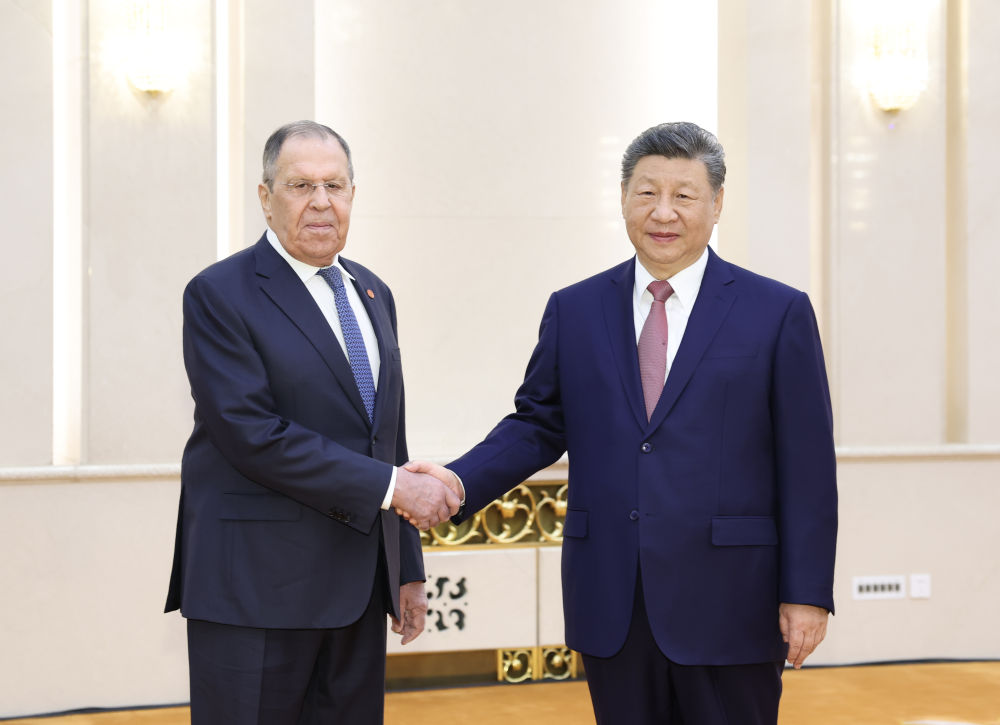
Chinese President Xi Jinping received Russian Foreign Minister Sergei Lavrov at the Great Hall of the People in Beijing this Wednesday (15). The meeting, which prepares the ground for Vladimir Putin’s official visit to China in the first half of 2026, formalized strategic coordination between the two powers in response to the escalation of the conflict in Iran and the blockade of the Strait of Hormuz.
Amid the ongoing conflict between Russia and Ukraine and the war waged by the US and Israel against Iran, unilateralism and hegemonism have brought countless risks and shocks to the world, and the global order faces increasing uncertainty. Under these circumstances, China and Russia need to strengthen communication and coordination through timely alignment on key issues, said Zhang Hong, a researcher at the Institute of Russian, East European and Central Asian Studies of the Chinese Academy of Social Sciences, when Global Times.
Sovereignty and “Global Majority” as central doctrine
Xi Jinping urged the two countries to “maintain closer and stronger strategic coordination” to “firmly defend their legitimate interests and safeguard the unity of the countries of the Global South.” The Chinese leader highlighted that “the stability and certainty of China-Russia relations are particularly valuable in a changing and turbulent international situation”, calling on the two countries to “assume their responsibilities as great powers and permanent members of the UN Security Council”.
“Although the current international order is in the process of restructuring, China and Russia are expected to play a more important role in shaping the future international order. By relying on multilateral mechanisms such as the Shanghai Cooperation Organization (SCO), BRICS and G20, they can expand their experience in regional governance to the level of global governance,” said Zhang Hong.
The partnership is described by the Russian Foreign Ministry as an “international balancing factor”. Lavrov reinforced that bilateral relations act as an “anchor of stability” for the “Global Majority”, which seeks sustainable development far from unilateral sanctions. The common strategy is to consolidate the BRICS and the SCO (Shanghai Cooperation Organization) as alternative governance platforms, accelerating the transition to a multipolar international order.
Energy security and the crisis in the Strait of Hormuz
The blockade of the Strait of Hormuz — through which around 20% of the world’s oil and gas passed — aggravated by the war between the United States and Israel against Iran, accelerated bilateral energy integration. The strait has in fact been closed to most maritime traffic through Iran since the start of the war. Meanwhile, the American military said on Tuesday (14) that its forces had completely blockaded all Iranian ports, in a maneuver to force Tehran to accept American conditions for a ceasefire.
In this scenario of logistical suffocation, the unity of the Global South becomes strategic. During his visit, Lavrov outlined Russia’s expectations regarding the US position in the Middle East, noting that Russia is capable of compensating for the shortage of energy resources faced by China and other relevant countries. “Russia can certainly compensate for the insufficiency of resources that has arisen for both China and other countries interested in working with us on an equal and mutually beneficial basis,” Lavrov said at a press conference.
In response to media inquiries about this offer, Chinese Foreign Ministry spokesman Guo Jiakun said on Wednesday that China has already made clear its position on the Strait of Hormuz, highlighting the practical cooperation and mutual benefit between Beijing and Moscow.
Diplomatic tension is also reflected at the UN. On April 7, Russia and China vetoed a United Nations Security Council resolution that “strongly encouraged” states interested in the use of commercial maritime routes in the Strait of Hormuz to coordinate efforts of a “defensive nature” — a maneuver seen by the two powers as an attempt to legitimize the Western military presence in the region.
Resilience on multiple fronts
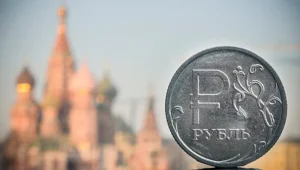
The “resilience of development” cited by Xi Jinping encompasses, in addition to energy, other pillars of the strategic partnership, such astechnological oberania, with the integration of supply chains in semiconductors, artificial intelligence and high-technology areas, reducing dependence on Western patents and components; aafinancial architecture, developing cross-border payment systems outside of SWIFT and greater use of local currencies (de-dollarization), ensuring commercial fluidity even under geopolitical pressure; and the defense coordinationwith the sharing of intelligence and the carrying out of joint exercises as a deterrent factor, especially in the face of instability in Eurasia.
International perspective
Analysts interpret the meeting as the consolidation of a bloc that challenges United States security policy, especially during Donald Trump’s term.
Lavrov’s visit sets the roadmap for the next Xi-Putin summit, when new long-term agreements on strategic infrastructure, energy and multilateral cooperation are expected to be announced — consolidating the Beijing-Moscow axis as the main pillar of the multipolar order in 2026.
Source: vermelho.org.br