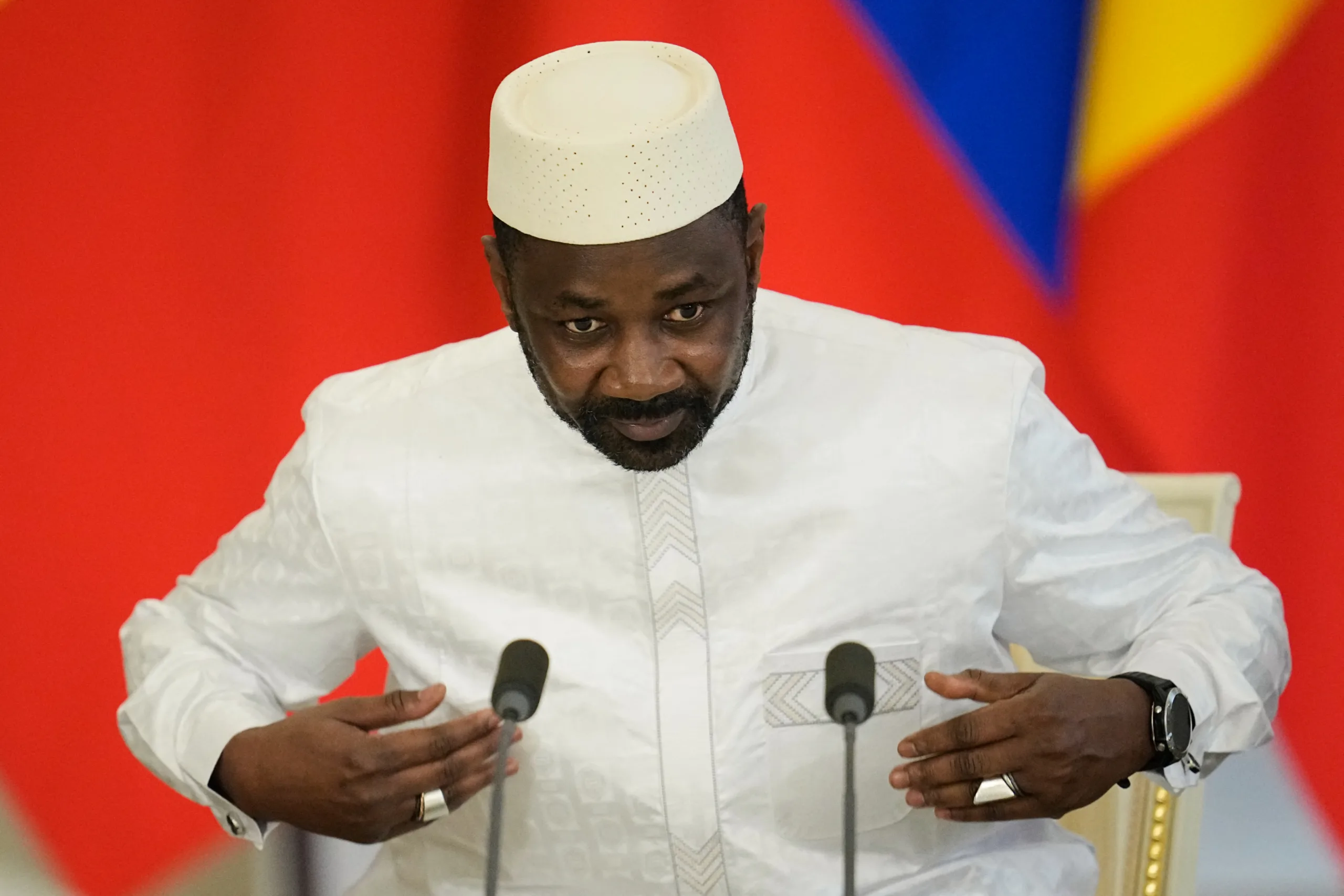
Armed groups in Mali have expanded means of coordination and threatened stability in the country. Last Saturday (18), an ambush killed at least 50 Malian soldiers near the city of Anefis, in the north of the country, and hit a joint convoy of the Malian Armed Forces (FAMa) and Russia’s Afrika Korps.
Malian forces even said they launched counter-operations, but the retaliation was fruitless. The Afrika Korps, in turn, released images that would indicate a drone attack against fighters.
Since at least April, several coordinated operations in northern Mali have called regional stability into question, bringing new nuances to the usually tense security situation in the Sahel.
Who is who
Two years ago, in July 2024, Mali, Niger and Burkina Faso announced the formation of a “confederation”. The objective was to strengthen the alliance between these West African countries. The trio, whose combined population exceeds 70 million inhabitants, is located in the Sahel region, a strip south of the Sahara Desert.
To strengthen security, however, it is necessary to create strategic alliances with other countries. At this point, Russia’s role is central: Moscow has long accused Ukraine of supporting terrorist groups in the region, aiming to destabilize the political situation in Africa. Still in 2024, Niger and Mali broke diplomatic relations with Kiev, motivated by alleged support for the Tuareg rebels. Ukraine maintains that the allegations are baseless.
In order to act as a guarantor of security in the region, Russia uses a paramilitary force known as Afrika Korps. The paramilitary organization emerged after the dismantling of the Wagner Group, which occurred with the controversial mutiny promoted by Yevgeny Prigozhin, in June 2023.
Amid the network of geopolitical interests, Moscow and the countries of the Alliance of Sahel States (ASS) signed an agreement to establish strategic partnerships. The agreement involves permanent meetings and the supply of advanced weapons and equipment, in addition to special training for the Sahel military.
The meanings of recent attacks
Two important actors claimed responsibility for this month’s attacks: the Azawad Liberation Front (FLA), which brings together Tuareg separatist groups, and Jama’at Nusrat al-Islam wal-Muslimin (JNIM), which acts as a branch of al-Qaeda in the Sahel.
The attack points to a union between the two groups. The FLA, historically, has a stance more focused on encouraging the independence of northern Mali. JNIM, formed in 2017, is committed to a stricter view of Islamic law, even imposing dress codes and other rules of conduct. In 2025, JNIM also promoted coordinated attacks against military positions in western Mali, close to the borders with Senegal and Mauritania.
There is a diplomatic component to the story. In this case, a factor in clear decline. Even though the Malian army has been strengthened with Russian support, there is very little progress in dealing with what the political conditions should be for the region to be minimally governable.
Part of this cooling is explained by the withdrawal of the United Nations Multidimensional Integrated Stabilization Mission in Mali (MINUSMA), an actor viewed with reservations by the local government and Moscow.
Furthermore, the strengthening of relations between the governments of the Sahel region and the Kremlin, despite the strategic advantages, may have begun to generate a complex but relatively predictable effect: that opposing forces may begin to form a partnership in attacks, as is the case with the FLA and JNIM.
The future will involve knowing the extent of the partnership between the two groups. If the scenario is confirmed, the risk for the Sahel, as a whole, increases. The groups’ activities could go beyond borders, causing broader problems for political conditions in West Africa.
Source: www.brasildefato.com.br