Published 05/13/2026 08:11 | Edited 05/13/2026 10:20
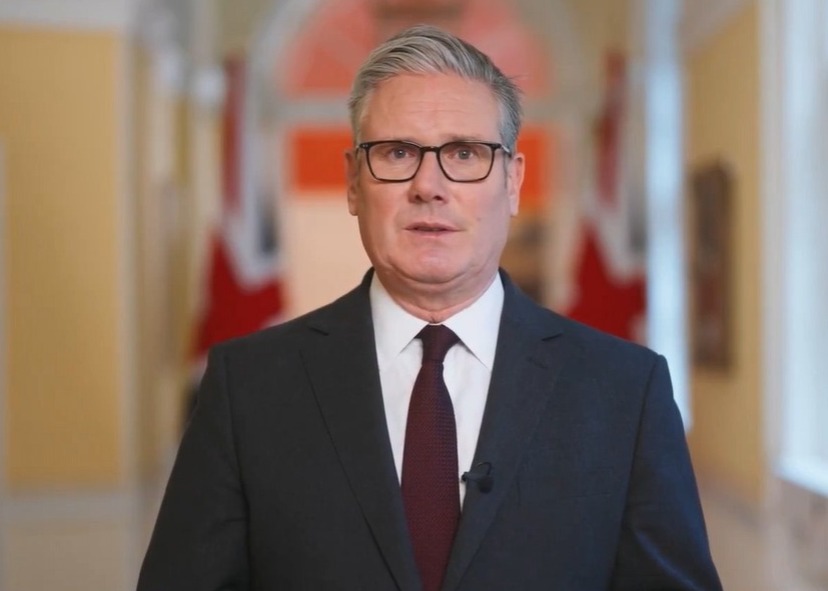
British Prime Minister Keir Starmer is facing the biggest political crisis since coming to power in 2024.
The local and regional elections held last week caused an earthquake in the Labor Party, expanded the advance of the far right led by Nigel Farage and triggered an open rebellion within the government.
More than 80 Labor MPs have already called for Starmer’s departure, while ministers have begun to openly discuss an “orderly transition” of leadership.
The scenario worsened this Tuesday (12), when the Minister of the Interior, Shabana Mahmood, asked Starmer to consider establishing a timetable for leaving office and after the resignation of two members of the government: Miatta Fahnbulleh and Jess Phillips.
Both accused the government of a lack of political direction, an inability to respond to social discontent and a lack of boldness in the face of the country’s economic and political deterioration.
Despite the pressure, Starmer told the cabinet that the formal process to remove him “has not been triggered” and that he will continue to govern. Close allies have tried to demonstrate public unity, but reports in the British press indicate a deeply fragmented government, with no consensus on how to stem the Labor party’s electoral erosion.
Historic defeat exposes collapse of traditional labor base
The election result showed a simultaneous collapse of the Labor party’s electoral base on both the right and the left. In working-class regions that supported Brexit, the party lost ground to Reform UK, a national-populist party led by Farage.
In progressive urban centers, especially London, the Green Party advanced on former Labor strongholds.
The situation was particularly devastating in Wales, a territory historically dominated by the Labor party for more than a century. The party suffered such a severe defeat that Welsh First Minister Eluned Morgan was unable to even retain her own seat.
In Scotland, the Scottish National Party (SNP) expanded its hegemony, while in the north of England and the Midlands, Reform UK conquered regions historically associated with the so-called Labor “red wall”.
In cities like Newcastle, the Labor party lost votes almost equally to Reform and the Greens, highlighting growing political fragmentation in the UK.
British analysts point out that the country has definitively entered a multi-party era, breaking the old bipolarity between Labor and Conservatives.
The British electoral system itself became the target of criticism. As the “first past the post” model rewards only the candidate with the most votes in each district, parties are able to win seats even without an absolute majority of the electorate, deepening distortions in an increasingly fragmented scenario.
Farage consolidates far right as main pressure force
The big political winner of the election was Nigel Farage. An ally of Donald Trump and a leading figure on the British far right, Farage called the results “a truly historic change in British politics.”
Reform UK advanced into former Labor strongholds, captured urban territories and finished second in the Welsh parliamentary elections.
Although projections indicate that the party has not surpassed the voting peak reached in 2025, its national presence has consolidated itself as a permanent factor in destabilizing the British political system.
Still, conservatives try to avoid the narrative of total collapse. The party led by Kemi Badenoch achieved important victories in London boroughs and preserved strategic areas threatened by Reform UK.
This prevents, at least for now, Farage from completely replacing the Conservatives as the main force on the British right.
Even so, the simultaneous growth of the far right and the green left has deepened the Labor party’s crisis.
The party began to face an internal dispute over which political direction to follow: toughening positions on issues such as immigration to try to win back conservative working-class voters or moving to the left to win back young people and progressives attracted to the Greens.
Internal rebellion increases uncertainty about Starmer’s future
Within the government, the environment is one of strong instability. British press reports describe ministers privately discussing ways to force the prime minister out. Some argue for a negotiated schedule; others consider directly challenging his leadership.
Among the names seen as possible successors are Health Secretary Wes Streeting, former Deputy Prime Minister Angela Rayner and Manchester Mayor Andy Burnham.
None of them, however, have publicly come forward against Starmer so far.
The prime minister tried to contain the crisis by focusing this Tuesday’s ministerial meeting on the war involving Iran and the possible economic impacts of the conflict. But even this could not prevent new internal friction.
According to reports released by POLITICO, Wes Streeting told the cabinet that “leading the country during the crisis in Iran is not enough in itself”, in an indirect criticism of Starmer’s attempt to use the international stage to reinforce his authority.
Jess Phillips, when announcing his resignation, made one of the harshest criticisms of the government. According to her, Starmer’s desire to “avoid conflicts” prevents the government from building a political project capable of mobilizing society.
Phillips accused the cabinet of making “catastrophic mistakes” and stated that the government lacks “combativeness” in the face of the country’s social and economic crises.
Prime Minister’s unpopularity becomes structural problem
Even if he survives politically in the short term, the perception is growing within the Labor party that Starmer is unlikely to lead the party in the next general elections, scheduled for 2029.
The combination of economic stagnation, rising costs of living, government wear and tear and electoral fragmentation quickly eroded the prime minister’s popularity.
The Labor party, which returned to power in 2024 promising stability after years of conservative crisis, now faces accusations of a lack of political direction and an inability to offer concrete responses to social demands.
At the same time, the rise of Reform UK and the Greens reveals an electorate increasingly disillusioned with traditional British parties.
UK politics thus enters a new phase of instability, marked by the erosion of the old bipartisanship and the growing dispute between different forms of populism on the right and left.
Source: vermelho.org.br