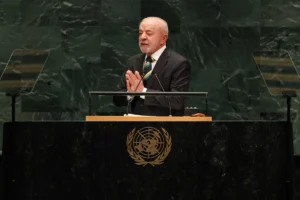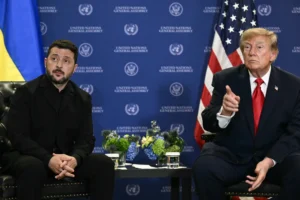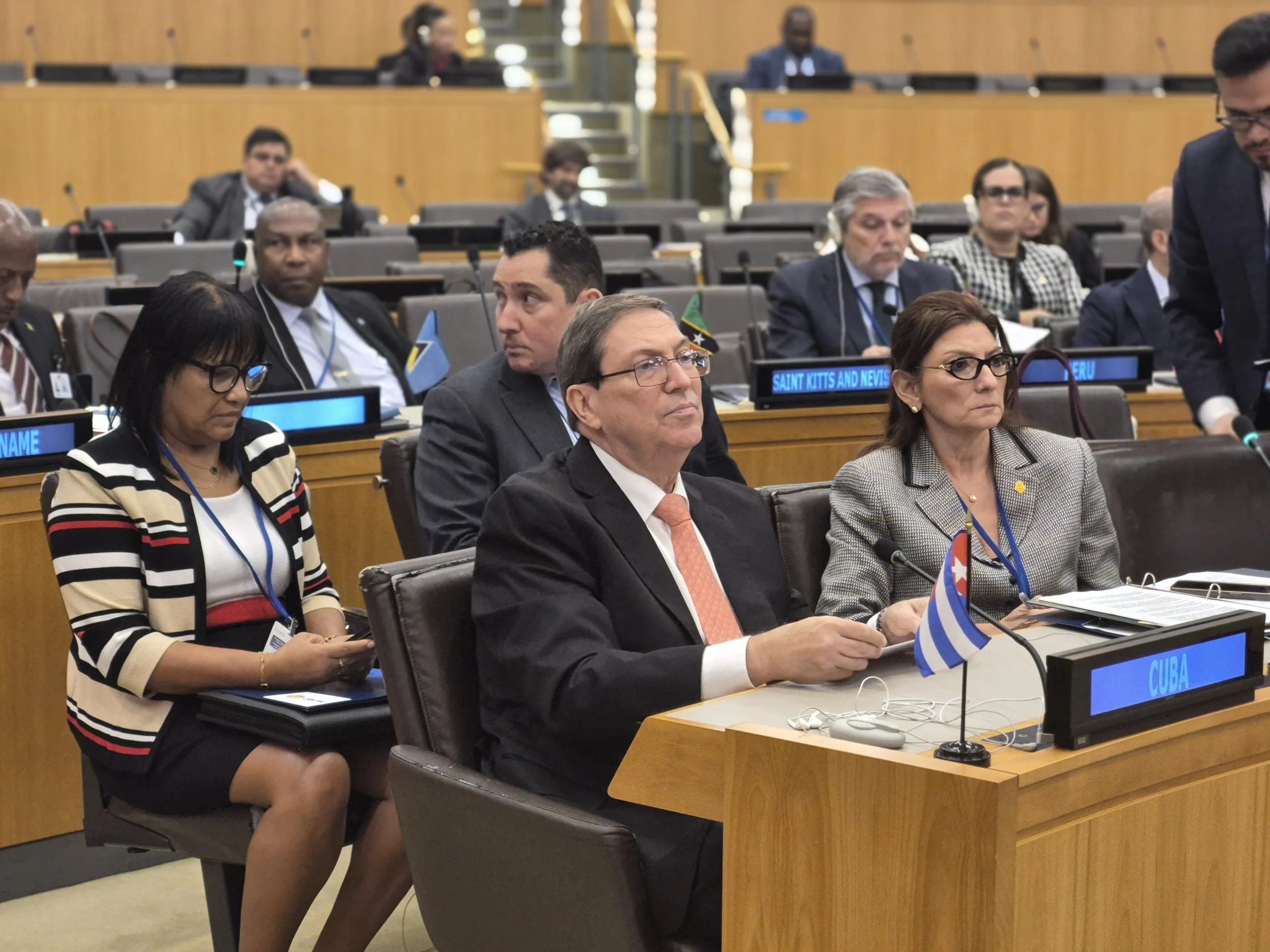
Washington is “incapable of accepting” that Cuba is an independent and sovereign country, Cuban Foreign Minister Bruno Rodríguez said this Tuesday (22), in response to statements made by US President Donald Trump during his speech at the General Assembly of the United Nations (UN).
Through a message published on social media, Rodríguez reiterated that Cuba does not represent a threat to the United States or other countries and questioned the economic pressure measures applied by Washington against the island.
“Cuba is not a threat to the USA or to any country. The economic blockade, including the energy siege, does threaten Cuba and the rest of the nations. It is an act of genocide and collective punishment. We are a country of peace and we deserve peace”, stated the Cuban chancellor.
Rodríguez’s statements came after Trump dedicated part of his UN speech to Cuba. The American president stated that his administration seeks “regime change” on the island and that he will continue to increase “economic pressure” as part of his policy towards the country.
Trump classified Cuba as an “absolutely failed state” and acknowledged that the United States is exerting economic and institutional pressure that, in his own words, is the “greatest in its history” against the island and the Cuban people. The US president also stated that his administration seeks a “fundamental transformation in the situation in Cuba” and once again threatened that the current Cuban government “will fall soon”.
“My administration also seeks a fundamental change in the situation in Cuba, where the communist regime is under enormous pressure, the greatest pressure it has ever had. It is an absolutely failed state. It is failing like never before and will fall,” Trump said during his speech at the UN General Assembly.
The American president — who, at the end of January, signed an executive order in which he classifies Cuba as an “unusual and extraordinary threat” and through which he imposed the energy blockade — once again justified the aggressions against Cuba as a matter of United States national security. In this sense, he stated that Washington will not allow “a paradise for foreign adversaries”.
“We will not allow a haven for foreign adversaries to threaten America on our own doorsteps,” he said.
Trump also stated that Secretary of State Marco Rubio “is leading the negotiations” with Cuba. The statement contrasts with what Havana has stated in recent months, when the Cuban government repeatedly denied the existence of formal talks with Washington and stated that “there are no formal dialogues with the United States”.
Cuba questions Washington’s policy at Celac
Chancellor Bruno Rodríguez’s response came one day after the official questioned Washington’s policy towards Latin America and the Caribbean during the ministerial meeting of the Community of Latin American and Caribbean States (Celac), held this Monday (21), within the framework of the 81st session of the UN General Assembly.
During his intervention, Rodríguez stated that the United States’ supposed fight against drug trafficking in Latin America and the Caribbean is a “pretext” to militarize the region.
“They use the militarization of the region as an instrument of domination under the pretext of combating drug trafficking; they impose punitive tariffs against several of our countries; they promote initiatives that aim to divide us; and they try to weaken the mechanisms of consultation and integration that it took so much effort for us to build,” warned Rodríguez.
The chancellor also stated that Cuba’s main concern in the current context is the US government’s offensive to impose the “archaic Monroe Doctrine”.
Over the past year, the White House has expanded the US military presence in the waters of the Caribbean and the Pacific. Furthermore, since the beginning of September 2025, the United States Armed Forces have been carrying out a bombing campaign against small vessels that Washington identifies as allegedly linked to drug trafficking.
According to records cited in reports from the United Nations and human rights organizations, US forces extrajudicially carried out more than 68 attacks or bombings, which left more than 230 people dead. Among the victims are fishermen from Venezuela, Trinidad and Tobago and Colombia.
The United Nations High Commissioner for Human Rights, Volker Türk, and special rapporteurs of the UN Human Rights Council condemned these operations. Experts questioned the legality of the attacks and said there were “reasonable grounds to believe” that the systematic bombings could constitute crimes against humanity of murder under international law.
At the same time, Cuba is preparing to present the draft resolution on the need to end the United States’ economic, commercial and financial blockade against the island. The text will be presented and submitted to a formal vote on October 27th and 28th at the United Nations General Assembly.
Source: www.brasildefato.com.br