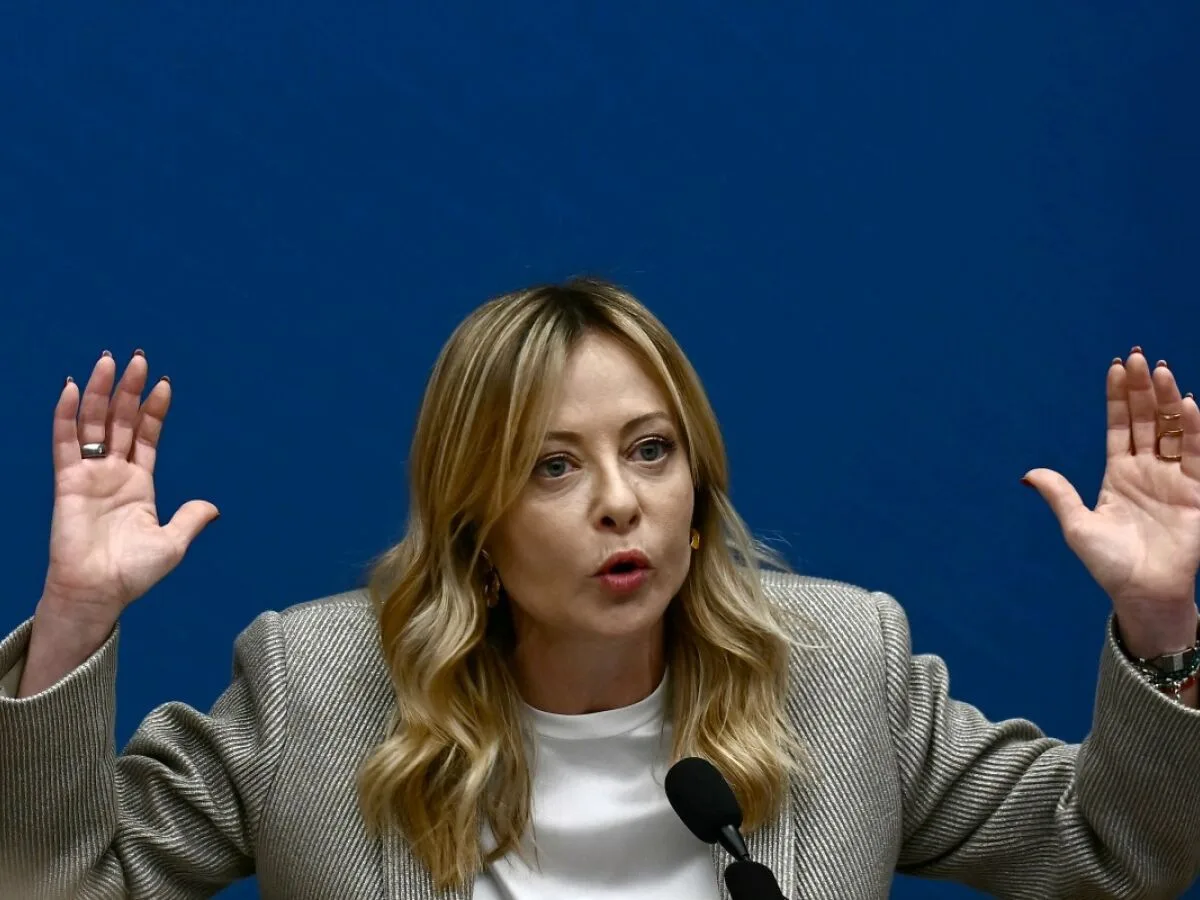
The Prime Minister of Italy, Giorgia Meloni, announced last Sunday (20) that she will take to the cabinet a measure to ban the use of burqas and niqabs in schools and reduce the number of foreign students per classroom. The proposal was presented during the festival National Youthmeeting of the youth wing of his party, the ultranationalist Brothers of Italy (FdI).
The prime minister specifically mentioned the burqa, a garment that covers the entire body, and the niqab, a veil that reveals the eyes. The authority, however, did not mention the hijab, a scarf worn on the head by Muslim women. For Meloni, the proposal also makes Italian language classes mandatory for fathers and mothers of foreign students who present “serious difficulties integrating into the school system”.
“For us, anyone who comes to Italy and wants to build their future here must learn our language, understand our culture and respect our rules,” said Meloni. “It’s the only serious way to welcome them.”
The flag is not new to the Italian right. In July, the far-right Futuro Nacional (FN) party had already defended the ban on burqas in schools. Outside the government coalition and positioning itself even further to the right than the FdI, the acronym, which was launched in February, has gained ground in the European country’s politics.
Italy does not have a law expressly prohibiting the burqa in schools or public spaces, but a rule from the 1970s bans helmets and clothing that makes identification difficult without valid justification. However, a decision by an Italian administrative court, taken in 2008, established that veils that cover the entire face can be worn for religious or cultural reasons, as long as the face is revealed when identification is necessary.
On the other hand, Italian legislation limits the presence of foreigners in the classroom. In the country, the ceiling is 30% per class and per school. The percentage may increase when students learn Italian or decrease if proficiency is low.
Meloni did not detail how he intends to change the rule. According to the National Statistics Institute (ISTAT), foreign students make up just under 12% of enrollments in Italian schools. To get off the ground, the project needs to be approved by the country’s Parliament.
Meloni did not detail how he intends to change the rule. According to the National Statistics Institute (ISTAT), foreign students make up just under 12% of enrollments in Italian schools. If approved by the cabinet, the measures will still need to pass through Parliament within 60 days to become law.
Source: www.brasildefato.com.br