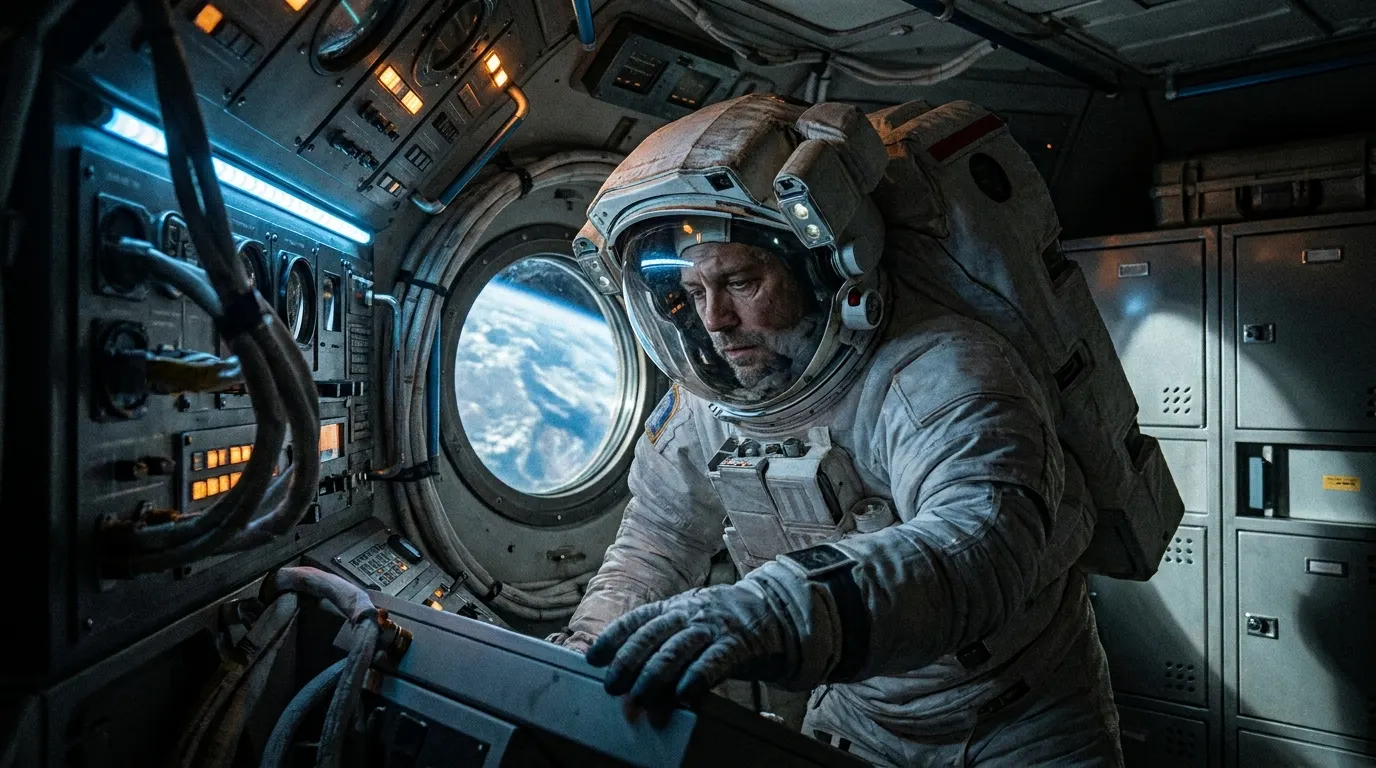
The allure of space exploration has captivated humanity for decades. From the first moon landing to the International Space Station’s continuous habitation, astronauts represent the pinnacle of human achievement and courage. Yet behind the polished public appearances and carefully curated social media posts lies a world of restrictions, classified information, and unspoken truths that these brave explorers cannot freely share with the public.
While NASA and other space agencies maintain transparency about many aspects of their missions, certain details remain shrouded in secrecy or simply too sensitive for public consumption. Here are eight things astronauts wish they could tell you but aren’t allowed to discuss openly.
1. The Psychological Toll Is Far Worse Than Admitted 😰
Space agencies conduct extensive psychological screening before selecting astronauts, but the mental health challenges of long-duration spaceflight are often downplayed in official communications. Astronauts experience what psychologists call “space adaptation syndrome,” which includes severe depression, anxiety, and cognitive changes that can persist months after returning to Earth.
The isolation from family, the constant surveillance by mission control, and the inability to escape confined spaces create a perfect storm for mental health deterioration. Many astronauts report experiencing what they describe as “existential dread” when viewing Earth from orbit, realizing how fragile our planet truly is. This phenomenon, sometimes called the “overview effect,” can trigger profound psychological shifts that space agencies prefer not to emphasize publicly.
Some astronauts have confessed privately that they struggled with suicidal thoughts during extended missions but were unable to seek help due to the stigma surrounding mental health in such competitive environments. The pressure to appear mentally stable at all times means many suffer in silence, fearing that acknowledging psychological struggles could end their careers.
2. Radiation Exposure Creates Long-Term Health Risks ☢️
Official statements minimize the radiation dangers astronauts face, but the reality is far more concerning. Beyond Earth’s protective magnetic field, astronauts are bombarded with cosmic rays and solar particle events that significantly increase cancer risk. While space agencies monitor radiation exposure levels, the cumulative effects over multiple missions remain poorly understood.
Astronauts who have flown multiple missions report higher incidences of cataracts, cardiovascular problems, and various cancers compared to the general population. The radiation damage occurs at the cellular level, affecting DNA in ways that may not manifest for years or even decades. Some retired astronauts have expressed frustration that space agencies do not provide adequate long-term health monitoring or compensation for radiation-related illnesses.
The shielding technology currently available on spacecraft offers limited protection against high-energy particles, and developing better solutions remains a significant challenge. Until then, every astronaut essentially volunteers for an experiment with unknown long-term consequences.
3. Equipment Failures Happen More Frequently Than Reported 🔧
Public relations teams carefully curate narratives about mission success, but equipment malfunctions occur far more regularly than the public realizes. From life support system glitches to communication failures, astronauts routinely deal with technical problems that could prove fatal if not addressed immediately.
Many near-miss incidents are never disclosed to avoid public panic or questions about spacecraft reliability. Astronauts train extensively for emergency scenarios precisely because failures are expected, not exceptional. The redundancy built into spacecraft systems exists because single points of failure are common occurrences rather than rare anomalies.
Some astronauts have reported experiencing moments where they genuinely believed they might not survive a mission due to cascading equipment failures. These harrowing experiences are rarely shared publicly, as space agencies prefer to maintain confidence in their technology and procedures.
4. The Food Situation Is Terrible 🍽️
Despite improvements in space food technology, astronauts consistently describe the culinary experience as one of the most challenging aspects of spaceflight. Taste perception changes dramatically in microgravity, making even favorite foods seem bland and unappetizing. The lack of fresh ingredients means meals consist primarily of freeze-dried, dehydrated, or thermostabilized options that bear little resemblance to normal food.
Astronauts lose weight during missions not just from exercise requirements but because eating becomes a chore rather than pleasure. Many report craving specific Earth foods so intensely that it affects their mood and performance. The monotony of repetitive meal options over weeks or months creates genuine psychological distress.
Space agencies invest millions in food research, yet astronauts still complain about poor quality and limited variety. The inability to enjoy a simple fresh salad or hot coffee represents a significant quality-of-life issue that receives minimal attention in public communications.
5. Sleep Deprivation Is Constant and Dangerous 😴
The sleep environment in space is far from ideal. Constant noise from life support systems, irregular light cycles, and the physical discomfort of sleeping while floating create chronic sleep deprivation. Astronauts average only five to six hours of quality sleep per night, well below the recommended seven to nine hours.
This persistent fatigue impairs cognitive function, reaction time, and decision-making abilities critical for mission safety. Studies show that sleep-deprived astronauts make more errors and take longer to complete tasks. Despite this known risk, mission schedules often prioritize operational needs over crew rest requirements.
Many astronauts rely heavily on sleep medications, which carry their own risks and side effects. The combination of medication dependence and chronic exhaustion creates a dangerous situation that space agencies address inadequately. Some retired astronauts have spoken about experiencing permanent sleep disorders after returning from space, suggesting that the damage may be irreversible.
6. Personal Privacy Essentially Does Not Exist 👁️
Life aboard the International Space Station involves constant surveillance. Cameras monitor nearly every activity, and communications with ground control are recorded and analyzed. Astronauts have virtually no private moments, creating an environment of perpetual performance and scrutiny.
Even bathroom use occurs in view of cameras, though footage is typically not reviewed unless an incident occurs. The lack of personal space and privacy contributes significantly to stress and interpersonal conflicts among crew members. Astronauts must maintain professional composure at all times, never able to truly relax or be themselves.
This surveillance culture extends to personal communications with family, which are monitored for security reasons. The knowledge that every word and action is potentially being watched creates psychological pressure that few outside the astronaut community understand. Some astronauts describe feeling like prisoners rather than explorers during long missions.
7. Interpersonal Conflicts Are Common and Intense 👥
Putting highly trained, strong-willed individuals in confined spaces for months inevitably leads to conflicts. Personality clashes, disagreements about procedures, and competition for recognition create tensions that can threaten mission success. While space agencies attempt to select compatible crews, predicting human dynamics under extreme stress remains imperfect.
Astronauts report experiencing intense arguments, silent treatments, and even physical altercations during missions. These conflicts are managed through strict protocols and intervention from ground control, but the emotional toll is significant. Crew members must learn to suppress natural reactions and maintain cooperation despite personal animosity.
The pressure to present a unified, harmonious team to the public means these conflicts are never acknowledged openly. Retired astronauts have described missions where they barely spoke to certain crewmates for weeks, yet publicly portrayed perfect teamwork. This disconnect between reality and public image creates additional stress for those involved.
8. Return to Earth Is Physically Devastating 🌍
The celebration surrounding astronaut returns masks the brutal physical reality of readjusting to Earth’s gravity. After months in microgravity, the body has adapted in ways that make standing, walking, and even basic movements painful and difficult. Bone density loss, muscle atrophy, and cardiovascular deconditioning require extensive rehabilitation.
Many astronauts experience severe back pain, joint problems, and balance issues that persist for months or years. Some never fully recover their pre-flight physical condition. The medical costs and ongoing treatment needs are substantial, yet space agencies provide limited long-term support for these conditions.
Additionally, the psychological adjustment proves challenging. Many astronauts struggle with reintegration into normal life, experiencing difficulty relating to people who haven’t shared their extraordinary experience. The contrast between the profound perspective gained in space and mundane earthly concerns creates existential dissonance that few understand.
Conclusion
While astronauts represent humanity’s greatest explorers, their experiences involve sacrifices and challenges that remain largely hidden from public view. The glamorous image of space travel obscures harsh realities including psychological strain, health risks, equipment dangers, poor living conditions, and lasting physical consequences.
Greater transparency about these challenges would benefit both prospective astronauts and the public understanding of space exploration’s true costs. Until then, these eight truths remain whispered among those who have ventured beyond our atmosphere, carrying secrets that reveal the profound price of reaching for the stars.
The next time you watch an astronaut wave from a spacecraft window, remember that behind that smile lies a complex reality of endurance, sacrifice, and silent suffering that enables humanity’s continued journey into the cosmos.