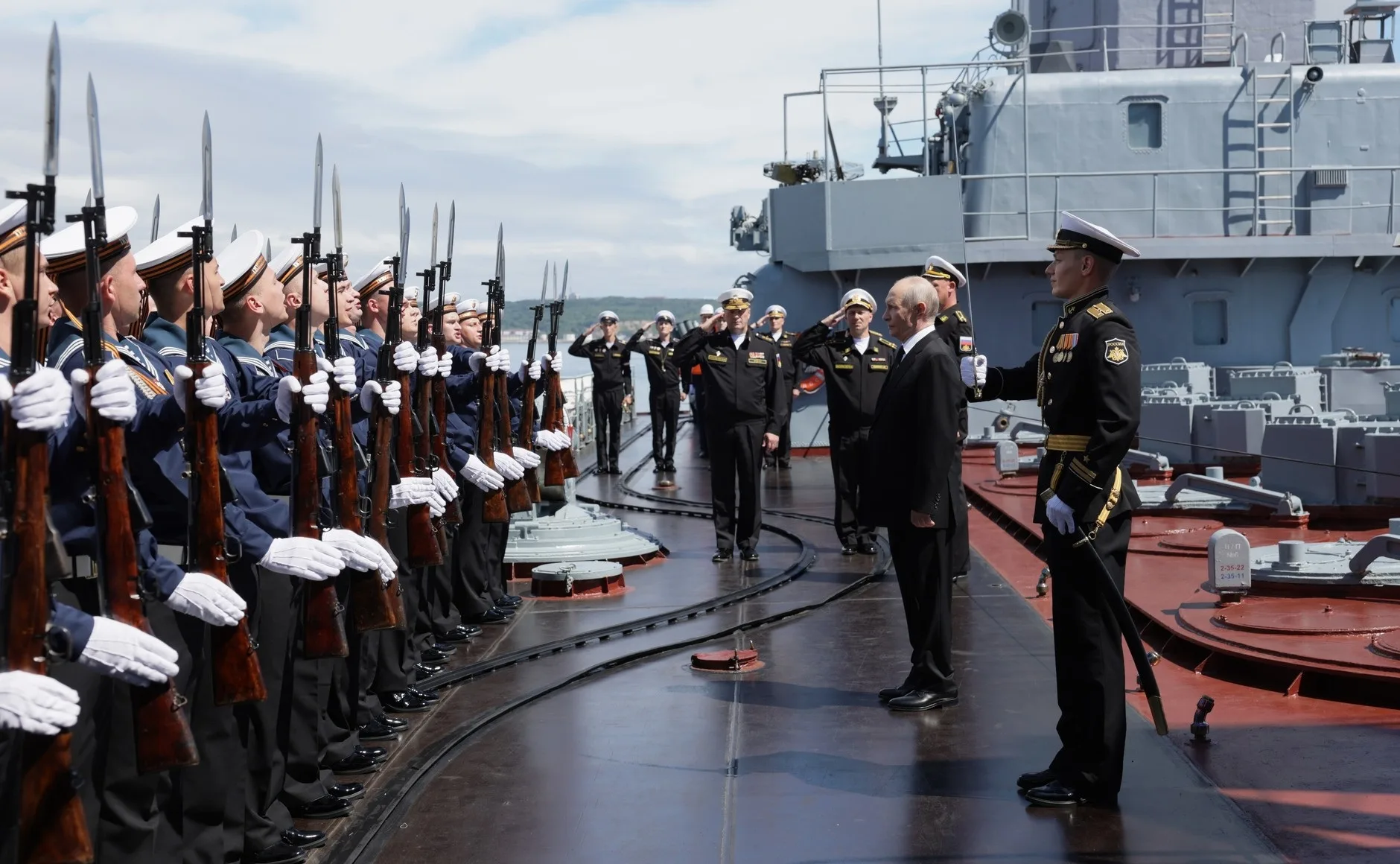
Russian President Vladimir Putin made this Thursday (13) his first visit to the Kuril Islands during his presidency of the country. Japan, which disputes sovereignty over the region, criticized the trip and summoned the Russian ambassador. Moscow rejected Japanese criticism, calling it “unfounded” and “unacceptable”.
The visit is part of a broader trip by the Russian president to the country’s Far East region. Putin visited Iturup Island, which is part of the Kuril Islands, located at the end of the Great Kuril Chain, near the Japanese island of Hokkaido.
This is the first visit by a senior Russian official to the Kuril Islands in 16 years. In 2010, then President Dmitry Medvedev also visited Iturup.
Japanese Prime Minister Sanae Takaichi reacted harshly to Putin’s trip, saying the visit “worsened Japan’s position vis-à-vis Russia.” “This offends the feelings of the Japanese people and is absolutely unacceptable. We hope that the Russian side fully understands the seriousness of this issue,” he added.
Japan’s Foreign Ministry also protested and summoned the Russian ambassador to the country to the Japanese Foreign Ministry. The Russian Embassy responded by classifying the action as “unfounded”.
“The head of the diplomatic mission explained that the South Kuril Islands are an integral part of the Russian Federation and became part of it after the Second World War, based on international legal grounds,” the embassy continued.
The diplomatic mission emphasized that the president’s travels within Russia are “exclusive sovereign decisions of the Russian leadership and cannot be discussed with foreign states.”
The spokeswoman for the Russian Foreign Ministry, Maria Zakharova, declared that the Japanese prime minister’s statements about the Russian president’s visit to the island of Iturup are unacceptable. The diplomat noted that the Kuril Islands are officially Russian territory. Therefore, according to her, the statements by Takaichi and Foreign Minister Toshimitsu Motegi are extremely “outrageous”.
“The most hateful and dangerous aspect of Sanae Takaichi and Toshimitsu Motegi’s ‘messages’ to all of Japan’s neighboring countries and to the Asia-Pacific region as a whole is the revanchism that permeates these statements,” highlighted Zakharova.
Context of the territorial dispute
Japan claims the four Southern Kuril Islands — Iturup, Kunashir, Shikotan and Habomai — based on the 1855 Trade and Border Treaty. However, the current configuration of the region began to be defined after World War II.
At the end of the conflict in Europe, the Soviet Union declared war on Japan and occupied the Kuril Islands in August 1945, including the four islands historically claimed by Japan. With Japan’s surrender in the context of World War II, which occurred in the same month as the invasion, Moscow began to administer the islands. Control was later inherited by the Russian Federation with the end of the Soviet Union in 1991.
Moscow claims that the occupation and incorporation of the islands were the result of agreements that reorganized the territories after World War II, and sovereignty over the region is not in question. Japan, however, disputes this interpretation and claims the four southern islands, which it calls the “Northern Territories”.
The dispute prevented the two countries from signing a definitive peace treaty after World War II. In 1956, Japan and the Soviet Union resumed diplomatic relations and agreed to continue negotiating the territorial issue, but they never reached an agreement.
Since coming to power, Russian President Vladimir Putin has sought ways to conclude a peace treaty with Japan, but always highlighting Russia’s sovereignty over the islands. His stated position was to negotiate based on the 1956 Peace Declaration.
In recent decades, Japan and Russia have developed economic cooperation, including in the Kuril Islands. During the 2010s, the two countries maintained consultations and even established joint activities in the region.
However, after the start of the Ukraine war in 2022, Japan immediately joined Western sanctions and the relationship between the two countries deteriorated. Moscow responded by suspending peace treaty negotiations, canceling visa exemptions for Japanese in the South Kuril Islands, and restricting joint activities with the Japanese in the region.
In 2025, the Russian Foreign Ministry stated that Russia sees no prospects for dialogue on a peace treaty with Japan.
Source: www.brasildefato.com.br