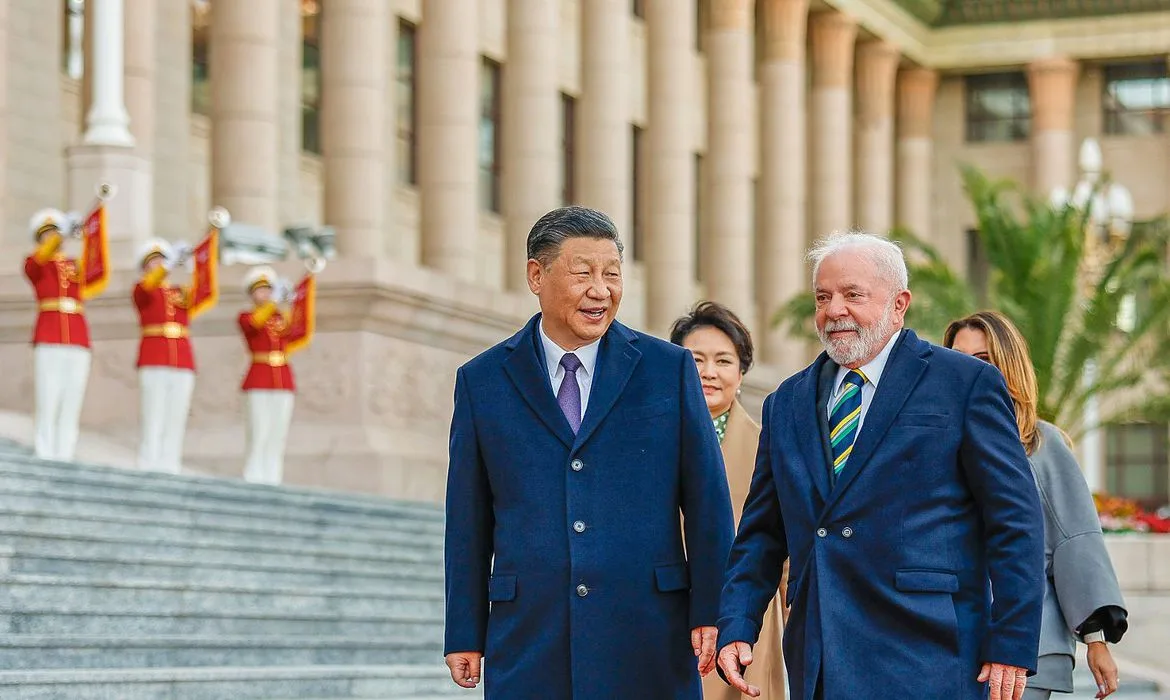
After Brazil established consultations on the tariffs imposed by the United States at the World Trade Organization (WTO), China formalized a request to participate in the negotiations. The United States has signaled that it will respond to the body, but the Donald Trump administration denies that any negotiations will take place.
International analyst Amanda Harumy assesses that the signaling is already important and that “perhaps it indicates that there are nuances and different interpretations of the tariff” within Trump’s own country. “These tariffs certainly also impact the United States economy”, he explains to BdF Connectionyes Radio Brasil de Fato.
The Asian giant entered the discussion in search of a new position in multilateralism. “China, which was once seen as a country that did not comply with the WTO order, technically claims this space. Brazil also, which is a very important country in diplomacy in the multilateral world, defends these bodies”, he continues.
According to the analyst, for some years now, in the context of a new global rearrangement that points towards multilateralism, the USA has been losing its hegemony and other countries are gaining more and more relevance, such as China, “a major player interested in this dispute, which we know is a political dispute, not strictly technical and commercial”.
Harumy defends the continuation of pressure through diplomatic channels. “The WTO is a space of multilateralism that aims to strengthen international trade, the free market, but today it has been obstructed by the United States itself, which for a long time was a great voice for the free market and the WTO.”
Amanda Harumy recalls that the tariff is directly linked to the Brazilian elections and assesses that a panel with the presence of Brazil and China at the WTO could help to remove this electoral focus. “We would enter into a more technical and commercial debate, not a political one. But the WTO has been obstructed by Trump since 2019.”
The analyst highlights that the Trumpist modus operandi with Latin American countries has sought imposition instead of dialogue. Therefore, despite the apparently positive sign of openness, the internationalist does not believe in a substantial change in the US external stance.
“The United States’ policy towards Latin America has been one of pressure, whether commercial — as we are seeing in the case of Brazil, based on the tariff — or political, communicational or even military, as we saw in Venezuela. So, in this analysis, we need to include the Latin America element, from Trump’s perspective of direct interventions”, he summarizes.
To listen and watch
The newspaper BdF Connection airs in two editions, from Monday to Friday: the first at 12pm and the second at 5pm, on Radio Brasil de Fato98.9 FM in Greater São Paulo, with simultaneous transmission also on YouTube do Brasil de Fato.
Source: www.brasildefato.com.br