Published 05/04/2026 08:52 | Edited 05/04/2026 15:16
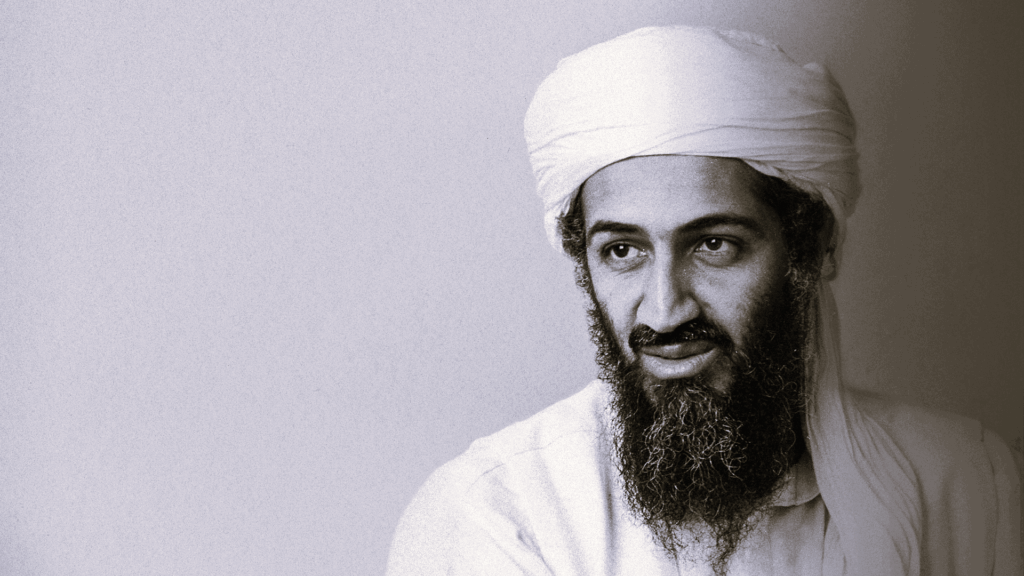
Fifteen years later, the scene still seems like something out of a carefully edited Hollywood script: at 11:35 pm on May 1, 2011, Barack Obama appeared on television in the United States, with an expression that balanced solemnity and triumph. That night, the American president announced to the world that Osama bin Laden was dead.
“Justice has been served,” Obama said. An operation conducted by US special forces in a compound in Abbottabad, in Pakistani territory, was presented as the final chapter of a hunt that began after the attacks of September 11, 2001. Within hours, the body of the founder of Al-Qaeda would be thrown into the Arabian Sea.
The official narrative, undertaken by the White House, attempted to impose the thesis of definitive victory. There was, without a doubt, an immediate political and emotional impact, as bin Laden was an emblem. His death seemed like a powerful gesture, full of meaning, like the toppling of a statue in a public square.
After 15 years, the shipwreck metaphor proves to be disturbingly appropriate – and the promise of ending an era was nothing more than a slogan. The body disappeared in the waters, but so did the promise of safety. The world has not become more peaceful. The strategic objectives declared by the US to justify the so-called “war on terror” remain, to a large extent, at the bottom of the sea, with Bin Laden.
From Al-Qaeda to the Islamic State
Militarily, Operation Neptune’s Spear can be considered an undeniable success. From a tactical point of view, the action was precise and efficient, demonstrating the US military and intelligence projection capabilities. Bin Laden – personification, for the Western public, of the September 11 attacks – was eliminated. Obama implied that the conclusion of the hunt was an end point, as if the death of one man decreed the end of a deep-rooted phenomenon.
History tried to show the opposite. If a strategy is measured by the lasting transformation of the scenario, there is, at most, one point that can support the thesis of North American victory: over the years, several measures adopted by the White House have made a new terrorist attack on the country of a scale and complexity similar to those of 9/11 practically unlikely.
It is little compared to the “whole work”. Far from being “destroyed”, al-Qaeda survived more resiliently as a network without a unified command. After a period of initial disorganization, the group reconfigured itself and stopped operating with rigid centralization, feeding branches in Yemen, the Maghreb and Syria.
At the same time, new actors emerged. This is the case of the Islamic State (IS), which, from 2013 onwards, occupied the void of protagonism with a different strategy: territorial control combined with aggressive and effective digital communication. The group was not the direct heir of bin Laden, but it was the biggest beneficiary of the power vacuum left by the death of the al-Qaeda leader, poorly managed Western interventions and the civil wars in Iraq and Syria.
Between 2014 and 2017, IS controlled a territory the size of the United Kingdom, imposed a self-proclaimed caliphate with systematic violence and exported attacks to Europe. If al-Qaeda operated as an underground web, the new group built a highly visible showcase that attracted fighters and global attention.
ISIS propaganda mobilized supporters of this radicalized message without direct links to organizations – the so-called “lone wolves”. The attacks in Nice (2016), Berlin (2016), Manchester (2017) and Barcelona (2017) were carried out by individuals inspired (but not controlled) by groups such as the Islamic State or Al-Qaeda.
On a broader geopolitical level, the results did not meet the expectations announced in 2001. The war in Afghanistan, started under the argument of dismantling these networks and stabilizing the country, cost the US more than US$2 trillion and around 2,500 military lives. In August 2021, after 20 years of war, the US carried out a chaotic withdrawal from Kabul. The Taliban, the same regime that had sheltered Bin Laden in the past, returned to power.
global security
The operation that killed bin Laden also raised legal questions that, in the euphoria of the moment, were swept under the rug. The attack took place within Pakistani territory, without any prior notification or authorization from the local government, which was interpreted by experts as a violation of the sovereignty of a foreign country. Analysts still characterize the act as an extrajudicial execution followed by forced disappearance.
Human rights organizations criticized the decision to bury bin Laden at sea in less than 24 hours, without observing Islamic rituals and without allowing any independent verification. Images of the body have not been fully released. The alleged need to prevent the tomb from becoming a “sanctuary” for followers is controversial in light of the Geneva Conventions and human rights treaties.
After 15 years, is the world safer? Empirical evidence suggests no. Bin Laden’s death was technically a successful operation. But, in the long term, the assassination of an important adversary became a strategic failure.
The US has not achieved its stated objectives. Al-Qaeda was not extinguished and the decentralization of its cells made prevention more difficult. Afghanistan has not been stabilized. According to the Global Terrorism Database and other monitoring centers, the number of annual jihadist attacks increased in the 2010s compared to the previous decade. Worse: the 2011 Arab Spring and its aftermath, such as wars in Libya, Yemen and Syria, have provided new laboratories for radicalization. Threats of another type arose, leaving the world more fragmented – and collective security more fragile.
The global threat associated with these groups has only changed shape. Instead of large coordinated operations, decentralized actions have multiplied, often led by individuals or small cells with diffuse links. It is as if the phenomenon had stopped being a concentrated storm and had become a succession of unpredictable gusts.
Finally, the practice of targeted executions – often without trial – has widened the gray zone between war and international law. Bin Laden was murdered without due legal process, which, according to experts, strains norms on the use of force outside of formally declared armed conflicts.
A death can end a biography, but not a historical cycle. How to map and explain the current world with such clarity? Bin Laden’s body is at the bottom of the sea – but the ideology he propagated continued to swim. On the shores of Abbottabad, 15 years ago, a helicopter landed. On the shores of the world, the waves of that night have not yet calmed down.
Source: vermelho.org.br