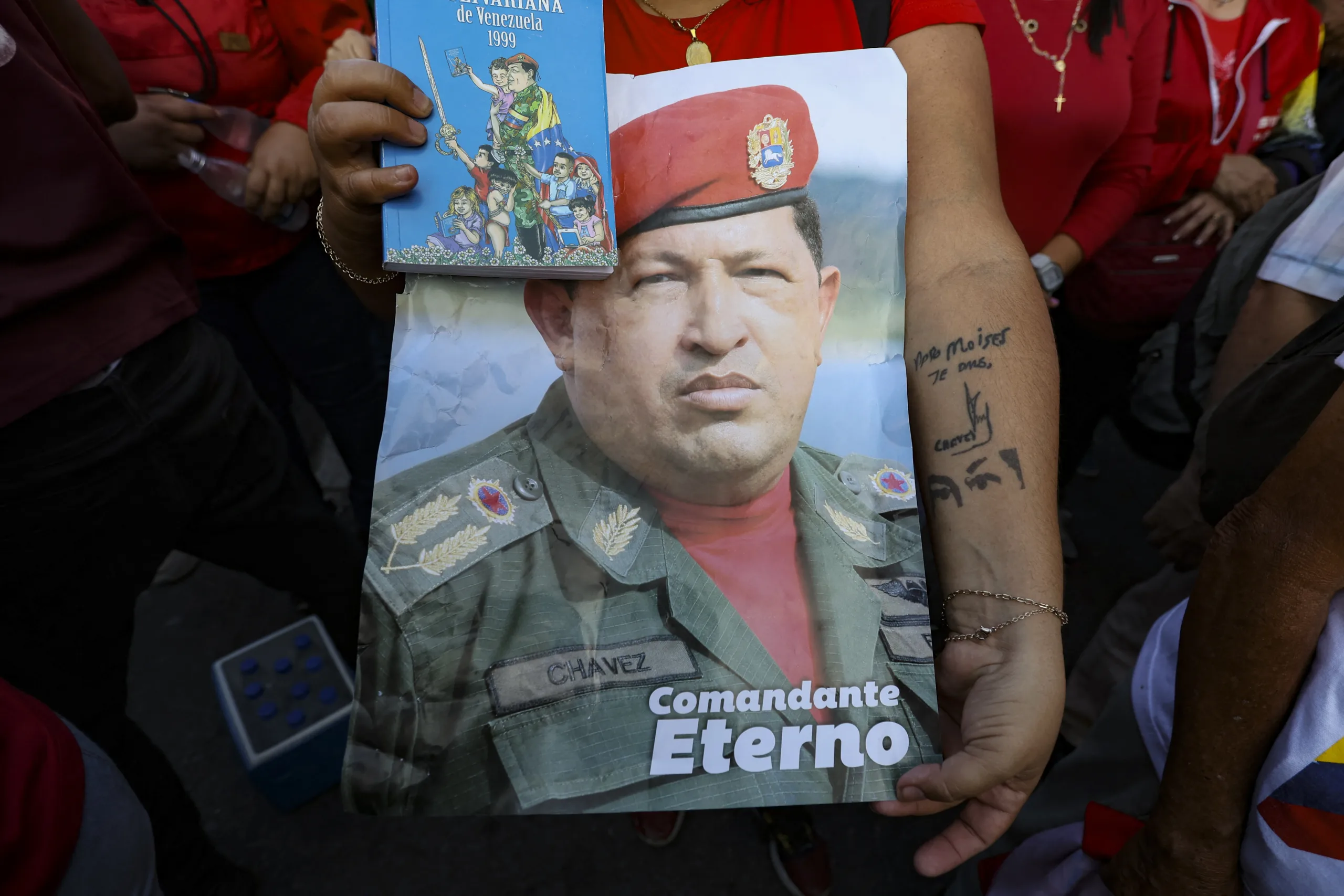
Thousands of Venezuelans gathered this Tuesday (28) in the historic 23 de Enero neighborhood, in Caracas (Venezuela), to celebrate the 72nd anniversary of the birth of former president Hugo Chávez, who passed away in 2013. The event was marked by speeches that reinforced the importance of Chavista thinking given the current scenario of foreign interventions in the country.
One of the strong names of Chavismo, the former Minister of the Interior and Justice, former mayor of Caracas and current governor of the state of Táchira, Freddy Bernal, took advantage of the act to call on the revolutionary base to resist external interference.
“Who said that Chavismo was over? Who said that Bolívar was buried? Who said that Chávez was over? On the contrary, Chávez taught us to grow in difficulties. It means not surrendering, not getting confused and not letting them continue trampling on the dignity of the country”, said Bernal.
“We can never forget the bombing of January 3rd”, he continued. “On January 3rd we were criminally bombed by a foreign power and we are not at war with anyone. It means that it was a cowardly bombing, a treacherous bombing, and no one can forget that disastrous day for the country. That day they kidnapped President Nicolás Maduro. That day they kidnapped Miraflores, violating all international order. That day they trampled on the United Nations system, that day they trampled on national and international law, and we cannot forget”, he stated.
Chávez’s former minister recognized the efforts of the interim government, led by Delcy Rodríguez, to “negotiate with the kidnappers”. However, he denounced the escalation of interference by the US government in the country.
“The truth is that Venezuela continues to be under a criminal economic blockade. And from here we raise the flag that we have been raising. May the unilateral sanctions against Venezuela cease, the criminal blockade against Venezuela cease. And, in the midst of this, the 3rd of January is not enough; they continue to threaten us permanently because they have ships, planes, missiles and drones. They said it before, but let us not get tired of what the empire says, because they are an empire. Let us not fall for provocations in what they say every day, because they want to trample on our dignity. They want to trample on the essence of who we are, they want us to be sad”, he pointed out.
In the hearts of the people
During the event, community leaders and activists highlighted humility and love for the country as the main teachings left by the commander. Luis Izturiz, councilor of the Libertador Caracas municipality, highlighted the recovery of history and the formation of consciences as Hugo Chávez’s main legacies.
“Commander Chávez left humility. Humility among these people, among the common people, among the bases and, mainly, brought us the story of Bolívar, brought the story of Zamora, brought the story of a Venezuela that was not known by the common people, by the bases, by the poor”, he highlighted.
“The battle is not about force or violence. The battle is about ideas. They with their capitalism and us with socialism, with the people, with the poor, which is the essence of this revolution, the essence of socialism. They there with their capitalism, we here with the idea. That’s why Chávez brought history”, said Izturiz.
Mariela Machado is an activist in the housing movement and recognizes that the revolutionary process is going through one of its most difficult moments. On the other hand, he believes that Chávez’s legacy contains the answers to continue moving forward, despite everything.
“The commander’s legacy has been for us the fundamental element in resisting this struggle to which imperialism has subjected us. Today we are here without fainting. We will not faint. As that black man Martin Luther King said, if we cannot fly, we walk. If we cannot walk, we run. If we cannot run, we crawl. But we will never faint for the ideal of building a free, sovereign, human homeland that is a projection for the entire world. We are not on our knees, we are intervened by an inhuman, capitalist, savage force, which what matters is our wealth”, attested Machado.
Antonela Frías takes Chávez’s surname. She was just 4 years old when the Venezuelan leader passed away. “I always listen to the commander, watch his videos and then I learn”, comments the young resident of the Simón Bolívar Socialist Commune.
“I’m 17 years old”, says Antonela, showing the shirt with Hugo Chávez’s eyes. “When this shirt came out, I was three years old and today I’m wearing it as a symbol of my love for him, for my love for the country, because that was the legacy he left us. He taught us to love the country as our own life”, says the young woman.
Trajectory of a popular leader
Hugo Rafael Chávez Frías was born on July 28, 1954 in Sabaneta, in the state of Barinas. The son of two primary school teachers, he pursued a military career and became a paratrooper lieutenant colonel. On February 4, 1992, he led a civil-military rebellion against the neoliberal policies of the time, which made him the main political figure in Venezuela.
He was elected president for the first time on December 6, 1998. Upon taking office in 1999, he promoted the creation of a new Constitution and founded the Bolivarian Republic of Venezuela, based on participatory democracy. His government was characterized by “misiones”, social programs that expanded access to health and education, and the defense of socialism in the 21st century. Chávez passed away on March 5, 2013, after a long battle with cancer.
Source: www.brasildefato.com.br