Published 05/23/2026 1:48 pm | Edited 05/23/2026 17:53
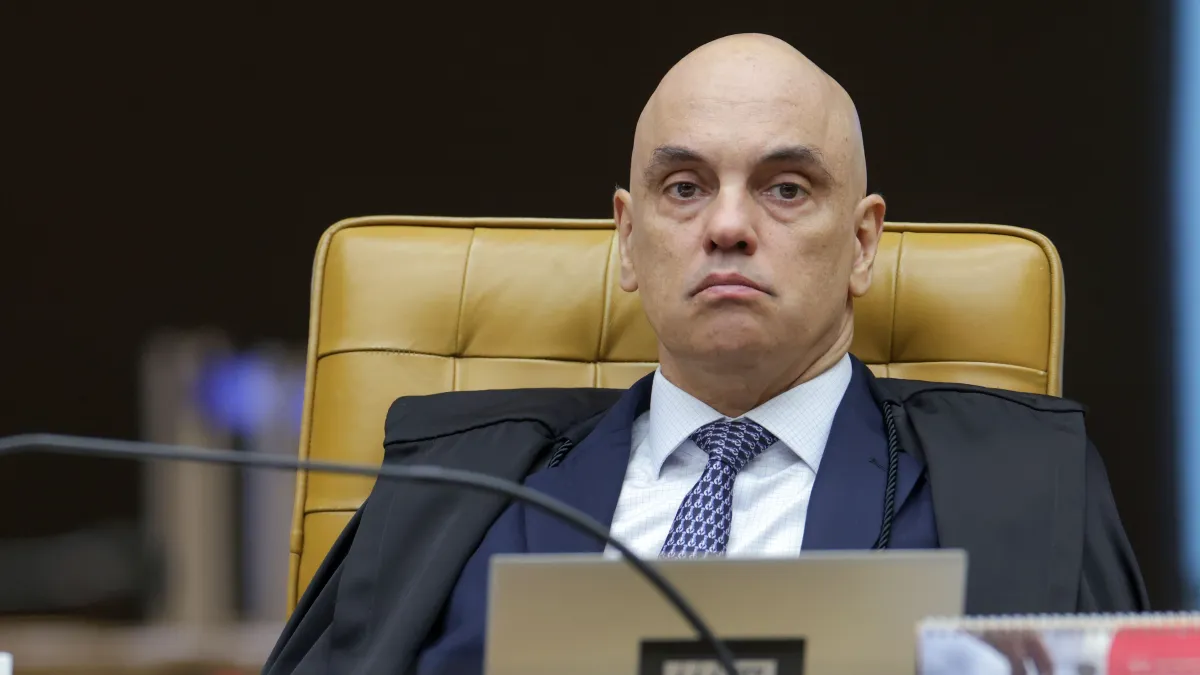
The Federal Court of Florida authorized, this Friday (22), the notification by email of Minister Alexandre de Moraes, of the Federal Supreme Court (STF), in a lawsuit filed by the platforms Rumble and Trump Media, the company that owns the social network Truth Social and controlled by the President of the United States, Donald Trump. The decision unblocked a process that had been stopped for more than a year and represents yet another movement by the American right to put pressure on the Brazilian Judiciary.
The order was signed by Judge Mary S. Scriven of the Federal Court of Florida. According to lawyer Martin De Luca, who represents the platforms, Moraes may be notified via institutional email addresses linked to the STF within 30 days. After receiving the summons, the minister will have a deadline to respond or ask for more time.
An action with political DNA
The action was filed in January 2025, but faced a procedural obstacle from the beginning: the difficulty of formally notifying Moraes through the channels provided for in the Hague Convention — an international agreement that organizes legal cooperation between countries. But the process did not progress and the American court then concluded that this path was blocked and authorized an alternative solution, which was to notify Moraes via institutional email from the STF itself.
It’s not difficult to identify the context of all this. Trump, who runs Trump Media, one of the companies behind the action, is openly aligned with Bolsonarism and turned the clash with the STF into a political flag, using his platforms to attack Moraes as a symbol of what he classifies as “global censorship”. Using the American Judiciary as a tool to pressure judges from sovereign countries is, to say the least, worrying.
What companies say
The platforms allege that Moraes ordered the removal of accounts and profiles without resorting to appropriate diplomatic channels. The central accusation is violation of the First Amendment of the American Constitution, which guarantees freedom of expression — an argument that companies extend, in a very elastic way, to content produced and distributed in Brazil by Brazilians, but which circulates on American servers.
Lawyer Martin De Luca celebrated the progress of the case on social media, stating that Moraes will now have to answer to an American court or face a conviction in absentia, that is, without the participation of his defense. This could result in a symbolic conviction or even the freezing of Moraes’ assets in the United States, if he has any.
In practice, however, experts warn that carrying out any conviction would be very difficult. STF ministers have immunity in the exercise of their functions, and Brazil is a sovereign country — which means that decisions from foreign courts cannot simply be imposed here.
Sovereignty in check
The most delicate point of the case is not procedural — it is political. It is an attempt to use American Justice to pressure, embarrass and eventually punish a Brazilian magistrate for decisions he made within the law, in the exercise of his work, to defend democracy in his country.
The thesis that the First Amendment of the United States applies to content moderated by order of a Brazilian judge, in Brazilian territory, is legally controversial and contested by experts in international law. What is at stake, in practice, is the attempt to subordinate sovereign decisions of the national Judiciary to the commercial and political interests of American companies — companies that, not by chance, have direct ties to the main leader of the global far right.
Voltage history
This is not the first time that Moraes has faced pressure from digital platforms. In 2024, his decisions led to the temporary blocking of platform
What’s next
With authorized service, the process enters a new phase. If Moraes does not respond within the deadline, the court could judge him in absentia — which could result in symbolic sentences or the freezing of any of the minister’s assets in the United States. In practice, however, experts in international law warn that the execution of any conviction would be extremely complex, given the immunity enjoyed by judicial authorities and the issues of sovereignty between the two countries.
The case opens an urgent debate: how far will the attempt by foreign powers to hold magistrates from other nations responsible, in their own courts, for the regular exercise of their functions? The answer to this question is of interest not only to Brazil, but to any country in the Global South that intends to preserve its institutional autonomy in the face of pressure from technological giants and their political allies in Washington.
__
with agency information
Source: vermelho.org.br