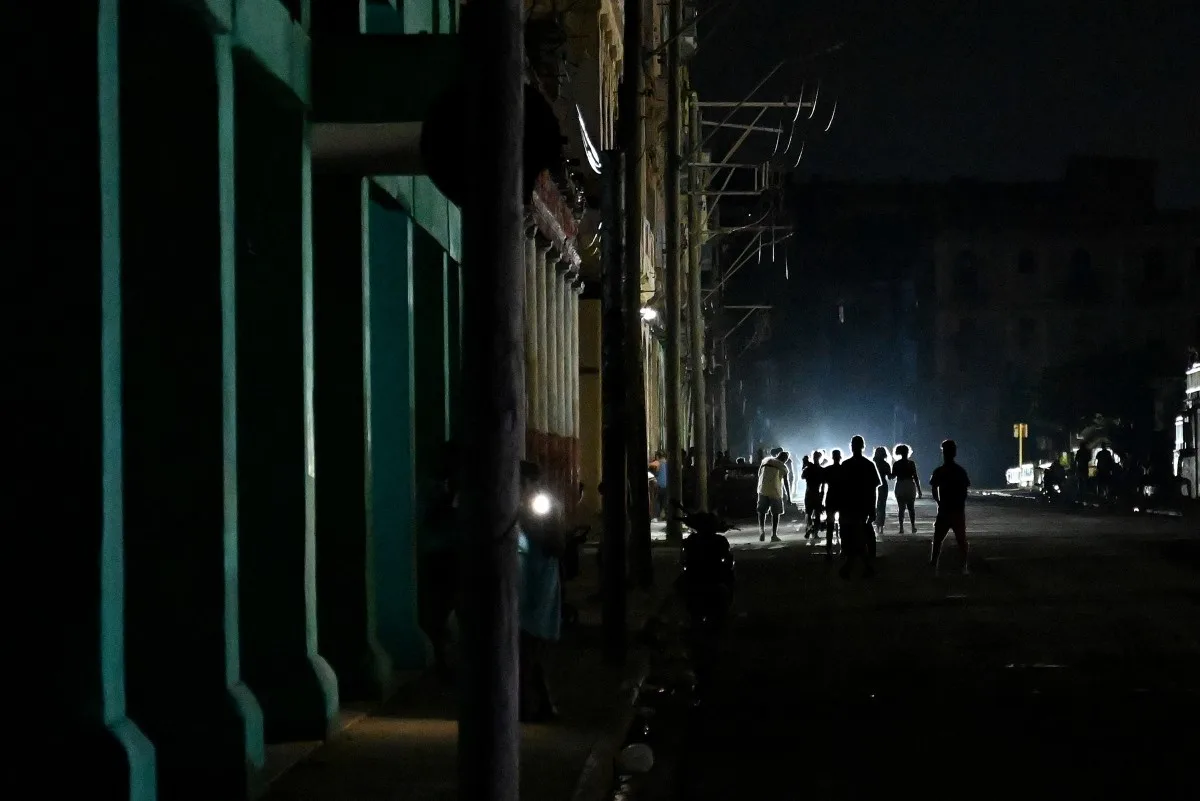
The island of Cuba faced this Monday (6) a new widespread blackout after a total disconnection of its National Electrical Energy System. The incident occurs against a backdrop of extreme fuel shortages, worsened by the economic siege and sanctions imposed by the United States.
Shortly after the collapse, the state-owned company Unión Eléctrica de Cuba (UNE) reported that work to restore the system had begun, with the reestablishment of one of the generating units at the Energás Boca de Jaruco plant.
The episode, however, exposes the serious crisis of Cuban infrastructure, where severe blackouts of up to 20 hours a day have paralyzed daily activities, transport, hospitals, schools and the water supply in recent months. The energy emergency coincides with the preparation of an important denunciation in international diplomacy.
This July 7, I will be in New York to participate in a session of the United Nations General Assembly on the need to end the economic, commercial and financial blockade imposed by the United States against #Cuba.
We go to the @UN_es with the truth of our… pic.twitter.com/6ousYCGBlh
— Bruno Rodríguez P (@BrunoRguezP) July 6, 2026
Cuban Foreign Minister Bruno Rodríguez Parrilla confirmed his trip to New York for a special session at the General Assembly of the United Nations (UN). On social media, the chancellor confirmed that the US blockade will be the central topic of the debate and denounced boycott attempts by Washington.
Rodríguez stated that “the US government tries to prevent the UN General Assembly from speaking out”, exerting strong political pressure on foreign governments and seeking to “coerce the sovereign will of member states”.
The Cuban minister once again classified the unilateral sanctions as a criminal collective punishment against the island’s civilian population. “We will defend our sovereign right to live without energetic siege, without external asphyxiation, without coercion, without threats of a bloodbath, without collective punishment,” he wrote, emphasizing that “Cuba is not a threat; the blockade is.”
The special session at the UN, scheduled for this Tuesday (7), was formally organized by Havana to expose the intensification of aggressions and the energy siege imposed by the White House. The Cuban government classifies the US unilateral coercive measures as “an act of genocide, collective punishment and a massive, flagrant and systematic violation of human rights.”
Tensions escalated further after statements by US Secretary of State Marco Rubio, who denied that Washington was applying an energy blockade against Cuba. Rubio has publicly argued that the shortage is due to the fact that Venezuela has decided to cut off the supply of free oil that the island used to “resell”.
In response, the Cuban foreign minister accused the US Secretary of State of “simply choosing to lie” to cover up the impacts of sanctions on the island’s economy. Rodríguez detailed that the siege suffocates the country by intimidating and threatening all foreign fuel suppliers, violating free trade rules and causing only one oil tanker to be able to dock in Cuban ports within a four-month period.
This energy asphyxiation is supported by US executive orders that threaten to severely punish any country or foreign entity that sells or supplies oil to Cuba. The economic offensive was harshly criticized by United Nations human rights experts, who called it a “serious violation of international law” and an extreme form of coercion.
The Cuban chancellor also warned about the “opaque” circulation of diplomatic documents produced by Washington with the aim of influencing votes against the island in the General Assembly. The materials, which include manuals such as “It’s time to change Cuba” and “The regime must reform itself, don’t vote with its propaganda”, attempt to associate the island with international terrorism and weaken the vote on the resolution against the blockade, approved without interruption by the UN 33 years ago.
Under the pressures of this unprecedented “state of siege,” the Central Committee of the Communist Party of Cuba and the National Assembly recently approved the most comprehensive economic reforms in more than 60 years on the island.
The package of 176 measures includes permission for private companies and banks, municipal decentralization and encouraging investment by Cubans residing abroad. When justifying the reforms of “untying the productive forces”, President Miguel Díaz-Canel declared that “there is no sovereignty with an empty plate”.
Faced with the severe blockade of fossil fuels, the transition to renewable energy has become a tool of national resistance, supported by agreements with China. Beijing is currently financing the installation of 92 solar parks on Cuban territory, with the goal of supplying around half of the island’s daytime electricity demand by 2028, reducing the country’s vulnerability to external threats.
Source: www.brasildefato.com.br