Published 04/06/2026 18:46 | Edited 04/06/2026 19:31
The United States and Israel’s war against Iran entered a new phase of escalation this Monday (6), even with indirect negotiations underway through intermediaries such as Pakistan, Egypt and Turkey. The ceasefire proposals were not accepted by either party, and the scenario remains far from any agreement. While Washington insists on conditions considered “excessive” by Tehran, Iran demands broader guarantees, including a definitive end to hostilities and compensation for damages — an impasse that keeps the conflict expanding.
At the White House this afternoon, Trump tried to take control of the narrative when talking about the rescue of the two crew members of an F-15E fighter jet shot down in Iranian territory. In a press conference marked by a triumphalist tone, he classified the operation as “one of the most daring in American military history” and stated that “no American is left behind”. However, to date, no official images or videos of the rescue have been released, which contrasts with the scale of the operation described by the president himself.
The dissonance between speech and reality also appears at other points in Trump’s speech. At the same time that he minimized the downing of the aircraft as the result of Iranian “luck”, he avoided detailing the fighter’s mission or explaining how Iran’s air defenses managed to hit one of the main vectors of US combat aviation. For military analysts, the episode highlights Tehran’s growing area defense capacity.
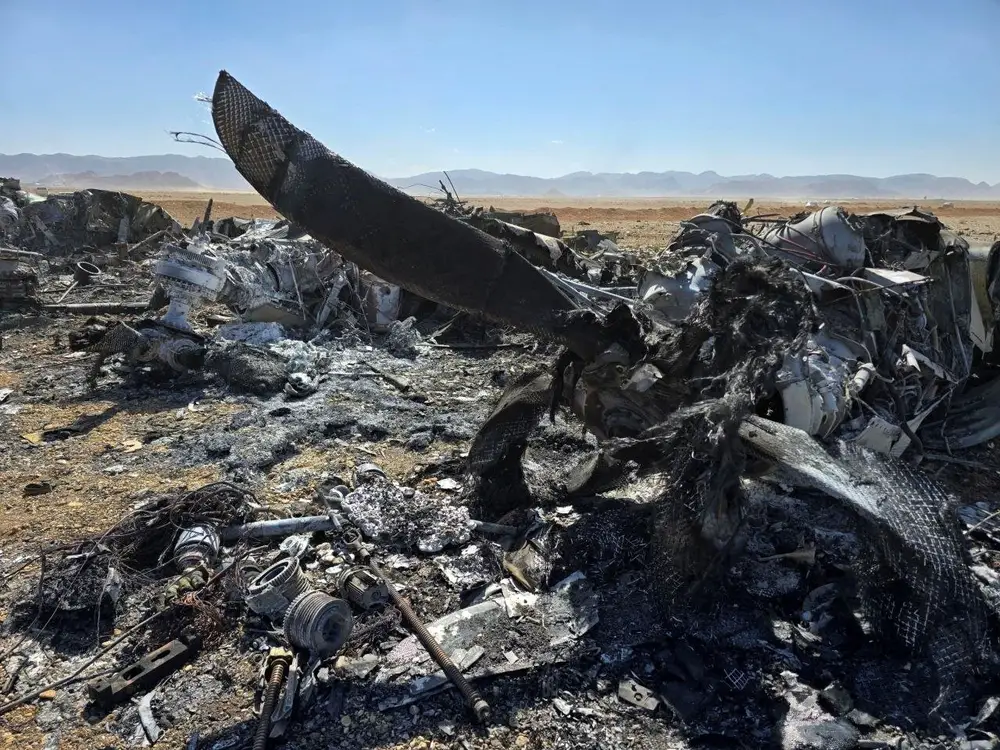
The Iranian government, in turn, reacted with a dual strategy: military and symbolic. Official bodies and state media published images of wreckage that they attribute to downed American aircraft — including, according to Tehran, equipment involved in the rescue operation. Although some of this material is treated with caution by Western analysts, the gesture reinforces the narrative of resistance and projects the idea that Iran has managed to impose real costs on US forces.
Trump threatens press freedom
The most serious point of the press conference, however, was not military, but political. Angered by reports that revealed difficulties in rescuing the second crew member — who remained isolated in Iranian territory for hours — Trump directly threatened the press. “Let’s go to the media company that published this and say [que é] national security. Hand over the source or go to jail” — he declared.
The speech provoked an immediate reaction from press freedom experts, who classified the threat as a frontal attack on source secrecy and democratic principles.
Meanwhile, Tehran toughened its speech. Iranian authorities have rejected proposals for a temporary ceasefire and warned of a “devastating” response if the US advances on the country’s strategic infrastructure. The Iranian Parliament classified American threats as potential war crimes, and the country’s mission to the UN accused Washington of seeking an “endless conflict”.
Trump threatens civilian targets over opening Strait of Hormuz
The center of the dispute remains the Strait of Hormuz, through which about a fifth of the world’s oil passes. Trump reiterated the ultimatum for the sea route to be reopened under control favorable to US interests, threatening to “eliminate Iranian bridges and plants” if this does not happen. In response, Iran conditions any opening to concrete guarantees and compensation, in addition to reaffirming its sovereignty over the region.
The result is a dangerous impasse: negotiations exist, but do not produce convergence; the war intensifies, and political discourse becomes radicalized. Between Washington’s propaganda of victory and Tehran’s demonstrations of force, the concrete fact is that the conflict is advancing — and, with it, the risk of an even wider escalation in the Middle East and the worsening of a global economic crisis grows.
Source: vermelho.org.br