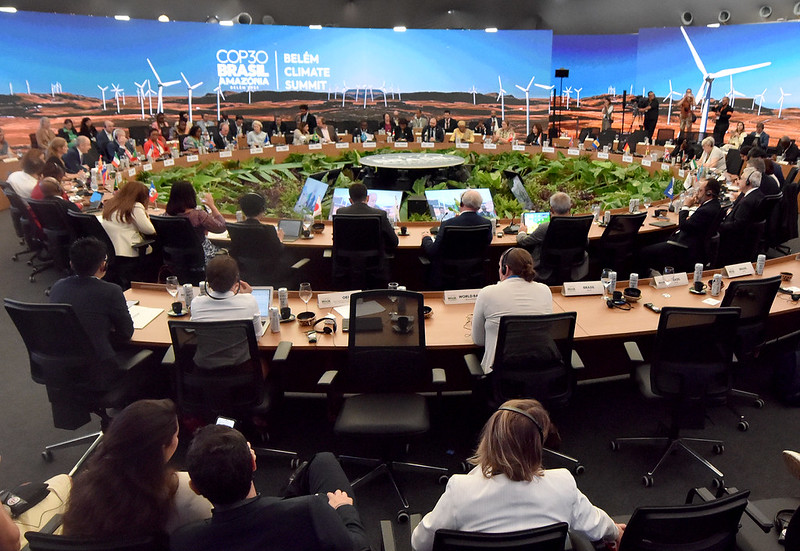
A decline in funding for developing countries, pressure against science and the climate change agenda marked the preparatory meeting for the 31st United Nations Climate Change Conference (COP 31), which ended last week in Bonn, Germany.
The 64th session of the Subsidiary Bodies (SB64) of the Climate Convention (UNFCCC) brought together 194 countries, plus the European Union, without the predictable presence of the United States. The meeting ended with a lack of consensus on the main proposals for alternatives and mitigations to climate change. The end of the meeting caused “disappointment” among several environmentalists, points out the article “At the Bonn conference, even the past is unpredictable”, written by the coordinator of International Policy at the Climate Observatory, Claudio Angelo, and climate change specialist Stela Herschmann.
“The most common word heard among the delegates who remained in Bonn for the closing was ‘disappointment’. Some expressed a lack of confidence in the multilateral process. No one took the blame for anything,” the experts write.
Negotiations on climate financing for mitigation, adaptation and synergies were blocked during the debates and postponed, by consensus, to COP31, which takes place in Türkiye at the end of the year.
Last year, in Belém, the Mutirão Decision, a document approved at the end of COP30, established a work program to try to meet the demand of poor countries for public financing to combat the climate crisis, but this official agenda disappeared at last week’s meeting, leaving only a task force to continue the discussions.
“The debate regarding the composition of the task force that will refine the 59 indicators approved in Belém shows the complexity of the negotiation process, marked by divergences of views between countries on this point and on financing for adaptation, which led to a lack of consensus, postponing the negotiations to COP31, in Turkey. Financing and support for developing countries are a central debate for the climate agenda and for the implementation of adaptive measures”, said Flávia Martinelli, climate change specialist at WWF-Brazil.
Another sensitive point were measures that could delay the updating of data on the impacts of climate change, which will be available in the seventh version (AR7) of the IPCC (UN Intergovernmental Panel on Climate Change), scheduled for 2028.
China and India, members of the G77, have been working to postpone the publication of the AR7, due to their own interests. In March, China announced, in the preliminary version of its 15th Five-Year Plan, a change in its target for reducing carbon emissions in the country to 17% by 2030. For scientists, to fulfill the Paris Agreement commitment, the Asian country would need to aim for 23%.
In the same month, India presented, after a year of delay, two of the four targets for 2030 as part of the update of its Nationally Determined Contribution (NDC): reducing the intensity of its emissions by 45% below 2005 levels by 2030 and increasing the share of non-fossil energy in the energy mix to 50% by 2030.
According to Climate Action Tracker, a scientific project that monitors climate actions based on the Paris Agreement, “both targets are more ambitious than the original proposals”, “but neither of them will result in real emissions reductions”.
Saudi Arabia, whose economy depends on oil and gas exports, opposed the Bonn resolutions expressing concern about El Niño, in addition to resistance to updating the IPCC.
The attempt to neglect science was met with a reaction from some countries, such as the European Union and the so-called Least Developed Countries (LDCs), which represent 44 countries considered to have the lowest income. The group came together to say that “science is non-negotiable”.
“There are powerful interests desperate to protect their wealth and influence,” said Sivendra Michael, head of the delegation from Fiji, an island country threatened by rising sea levels due to global warming.
Path map
Discussed at the beginning of the year in Colombia, one of the few advances of the meeting was the update of the effort to write a roadmap to end the use of fossil fuels in the world. In total, 115 countries and 247 non-state actors sent contributions to the document, which the president of COP30, André Corrêa do Lago, who is responsible for systematizing the data, considered “above expectations”. The final document should be launched in Belém, shortly before the start of COP 30.
Source: www.brasildefato.com.br