Iran’s government has rejected US President Donald Trump’s decision to take control of the Strait of Hormuz and levy a tax on vessels using the waterway. Tehran said it will not allow interference in the administration of the crossing and announced a new series of attacks on US military installations in the region in response to US bombings.
Iranian Foreign Minister Seyed Abbas Araghchi responded to Trump’s statements in a post on the social network X. “Iran has always been the guardian of the Strait and will remain so forever. 20% is obviously a very high value. We will be fair,” he wrote.
POTUS is absolutely right. Whoever provides secure and safe passage of commercial vessels through the Strait of Hormuz should be compensated for this service.
Iran has always been the GUARDIAN of the Strait and will remain so FOREVER.
20% is of course too much. We will be fair
— Seyed Abbas Araghchi (@araghchi) July 13, 2026
Earlier, Trump had announced that the United States will once again block Iranian ships or ships bound for Iranian ports and that they will control security in the Strait of Hormuz. According to Donald Trump, Washington will charge a fee equivalent to 20% of the value of the cargo transported as a form of compensation for the costs of the operation. The United States Army informed that the measure will come into effect at 8pm this Tuesday (14).
The spokesman for the Central General Headquarters Khatam al-Anbiya, Ebrahim Zolfaghari, also stated, on Monday (13), that Iran will never allow the United States to interfere in the management of the Strait of Hormuz.
“The adventurism and recurring provocations of the US by interfering in the management of the Strait of Hormuz have seriously endangered regional security, international trade and the passage of oil tankers and commercial ships,” he said in a statement.
Zolfaghari also declared that the Iranian Armed Forces will respond “firmly” to any US military action outside routes determined by Iran and without authorization from Iranian military authorities. The spokesperson also warned governments in the region that any logistical support to US forces will be considered an act of war against Iran’s sovereignty and national security. “If the war spreads across the region, the flames of conflict will engulf all countries in the region,” he said.
While the Iranian government toughened its speech, the United States Central Command announced the start of a third consecutive night of bombings against Iran. “We are going to hit them hard tonight, and we are going to hit them hard tomorrow”, he declared shortly before the offensive, at the White House. Despite the military escalation, he declared that an agreement between Washington and Tehran remains “possible”.
According to the Iranian agency IRNA, four explosions were recorded near Bandar Abbas, a port city located on the Strait of Hormuz. Later, the agency also reported explosions on the islands of Kish and Qeshm. The US said it had used unmanned maritime drones for the first time in an offensive against an Iranian naval base. Other attacks targeted the country’s ammunition depots and defense systems.
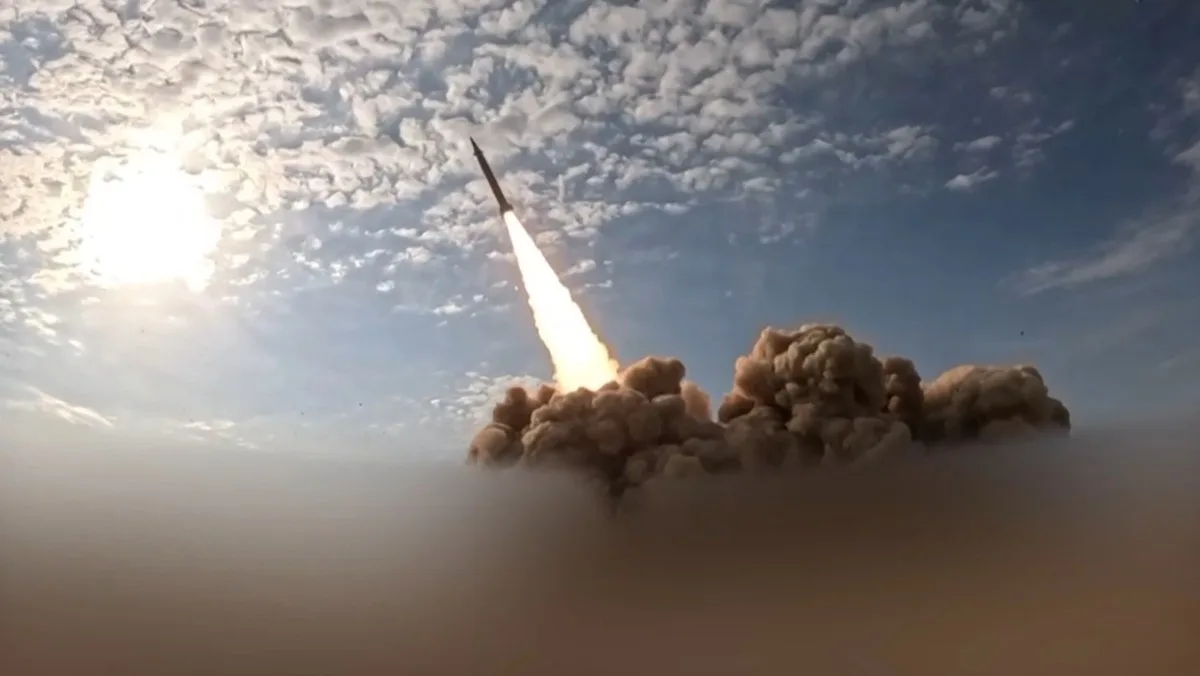
In response, the Islamic Revolutionary Guard Corps (IRGC) announced the start of the second phase of Operation Nasr-2. According to the IRGC, ballistic missiles hit installations and positions used by US forces at an air base located in Jordan. According to the text, the site had been used on the first day of the war that began on February 28 to launch an operation that killed 168 Iranian students and teachers in the city of Minab.
The IRGC stated that Iran does not maintain hostility against the people of Jordan and declared that the withdrawal of US military bases from the country would help protect the Palestinian population and restore regional security.
In another statement, the IRGC said that weapons depots, a satellite communications center and US military accommodation in Bahrain were also hit on Monday. According to the note, the Revolutionary Guard Navy launched missiles and drones against the Juffair naval base after American forces bombed positions on the southern coast of Iran.
The Revolutionary Guard further stated that it destroyed a Patriot radar, an air traffic control radar, and a C-RAM early warning system belonging to the United States Navy’s Fifth Fleet. According to the statement, the attacks also set fire to fuel tanks, completely destroyed a control and monitoring center for unmanned vessels and caused other damage to US military infrastructure.
Recently, Trump stated that the ceasefire is “over” and the White House confirmed that the president officially notified Congress about the resumption of conflict, according to the agency Reuters. The ceasefire signed after almost 40 days of war came into force at the beginning of April and was ratified on June 17th through a protocol of understanding.
Last week, Iranian Foreign Ministry spokesman Esmaeil Baqaei said the memorandum of understanding reached in June was “in crisis.” Despite this, Baqaei had reported that Tehran continued to hold talks with mediators from Qatar, Pakistan and Oman to try to avoid an even greater escalation.
Source: www.brasildefato.com.br