Published 02/04/2026 12:00 | Edited 04/02/2026 12:07
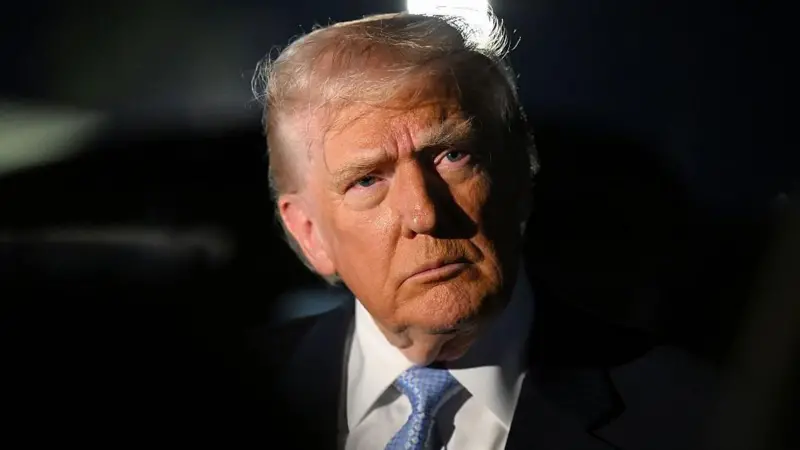
Donald Trump stated, in a speech at the White House this Wednesday (1), that the United States achieved a quick, decisive and overwhelming victory against Iran. According to the Republican, the war would be “almost concluded”, accompanied by threats to destroy Tehran’s energy infrastructure and “return the country to the Stone Age” if there is no immediate capitulation. Reality, however, tells another story that the Republican’s arrogance cannot erase: the conflict is prolonging, the energy market is shaking and Iran shows no sign of surrender.
Trump’s speech is less a war report and more an effort at political engineering to convince American public opinion that the military adventure was successful. While the president claims that Iran is “decimated” and that the Strait of Hormuz is unnecessary for the USA, global economic data reveals a rise in the price of oil and gasoline reaching the mark of 4 dollars per gallon at American pumps. On the ground, Iranian and allied actions remain continuous, maintaining navigation restrictions on strategic routes. On North American soil, Donald Trump’s decisions face waves of demonstrations in every state of the country, with millions of people on the streets with the slogan No Kings.
The summary of the presidential narrative maintains that the Iranian Navy has “evaporated” and that the missile and drone industry has been dismantled. Trump uses this supposed dominance to justify pressure for an agreement, even alleging that Tehran manipulates the energy market to inflate prices in the US. If this description were true to reality, the conflict would tend towards Iran’s surrender or rapid de-escalation. What we see, however, is the opposite.
Unlike the “short-term investment” promised by the White House, the world economy is facing a structural shock. The Strait of Hormuz, through which around 20% of the world’s oil and gas flows, is at high risk, reducing flow by 11 million barrels per day. Shortly after Trump’s speech, Brent oil soared between 5% and 6%, while the IMF and World Bank warn of asymmetric global impacts. The “cheap victory” thesis collapses in the face of the drop in consumer confidence and international stock indices.
Resistance and stalemate in the theater of war
Since February 28, the conflict has claimed more than 5,000 deaths on fronts covering Lebanon, the Gulf, Israel, Syria and Iraq. Groups such as Hezbollah and Iraqi militias reinforce the regionalization of the conflict, proving that the regime has not been deprived of its ability to respond. Mediators, such as the Pakistani government, report an absolute impasse in negotiations. Instead of a collapsing Iran, what we see in the theater of war is a nation-state in resistance, with the capacity to continue the confrontation indefinitely. Iranian rhetoric directly dismantles Trump’s attempt to turn the country into a defeated “ghost.”
In a letter to the American people, President Masoud Pezeshkian stated that war is a response to aggression and not to ordinary citizens. Elias Hazrati, presidential spokesman, classified Trump’s speech as “insane”, guaranteeing that “Iran administers the Strait of Hormuz with force”. On the military flank, spokesman Ebrahim Zolfaqari, from the Khatam al-Anbiya summit, was adamant: the war will only end with the “permanent repentance and surrender of the enemies”, demanding a guaranteed ceasefire before any operational pause.
Diplomatic isolation and fallacies
Trump’s fallacious speech finds resistance even among traditional allies. The European Union rejects the version of a decimated Iran, and European Defense authorities consider any NATO operation in the Strait of Hormuz to be “illegal”. Internally, Democrats criticize the lack of clear criteria for victory and the absence of a withdrawal plan. Trump is not describing a reality; is constructing a political fiction to keep the war going under the label of “victory”. The narrative about the supposed victory is not just dissociated from the situation: it is a way of shielding a very expensive military adventure, which poses a risk to the global economy and geopolitical stability, without offering any viable political solution.
Source: vermelho.org.br