Published 04/08/2026 11:13 | Edited 04/08/2026 11:25
As April 26 approaches, the date of the bombing of Gernika, in the Basque Country, in 1937, the city reaffirms its sad place as one of the greatest symbols of political violence in the 20th century. In 2026, the attack turns 89 years old and, in 2027, it will mark nine decades of an episode that does not just belong to the past. His memory remains current as a warning against the advancement of far-right projects in the contemporary world.
Before the Spanish Civil War, Gernika was a lively town, with strong economic activity, an active weekly market and intense community life. Inserted in the political tensions of Spain in the 1930s, it still maintained a routine organized around work, social coexistence and a deeply rooted Basque identity. This normality was brutally interrupted on the afternoon of Monday, April 26, 1937, when the city was the target of a systematic air attack carried out by the German Condor Legion and Italian aviation, under the command of Francoist forces.
Not by chance, it was a market day. Gernika welcomed residents from all over the region, who traveled to the city to carry out their shopping and commercial activities. The streets were more crowded than usual, with an increased presence of civilians coming from neighboring locations. The choice of date reveals the degree of calculation involved in the operation and reinforces the deliberate nature of the attack against the population.
The bombing lasted more than three hours and followed a logic that would mark contemporary history. It was not just about destroying physical structures, but about deliberately targeting the civilian population. More than 31 tons of explosive and incendiary bombs were dropped in a planned phased operation. First came explosive bombs, responsible for breaching buildings and opening the way to destruction. Then, incendiary bombs expanded the range of the fire, creating a scenario of continuous devastation. Finally, planes flew low over the city, machine-gunning civilians who were trying to escape, which shows the direct intention of turning the population into targets.
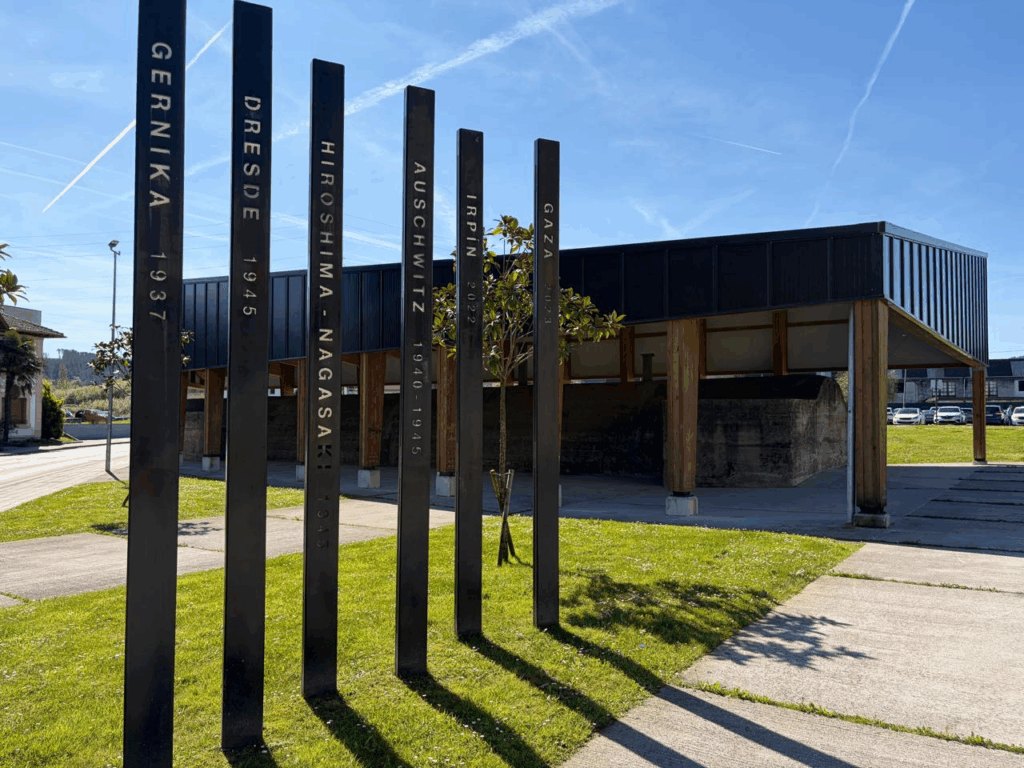
The scale of the attack is also revealed in what was preserved. Strategic structures, such as the Astra weapons factory, the Casa de Juntas and the railway, were not affected. This selectivity demonstrates that it was not a conventional military operation, but an action aimed at the destruction of the urban fabric and the psychological terror of the population. Around 85 percent of the city was destroyed and the urban center was virtually leveled on a scale that shocked the world at the time.
The violence did not end with the explosions. It was accompanied by a disinformation strategy. The day after the attack, the Franco regime denied the bombing and blamed the destruction on the Republicans themselves. The lie was not a secondary element, but a structuring part of the operation. Physically destroying the city and, at the same time, trying to erase the truth about what happened was part of the same logic of power.
What happened in Gernika represented a milestone in the transformation of modern warfare, consolidating the use of terror as a deliberate instrument against civilian populations. What was configured as an experiment throughout the Spanish civil war would, in the following decades, become a recurring method in different conflicts around the world.
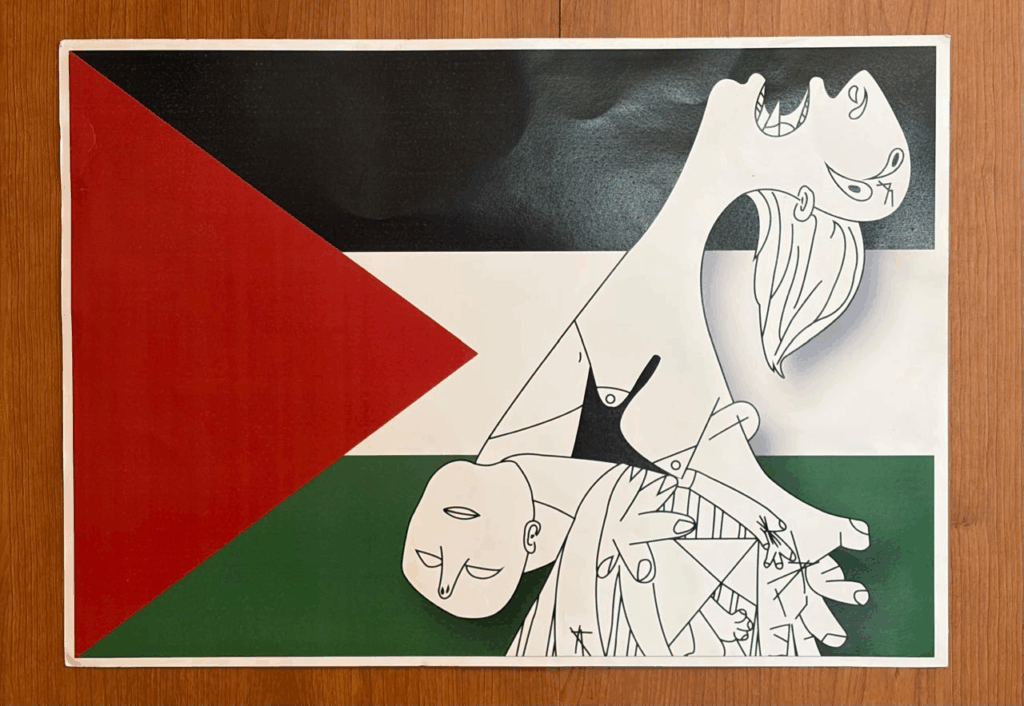
This historical continuity manifests itself clearly in the present. The devastation observed in Gaza, marked by bombings over densely populated areas, destruction of infrastructure and massive deaths of civilians, reveals the permanence of this logic. As in Gernika, violence is not limited to the military field, but is directed directly at the population, producing fear, forced displacement and the collapse of living conditions.
Among the most dramatic elements of this historical repetition is the condition of children. In Gernika, many died during the bombings, others were buried, injured or separated from their families. They were children who were on the streets, in the market, playing ball, in houses or makeshift shelters when the city was attacked. In Gaza, decades later, the image is repeated in a brutal way. Children hit by bombings, buried under rubble, deprived of access to water, food, health and basic security. The comparison concretely reveals what it means to transform terror into a method of war.
This logic is also expanded in the regional scenario, reaching other territories and escalating conflicts. In Lebanon, bombings on densely populated neighborhoods and civilian areas demonstrate the same dynamics of use of force against populations, increasing the humanitarian impact and deepening regional instability. The war involving Iran, with attacks on strategic infrastructure and large-scale military actions, demonstrates how the conflict expands and intensifies. At the same time, policies of economic siege and international pressure against countries like Cuba reveal other forms of aggression, based on economic asphyxiation and attempted political destabilization.
The similarity is not restricted to war practices. It is also expressed in the way these episodes are narrated and denied. If the Francoist regime tried to erase the bombing of Gernika, Benjamin Netanyahu’s government has sought to relativize or justify the scale of the destruction in Gaza, while military actions and sanctions are presented as inevitable or necessary, even given their humanitarian impacts.
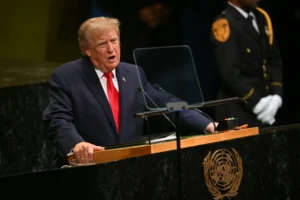
On the international scene, this logic gains political strength with the reorganization of far-right projects on a global scale. The figure of Donald Trump summarizes this movement in its most aggressive form, structuring its action around disinformation, attacking democratic institutions and building permanent enemies. This is a project that naturalizes authoritarianism, legitimizes violence and contributes to an international environment of instability and democratic regression.
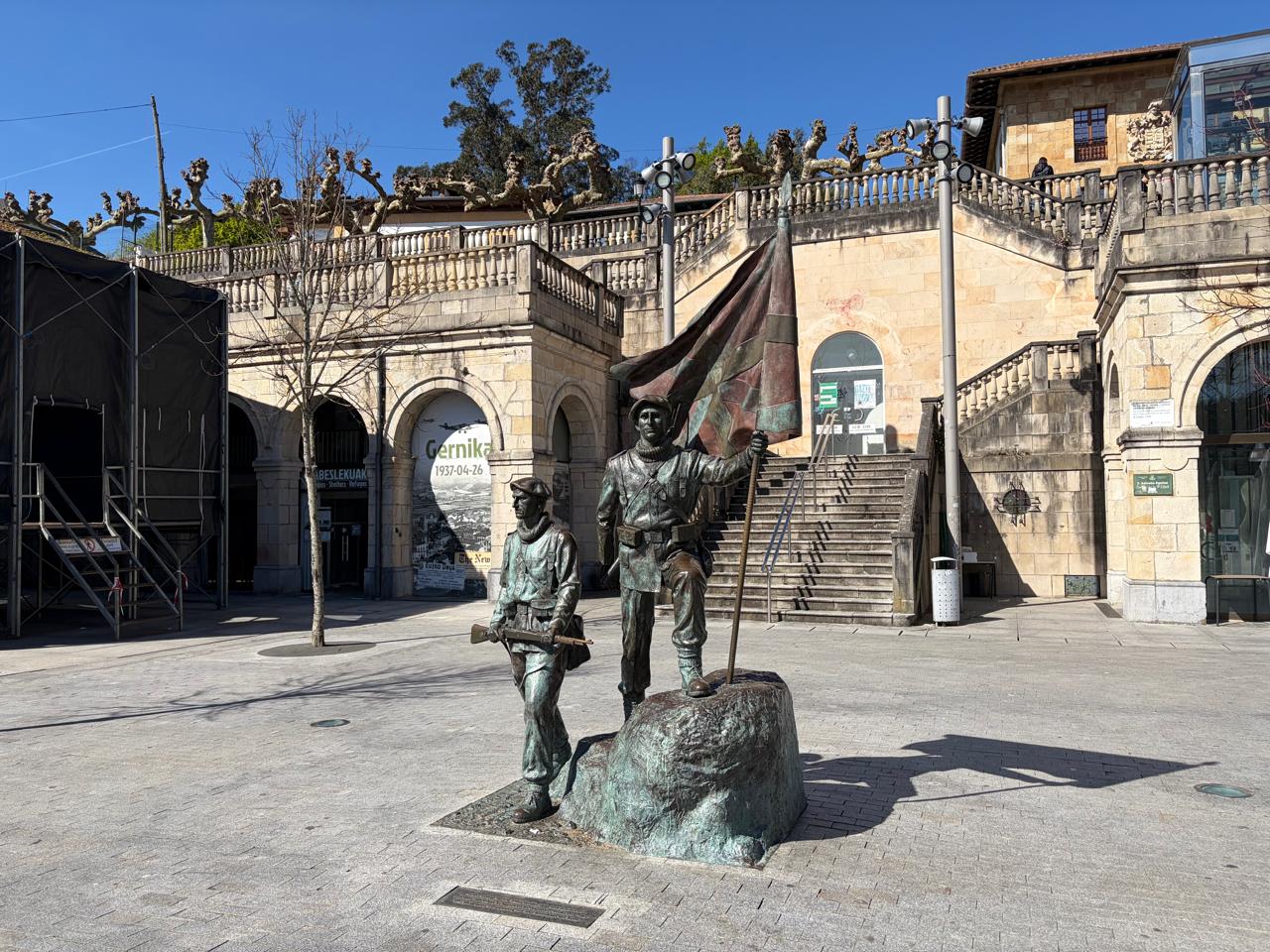
Today’s Gernika does not physically preserve the city of 1937. It was almost completely destroyed and later rebuilt, with few original buildings remaining. Still, the memory was rigorously preserved. The route through the bombing sites and the Peace Museum organizes not only the facts, but the political meaning of that episode. The city rebuilt itself without erasing its history, transforming memory into an instrument of reflection and warning.
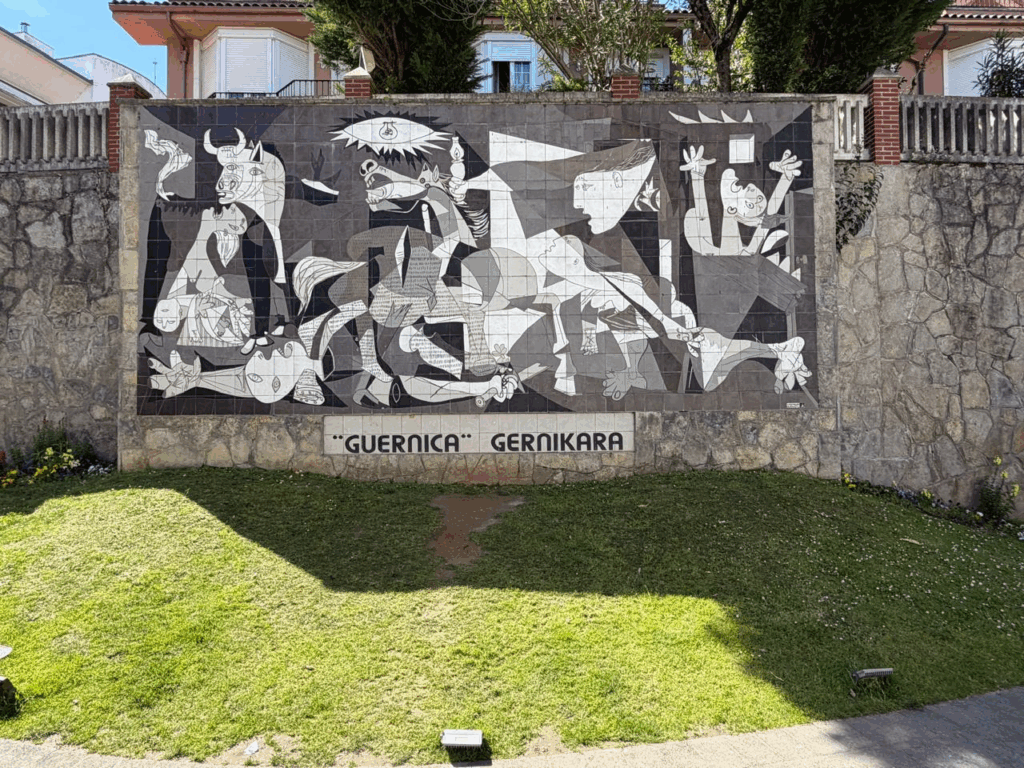
In the city itself, a reproduction of Pablo Picasso’s Guernica panel occupies a central place in this construction of memory. More than a work of art, it is a political act. There, the representation of pain, destruction and civil suffering asserts itself as a permanent denunciation of barbarism and a refusal to be forgotten.
This dimension makes Gernika a mirror of the present. It highlights that fascism should not only be understood as a historical phenomenon, but as a political logic that can reappear in new forms, maintaining central elements such as violence against civilians, the manipulation of truth and the use of fear as an instrument of power.
This logic is present in the contemporary international scenario and also in Brazil. Bolsonarism expresses an updated form of this authoritarian matrix, combining disinformation, attacks on democratic institutions and the naturalization of political violence. Jair Bolsonaro’s electoral defeat did not end this process. On the contrary, the movement remains active, organized and capable of mobilization.
Gernika’s story demonstrates that this kind of strength cannot be underestimated. Authoritarian processes gradually consolidate, advancing when they find space and strengthening in the absence of confrontation. The trivialization of violence and the normalization of lies are stages in this process.
Given this, the defense of democracy requires more than vigilance. It requires concrete action. Confronting the extreme right needs to occur in multiple dimensions, articulating institutional political dispute, social mobilization, cultural production and affirmation of democratic values.
On the eve of another April 26th, Gernika’s memory imposes itself not only as a memory, but as a historical warning. What happened in 1937 demonstrates how far political projects can go when terror becomes an instrument of power.
In Brazil, this warning takes immediate shape. Next October, the country will go through a new electoral process that will be decisive for the future of democracy. It will be essential to defeat Bolsonarism at the polls, guaranteeing the re-election of the Lula government and the formation of a broad bench of federal deputies committed to defending democratic institutions and guaranteeing governability.
Defeating the extreme right in Brazil and around the world is not just a political position. It is a historical necessity that is imposed so that we are not condemned to live new Gernikas.
Source: vermelho.org.br