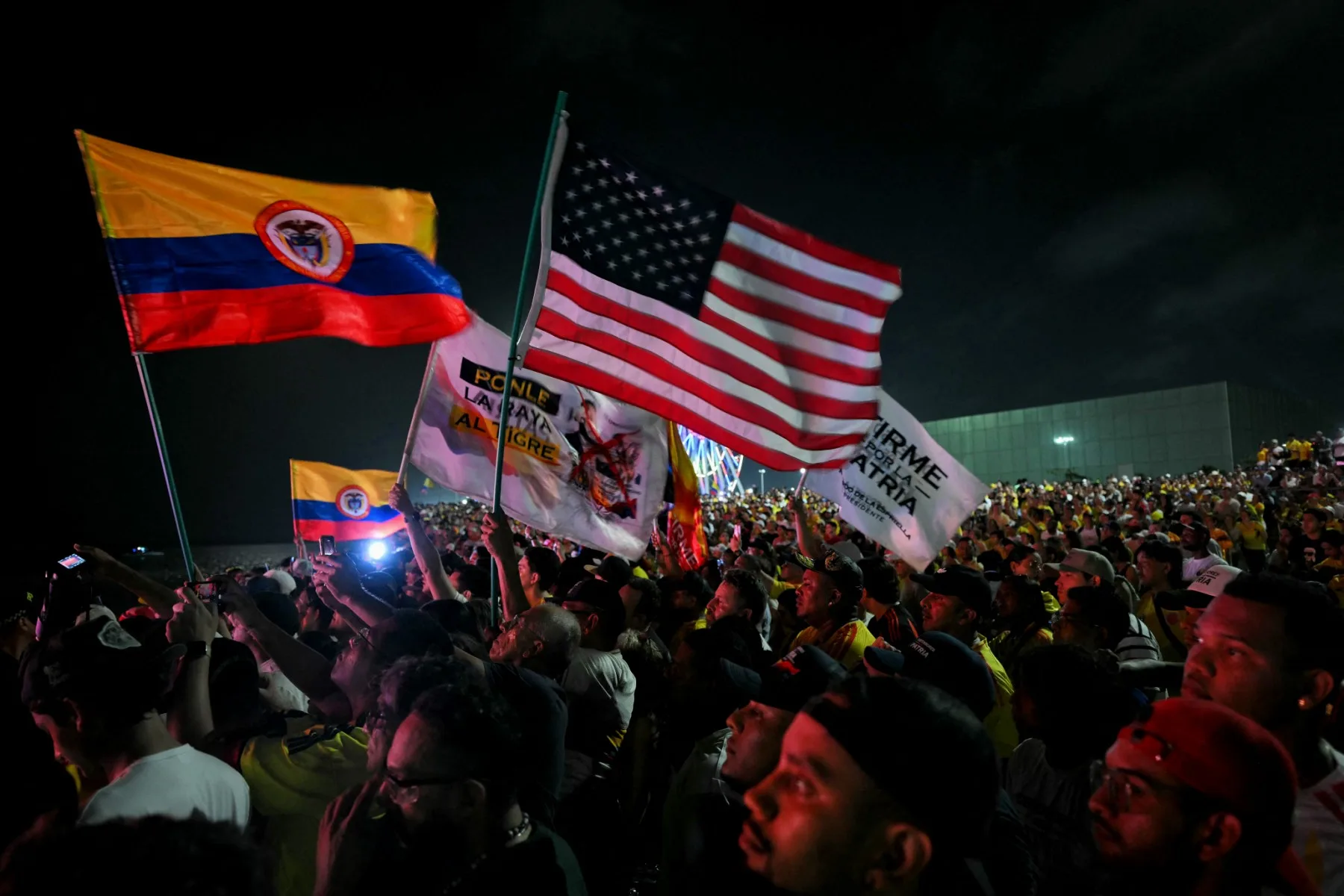
The future Colombian government, led by the ultra-rightist Abelardo de la Espriella, announced this Friday (10) that it will close its embassies in Cuba and Nicaragua. The information was confirmed by the designated chancellor, Omar Bula Escobar, in statements released by the broadcasters RCN News e Caracol News.
According to Bula Escobar, the decision is part of a broader policy of “reengineering” the Ministry of Foreign Affairs and “reordering” Colombian foreign policy in light of the new government, which will take over the House of Nariño on August 7.
This is a significant change in Bogotá’s foreign policy, especially in relation to Cuba, a historically relevant actor in Colombian politics. During the governments of right-wing Juan Manuel Santos and progressive Gustavo Petro, the island became the main setting and guarantor of peace negotiations between the Colombian State and guerrilla groups such as the FARC and the ELN. The closure of the embassy, therefore, ends the mediating role that Cuba played in these processes.
“We are not going to legitimize regimes by maintaining an embassy,” said Bula when referring to the governments of Cuba and Nicaragua. The stance of the future Colombian government is directly aligned with the discourse of far-right governments in the region, such as those of Javier Milei, in Argentina, José Antonio Kast, in Chile, Nayib Bukele, in El Salvador, and José Raúl Mulino, in Panama.
The announcement of the closure of the embassy in Havana comes in a context of escalating hostilities adopted by the United States since the end of January — the most intense in decades —, marked by an energy blockade that threatens any country that sells or supplies oil to the island, in addition to the expansion of so-called “secondary sanctions”.
In contrast to the diplomatic rupture with Havana and Managua, the new Colombian government anticipated that it would maintain a “constructive” relationship with Venezuela, a country with which Colombia shares an extensive and conflictual border.
“Relations with Venezuela are, above all, an opportunity, a unique opportunity for two countries very rich in natural resources and human talent”, stated the future Colombian chancellor when commenting on relations with the government of interim president Delcy Rodríguez.
Bull highlighted that this relationship will have as its main axes the economic and security areas. He classified possible ties with Caracas as “constructive”, with the aim of “generating wealth for both countries” and “putting an end to border problems”. He also highlighted the fight against organized crime as a central part of the bilateral agenda and explained that it would be an effort that would also involve Ecuador. Furthermore, it linked the regional strategy to a close alliance with the United States.
“We are going to be allies in this sense, and our alliance with the United States guarantees, in a certain way, that we are integrated into this process,” he stated. Furthermore, he indicated that this approach also seeks to accompany a “transition” in the neighboring country.
“People need to be clear that the presence of 21st century socialism in Venezuela and the red wave that existed in the past have deep roots. Changes cannot be made overnight,” he declared.
In line with Washington’s speech, Omar Bula Escobar stated that “the important thing is to decide to promote change. We are very determined to make this change, and people need to have a little more patience”, in relation to the neighboring country. And he explained that the new administration’s vision includes a “three-step” scheme for Venezuela: “stabilization, recovery and transition”.
Source: www.brasildefato.com.br