Published 05/31/2026 11:34
Colombians will go to the polls this Sunday (31) to choose their next president of the Republic. In addition to maintaining the left in central power to continue a popular project advanced domestically, the dispute has strategic relevance for strengthening Latin American sovereignty in the face of the extreme right’s offensive.
With 53 million inhabitants and 41.4 million voters, the country is the second most populous on the continent, behind only Brazil. In addition to deciding the new president and vice president, the country will also choose its senators and federal deputies. In total, 14 names are running for president, but the majority is betting on three of them.
Also read: Colombia: “Victory for sovereignty and democracy is a defeat for Trump”
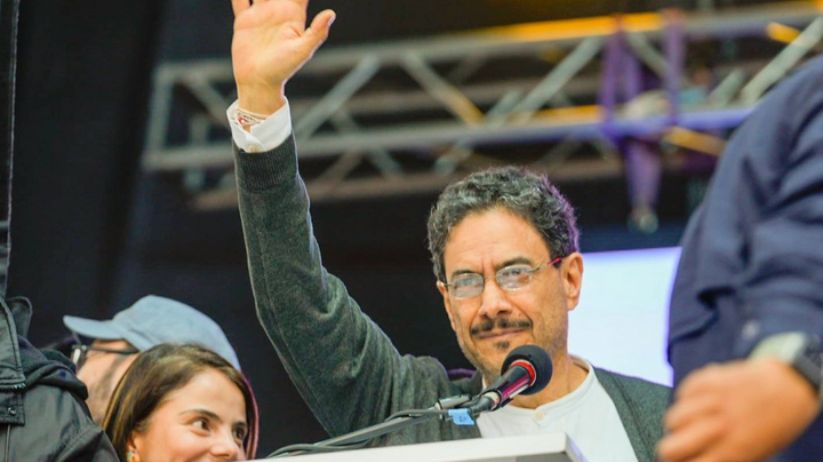
Ahead in voting intention polls is the philosopher and former senator Iván Cepeda, from the left-wing Historical Pact, who is running to succeed the current president, Gustavo Petro, one of Latin America’s main leaders in the resistance to imperialism. He has appeared with percentages between 35% and 44% in voting intention polls.
In an interview given on the eve of the dispute, Cepeda declared: “I represent a process of social transformation that, without a doubt, has done good for this country”. Furthermore, he reiterated his concern with combating poverty and inequalities, “because this will lead us to a series of national purposes that are fundamental: democracy, peace and prosperity”.
Another candidate is millionaire Abelardo da la Espriella, from the National Salvation Movement, who follows the style of Nayib Bukele, president of El Salvador, and is aligned with Donald Trump, from the USA, and Javier Milei, from Argentina. In addition to extremist ideas, he is of the media and popular type, just like his idols. Most polls indicate that it has around 25% of voting intentions.
This percentage sometimes appears for the third competitor, Paloma Valencia, from the traditional right. Candidate for the so-called Democratic Center, party of former president Álvaro Uribe, she declares herself to be his faithful follower and even suggested him for the country’s Ministry of Defense.
Also read: Election in Colombia tests continuity of the cycle started by Petro
Analysts indicate that the scenario is still open because there are around 11% undecided. The tendency, however, is for there to be a second round — scheduled for June 21st.
To the RFI agency, political scientist Paola Montilla, director of the School of Government and Public Policies at the Externado University of Colombia, declared that “these options represent diametrically opposed proposals, something that, historically, Colombia is not accustomed to. The country has always oscillated between traditional liberal options of the center, in which the ideological divisions between right and left were not identified by the candidates. Since 2022, with the arrival of Gustavo Petro, we have experienced a political reconfiguration, of alternation explicit ideology”.
With agencies
Source: vermelho.org.br