The Chinese government has published new guidelines that tighten the rules for the sale of off-plan properties and place the sale of ready-made units as a priority for the sector. The statement has been in force since last Friday (28) and is signed by the Ministries of Housing and Rural and Urban Development and Natural Resources, and by the National Administration of Financial Regulation.
From now on, companies that insist on advance sales will only be able to negotiate units after the main structure of the buildings has been completed. All resources disbursed by the buyer (down payment and financing) must be centralized in a linked and audited account at the bank that finances the work. In the previous system, financial institutions released real estate financing resources to construction companies even before the works were completed, and buyers were already paying installments for apartments still under construction.
According to the new criteria, these amounts will only be released after the final inspection is approved and there is proof that the water, electricity, gas and heating installations are in usable condition. If delivery does not occur within the stipulated period, the buyer may terminate the contract and demand a full refund of what he paid.
Priority for ready properties
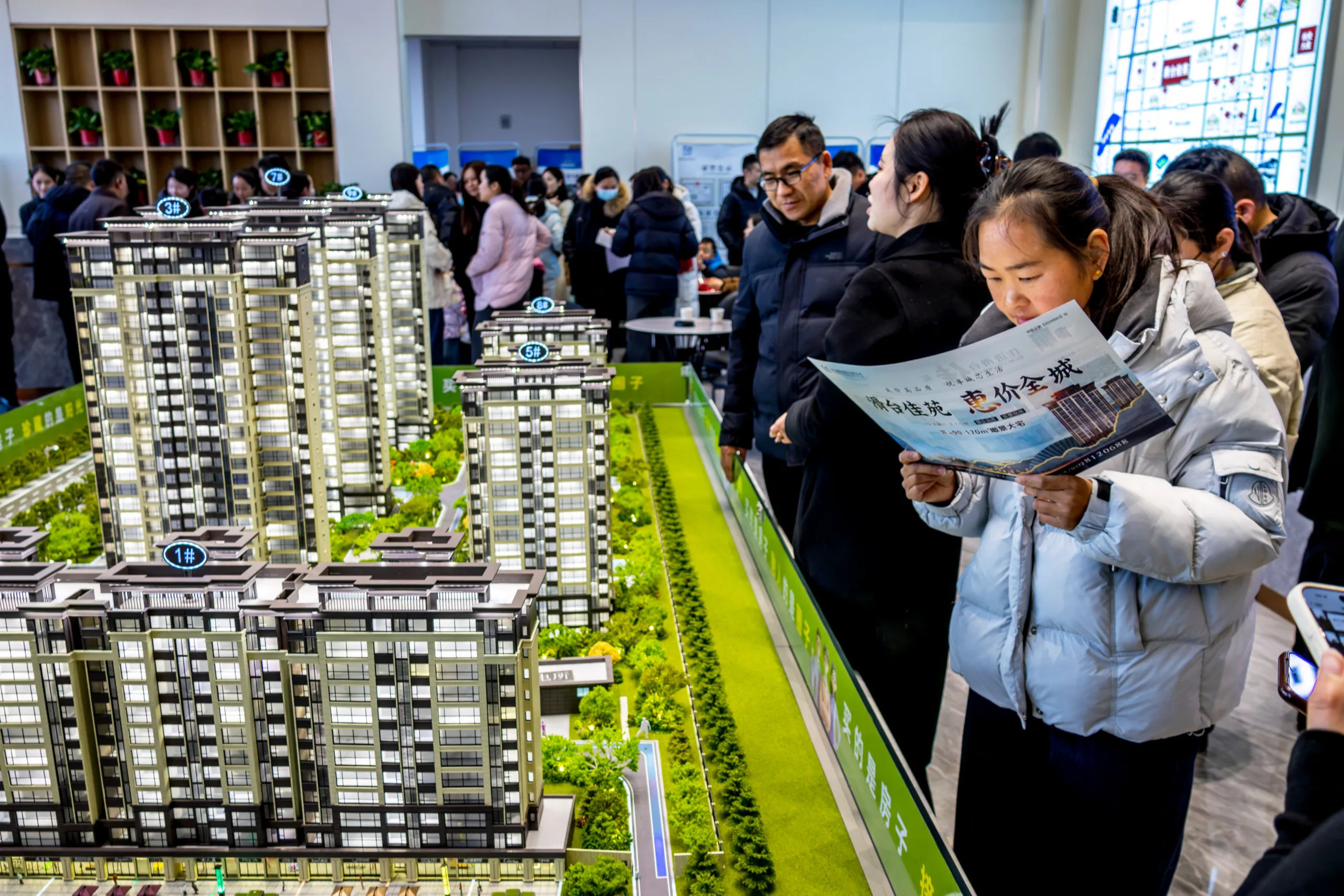
For areas recently auctioned and projects that have not yet obtained an urban planning license on the date the notice was published, the text advises that preference be given to the sale of units that have already been completed, a modality in which the buyer visits the product before signing any document. The document summarizes the idea in the expression “what you see is what you get”.
In these cases, as soon as they obtain the works license, developers can sign a contract with payment of a deposit, charging a reduced amount from the buyer as a guarantee of the deal. The notice also stipulates that the buyer must receive the title to the property upon handing over the keys.
Context of the reform
The pre-sale of properties as a legal modality was established in China in 1994, along the lines of the “paper” floor sales system in Hong Kong. In practice, developers could start selling only with the foundations excavated and 25% of the total investment made. Buyers’ resources, including bank financing, were transferred to construction companies before works progressed. As in the case of Evergrande, companies used revenue from one project to finance others, instead of finishing what had already been sold.
In 2020, the central government implemented the “three red lines” policy, which set maximum debt limits for developers and restricted access to new loans for those that exceeded them. The following year, large developers, unable to refinance their obligations without continuing to go into debt, defaulted and halted construction. Buyers continued to pay installments for properties whose work was at a standstill.
The new rules are part of the central government’s strategy to build a “new model of real estate development”, a goal that the statement says is in line with the guidelines of the Central Committee of the Communist Party of China (CPC) and the State Council.
Source: www.brasildefato.com.br