Published 05/06/2026 11:18 | Edited 05/07/2026 18:11
China activated its anti-blockade legal mechanism on Saturday (2) for the first time to prevent compliance with sanctions imposed by the United States on five Chinese refineries that trade Iranian oil.
The measure, announced by the Chinese Ministry of Commerce (MOFCOM), prohibits companies and financial institutions in the country from recognizing or executing US punishments and deepens the confrontation between Beijing and Washington over unilateral sanctions and their extraterritorial application.
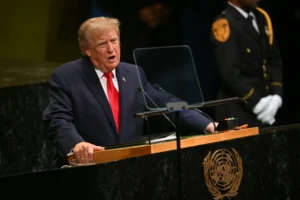
The decision was announced weeks before Donald Trump’s scheduled visit to Beijing, scheduled for May 14 and 15.
The Chinese blockade affects five refineries included by the US on the US Treasury’s sanctions list, including Hengli Petrochemical and independent private refineries concentrated in Shandong province, responsible for around a quarter of China’s refining capacity.
Washington accuses these companies of maintaining oil trade with Iran, the target of the “maximum pressure” policy resumed by Trump.
In practice, the order issued by MOFCOM determines that sanctions imposed based on executive orders 13902 and 13846 “shall not be recognized, executed or enforced” within Chinese territory.
- Executive Order 13846 was signed by Donald Trump in 2018, after the US exit from the nuclear agreement with Iran (JCPOA), reestablishing and expanding economic sanctions against Tehran;
- Executive Order 13902, signed in 2020, also by Trump, expanded punishments for strategic sectors of the Iranian economy, including oil, mining, construction and industry.
The measure also represents the first formal activation of the anti-blockade mechanism created by Beijing in 2021 to respond to the extraterritorial application of foreign laws.
The decision creates an impasse for Chinese banks and financial intermediaries. If they follow US demands to preserve access to the dollar financial system and the international SWIFT transfer system, these institutions may violate Chinese law.
On the other hand, if they obey Beijing’s order, they run the risk of suffering US punishment.
According to international press reports, the US Treasury has already sent communications to Chinese banks warning of the possibility of secondary sanctions if operations linked to Iranian resources are identified.
Punishments could include freezing assets under US jurisdiction and restrictions on international transactions.
The Chinese government claims that Washington’s measures violate international law and the basic norms of relations between States.
In a statement, the Ministry of Commerce declared that the order seeks to protect “China’s sovereignty, security and development interests”, reiterating Beijing’s opposition to unilateral sanctions without authorization from the UN Security Council.
Source: vermelho.org.br