Published 06/15/2026 15:33 | Edited 06/15/2026 18:37
A historic milestone in the global energy transition. In 2025, China reached an unprecedented inflection point: all growth in electricity demand in the country was fully met by renewable energy sources. This means that economic expansion and increased energy consumption occurred without any additional carbon footprint.
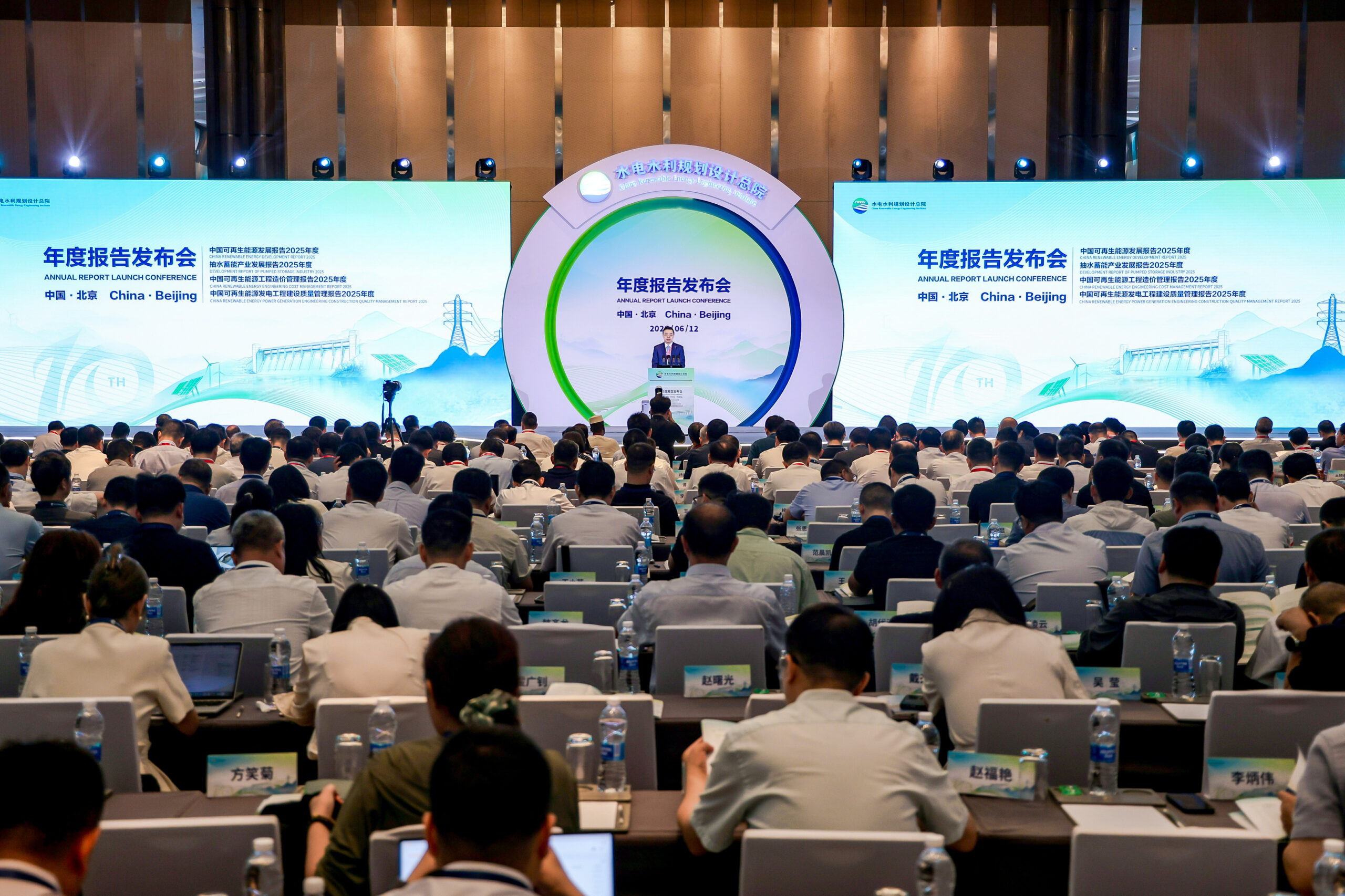
The data is the highlight of the “China Renewable Energy Development Report 2025”, released by the China Hydroelectric Engineering Consulting Group, which also projects an even greater leap for next year. The feat gains relevance because it occurs precisely at a time when the geopolitical dispute over green technologies, strategic minerals and industrial leadership in the 21st century is growing.
More than expanding the share of clean energy, Beijing demonstrates that a continental economy, with more than 1.4 billion inhabitants and one of the largest industrial parks on the planet, can already sustain its economic expansion without depending on the increase in fossil generation. With this, China achieved in 2025 a result that a few years ago seemed distant even to the most optimistic supporters of the energy transition.
Renewables become the majority in the electrical system
The report’s data shows a structural transformation.
The year 2025 was marked by a definitive reconfiguration of the Chinese energy matrix. Installed renewable energy capacity has grown exponentially, with a record 452 million kilowatts (kW) added in just 12 months. The total generating capacity from clean sources reached 2.337 billion kW, representing 60.1% of the country’s entire installed capacity.
The symbol of this transformation is the “triple surpassing” of the combination of wind and solar energy, which reached 1.842 billion kW. For the first time, the installed capacity of wind and solar surpassed thermal energy (coal and gas) and also the largest historical load on the Chinese electrical system.
In practice, the combined generation of wind and sun reached 2.3 trillion kWh, a volume greater than the electricity consumption of the primary (agricultural) and tertiary (services) sectors combined, effectively replacing the burning of coal. This is a historic change in a country whose industrialization was associated, for decades, with mineral coal.
Coal begins to lose space
Although coal continues to be an important component of China’s energy matrix, signs of change are becoming more evident.
Wind generation reached 1.13 trillion kilowatt-hours and solar reached 1.17 trillion. Together, they accounted for around 22% of all electricity produced in the country.
Meanwhile, thermal generation recorded its first drop in a decade, falling 0.7% compared to the previous year.
This is not yet the abandonment of coal, but a clear sign of decoupling between economic growth and the expansion of fossil sources.
The electricity market and the “duck curve”
The massive insertion of intermittent sources required a radical modernization of the Chinese electricity market. In 2025, spot market trading volume exceeded 6.6 trillion kWh, accounting for 64% of society’s entire consumption. The report highlights the formation of the classic “duck curve” in spot prices: with the abundance of solar energy, prices plummet at midday, at the peak of photovoltaic generation, and spike in the early evening, when the sun sets and residential demand increases.
This dynamic boosted the Green Certificates market. Trading in environmental assets exploded 108%, with 930 million certificates traded. The average price jumped from 2.12 to 5.57 yuan, reflecting greater corporate and social appreciation of the environmental value of clean energy.
To deal with intermittency, the country also aggressively expanded storage: the capacity of new energy storage systems reached 136 million kW, a more than 40-fold increase from the end of the 13th Five-Year Plan.
Increasingly consolidated global leadership
The report also shows China’s weight in the global energy transformation.
In 2025, the world added approximately 702 million kilowatts of new renewable capacity, equivalent to 84.7% of all global electrical capacity expansion. Of this total, 63.6% came from China.
In other words, almost two-thirds of all renewable expansion on the planet occurred in Chinese territory.
This helps explain why the country currently dominates strategic production chains linked to solar energy, batteries, electric vehicles and transmission equipment.
A lesson for the world — and for Brazil
China not only decarbonizes its own economy, but sets the pace of the global transition.
The pace must not slow down. The report projects that by 2026, China will add approximately 300 million kW in wind and solar energy alone (with 100 million kW in wind and 200 million kW in solar).
With the consolidation of the unified national electricity market and the establishment of a regular negotiation mechanism between the different areas of grid operation, Chinese renewable energy is poised to continue as the main driving force in building a green economy, proving that economic growth and climate sustainability can, in fact, go hand in hand.
The main conclusion of the report is that the energy transition is no longer just an environmental policy and has become a national development strategy.
China demonstrates that clean energy, state planning, industrial policy and technological innovation can go hand in hand. The country not only reduces emissions, but strengthens its economic competitiveness, expands its energy security and consolidates strategic positions in sectors that are decisive for the economy of the future.
For countries like Brazil, which have an abundance of natural resources, renewable potential and strategic reserves of critical minerals, the Chinese experience reinforces a central issue: the dispute of the 21st century will not just be about producing clean energy, but about dominating the industrial, technological and production chains that arise from it.
Source: vermelho.org.br