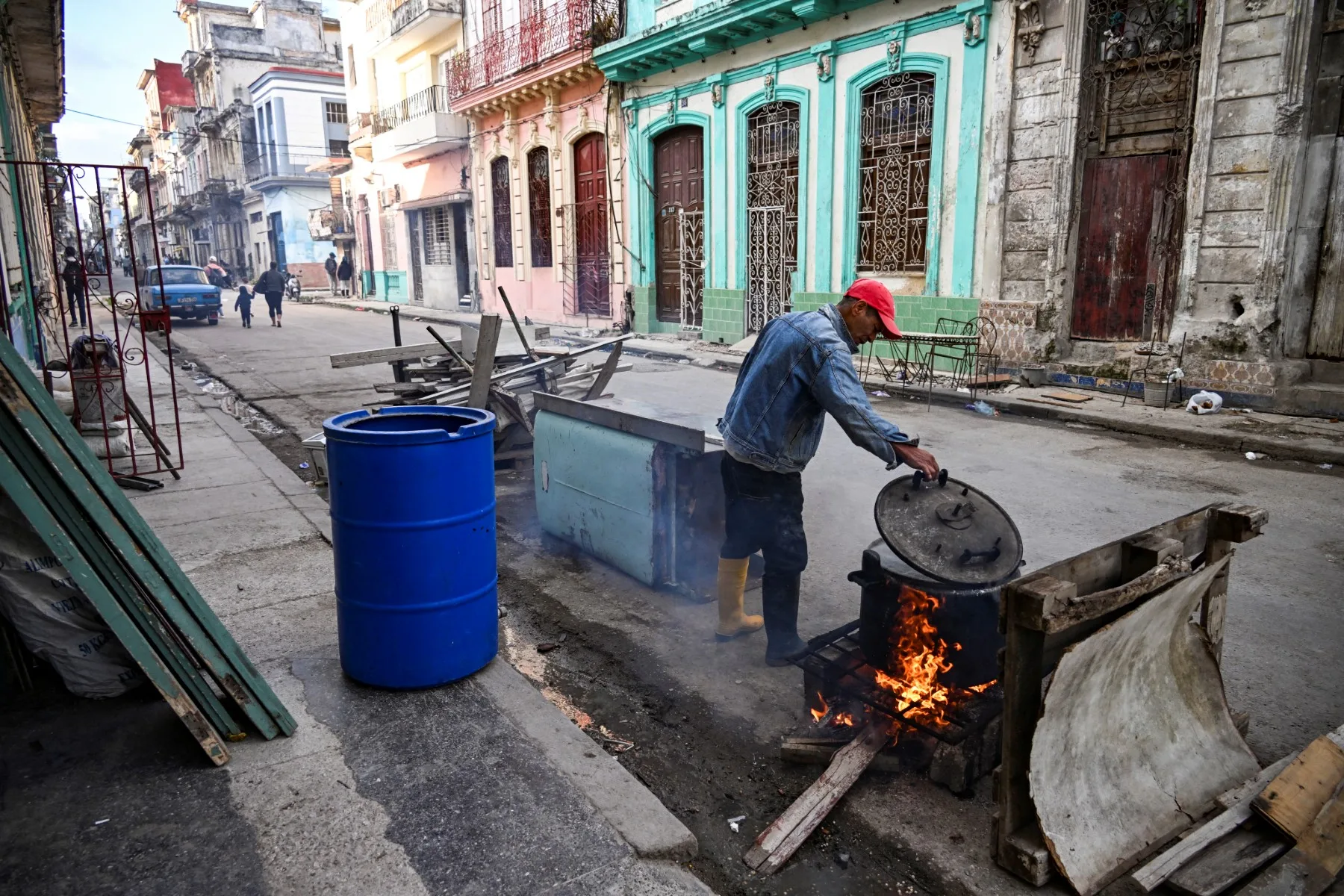
The Brazilian government began, this Monday (13), sending 48 tons of powdered milk in humanitarian aid to Cuba. The operation, confirmed through an official note, takes place to help combat the serious shortage situation experienced by the Caribbean island, which is dealing with severe structural challenges and the impact of sanctions imposed by the United States.
Coordinated by the Brazilian Cooperation Agency (ABC), of the Ministry of Foreign Affairs, the operation relies on food provided by the National Supply Company (Conab). The inputs will be transported on two Brazilian Air Force (FAB) flights to Santiago de Cuba.
Other donations, involving new foods and medicines, are still under evaluation by the Brazilian government. The island suffers from a shortage of basic necessities and limited access to international markets due to the economic blockade promoted by Washington, which has lasted more than six decades.
Economic context and reforms
The Cuban economy is undergoing a profound readjustment process through a package of 176 reforms that redefine the country’s economic structure to liberalize private capital and decentralize management. Recently, the government detailed a business reform that proposes a “high interrelationship” between the public and private sectors, granting greater operational autonomy to state-owned companies and eliminating bureaucratic restrictions for private companies.
In a recent interview with the Dominican program Corripio GroupPresident Miguel Díaz-Canel defended the transformations, but rejected the idea of an ideological shift. “We are not seeking a capitalist restoration of the country. We are seeking the improvement of socialist construction in the very adverse conditions in which we live today”, he argued.
This position is in line with statements made by the representative in an exclusive interview with Brazil in factin which he emphasized that national sovereignty is non-negotiable. “We are not a nation in dispute, we are not a colony, nor are we a possession for someone to appropriate us”, declared the president at the time.
Energy crisis and complaints at the UN
Cuba’s electrical infrastructure remains under extreme pressure. On Monday last week (6), the island faced a new widespread blackout after a total disconnection of its National Electrical Energy System, caused by severe fuel shortages. The Cuban government classifies Washington’s siege as a policy of “energy suffocation”, denouncing that the sanctions intimidate foreign suppliers and prevent the regular arrival of oil tankers.
Faced with this scenario, Cuban Foreign Minister Bruno Rodríguez Parrilla traveled to New York to formally present at the General Assembly of the United Nations (UN), on July 7, 2026, a complaint against the tightening of the energy blockade and the aggressions from the White House. The Cuban government accuses the US of committing a “crime against humanity in full execution” by imposing collective punishments that directly harm the living conditions of the civilian population on the island.
Internationalist solidarity
Even facing difficult internal difficulties, Cuba keeps its tradition of international solidarity alive. Following the emergency caused by the strong earthquakes that hit Venezuela on June 24, causing 164 confirmed deaths, the Cuban government sent two new rescue teams to collaborate in locating survivors. Furthermore, the Cuban medical team, which already operates in Venezuelan territory, was fully mobilized to provide emergency aid to victims in the affected areas.
Internally, Díaz-Canel’s administration reinforces that broad popular participation and social control will be decisive for the population to understand the need for reforms and help to enable the country’s economic resistance.
Source: www.brasildefato.com.br