The United States government announced this Thursday (17) a new escalation of the economic war it maintains against Cuba, with the imposition of new unilateral coercive measures — the so-called “sanctions”.
The new measures once again target the nickel mining sector and entities linked to the Cuban military-industrial complex. In total, they affect eight state-owned companies and three employees.
In an official statement, the United States Department of State once again justified the economic aggressions against Cuba and stated that the new measures seek to “boost the Trump administration’s comprehensive strategy to put an end to the Cuban regime’s malign activities, both in Cuba and throughout our hemisphere.”
Among the sanctioned entities are four state-owned companies linked to the nickel industry: the Nickel Engineering and Projects Company (CEPRONÍQUEL), the “Capitán Alberto Fernández Montes de Oca” Nickel Research Center (CEDINIQ), Pinares SA and the Computer, Communications and Electronics Technical Services Company (SERCONI).
Washington justified the measures against these companies by stating that nickel constitutes “a critical source of revenue for the Cuban government”.
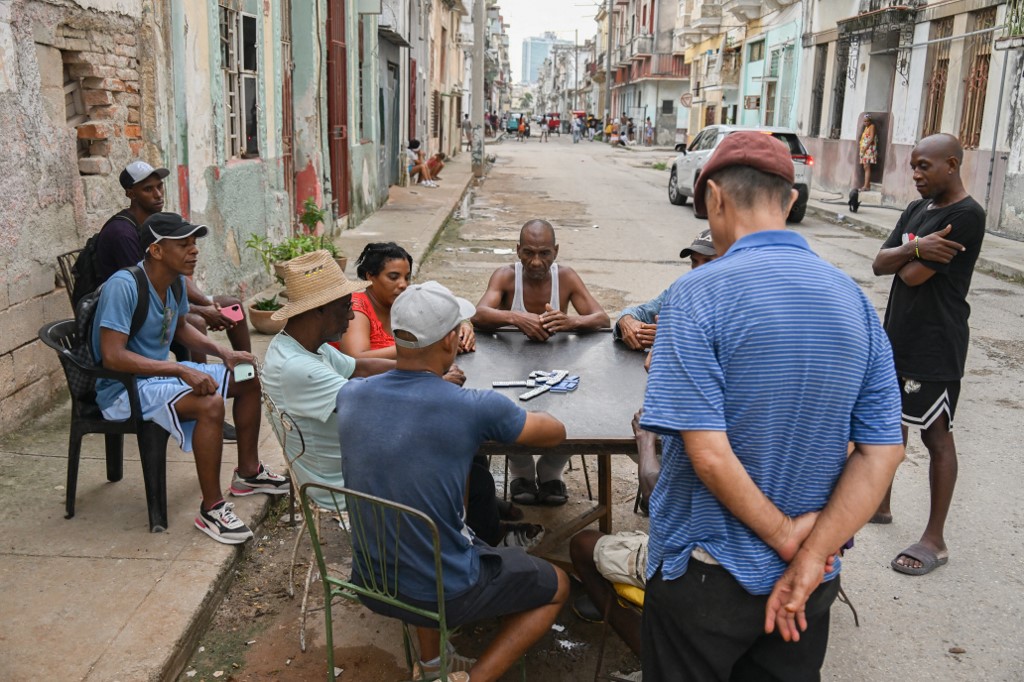
Nickel is one of Cuba’s main mineral resources and, together with other mining activities, has represented between 25% and 35% of the foreign exchange entering the country in recent years. Its exploration is mainly concentrated in the north of the province of Holguín, where municipalities such as Moa and Mayarí had their activities practically paralyzed due to Washington’s aggressions, with direct effects on the daily life of the population.
The measures also affect Cuban entities linked to research, development and production for the Revolutionary Armed Forces (FAR).
Among them is the Simulator Research and Development Center (SIMPRO), which works in the development and manufacture of simulators and training of FAR and other government entities.
The list also includes the Naval Research and Development Center (CIDNAV), the Infantry Armaments Research and Development Center (CIDAI) and the “Grito de Baire” Research, Development and Production Center (GELCOM).
‘The United States will continue to sanction’
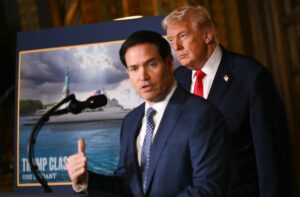
When announcing the measures, Secretary of State Marco Rubio once again insisted on his confrontational rhetoric and stated that Washington’s aggression responds to the “threat” that, according to him, Cuba represents to the United States.
“Communist Cuba is a corrupt and failed state and a persistent threat to US national security, located less than 100 miles from the American coast,” he said.
Rubio added that “the United States will continue to expose and sanction those who uphold this system.”
This is the “seventh round” of sanctions against Cuba since, in early May, Donald Trump’s government expanded the so-called “secondary sanctions” through Executive Order 14404, with which Washington threatens to sanction any non-US company or entity that maintains links with sanctioned Cuban companies.
Since then, Washington has systematically expanded economic war measures against Cuba, affecting sectors such as tourism and mineral exports, with the aim of restricting the island’s access to foreign currency; the financial sector, in an attempt to financially block the country; and the military sector, with the aim of weakening the island’s defensive capabilities at a time when the United States is increasing its aggression and threatening military intervention in Cuba.
A few hours after the announcements, Cuban Foreign Minister Bruno Rodríguez insisted that the Trump administration “will fail in its attempt” to subjugate the Caribbean country. “We will never renounce our sovereignty and independence, achieved in almost 70 years of Revolution,” he stated.
Source: www.brasildefato.com.br