Chinese drones already dominate the Brazilian agricultural market and are beginning to expand their presence to other activities. China is today the world’s leading manufacturer and exporter of this type of equipment, while companies are advancing new applications.
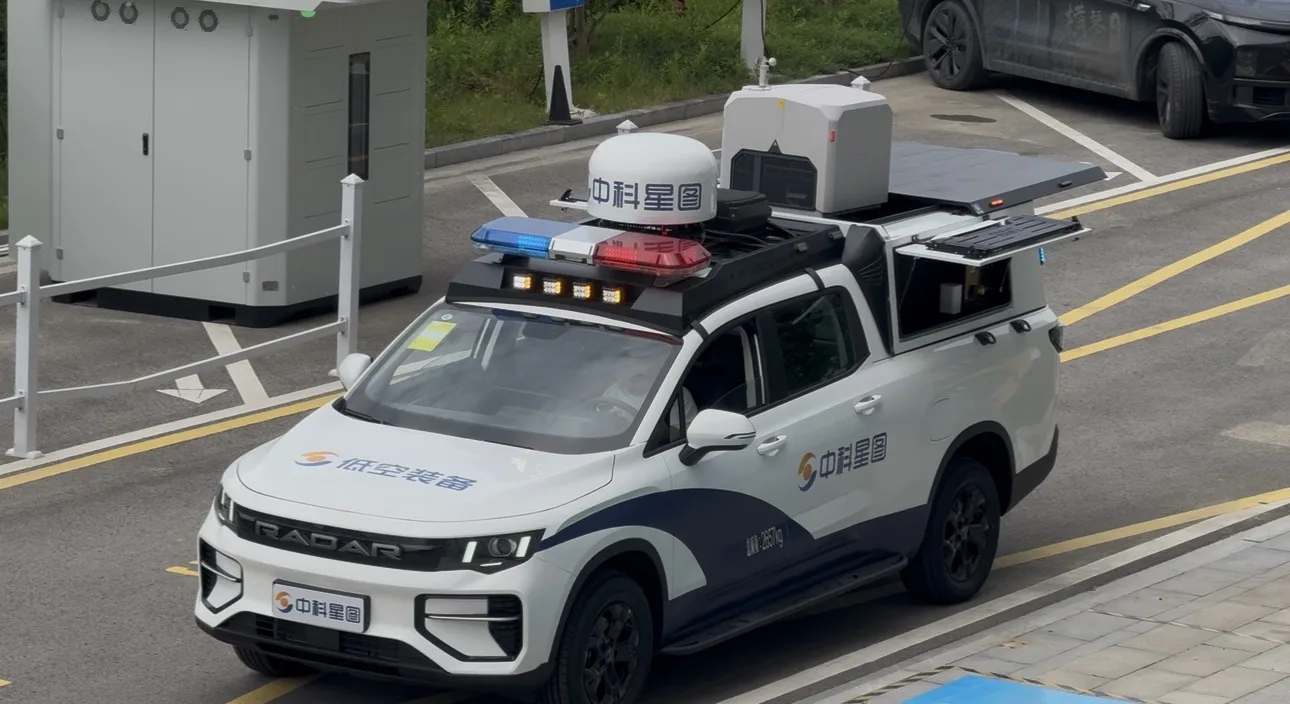
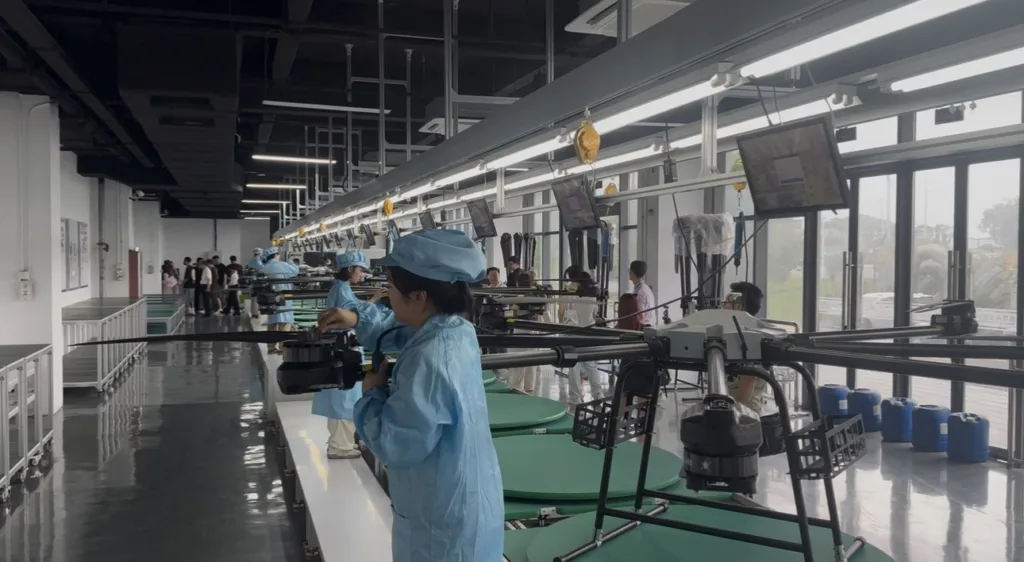
To get to know this industry up close, the Brazil in fact went to one of the industrial parks in Ma’anshan, in Anhui province, in eastern China, where he spoke with representatives of companies operating in different stages of this sector. Among them are Anhui Hongjing UAV Technology, which specializes in manufacturing drones, and GEOVIS Zhiyuan, which develops systems and solutions for use in urban inspections, agriculture, logistics, security and the environment.
The visit allowed us to observe one of China’s main bets: the so-called low-altitude economy, which seeks to expand the use of airspace close to the ground. In Anhui, this strategy appears linked to both the production of equipment and the creation of services and applications for different areas.
The size of this industry can be measured by the Chinese presence in Brazil. A survey carried out from the public base of the Unmanned Aircraft System (SISANT), of the National Civil Aviation Agency (Anac), identified 13,224 agricultural drones registered in Brazil in August 2026. Of this total, 83.9% were from the Chinese DJI and 9.1% from the Chinese company XAG. Together, the two companies accounted for around 93% of registered equipment.
Drones are used in Brazil mainly for spraying and monitoring crops, but they are also beginning to be used to transport agricultural products and inputs. According to a projection released by the Brazilian company Xmobots, this market should generate more than R$2 billion in 2026, with the activation of more than 11 thousand new units throughout the year, an increase of 38% compared to 2025.
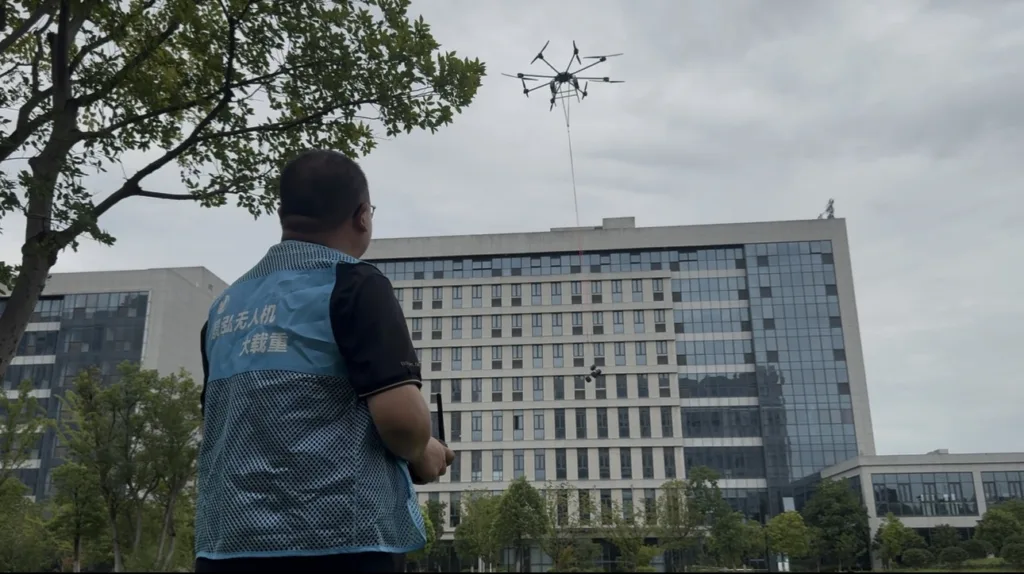
The Chinese presence in the Brazilian market includes large manufacturers and smaller companies, such as Anhui Hongjing. Its president, Wang Minglong, stated in an interview with the report that its drones “were mainly used to transport agricultural products and inputs”, such as fruits and other products.
A market that grows in the countryside
Equipped with cameras and sensors, drones can monitor crop development, identify problem areas and carry out localized spraying. The technology makes it possible to reduce the time required for certain operations and reach areas where land-based machines encounter difficulties.
At the same time, expansion requires rules to ensure the safety of operations and the proper use of equipment, especially when used to apply agricultural products.
The Chinese scale can also be seen in the number of equipment in operation in the country itself. At the end of 2025, China had around 3.29 million registered drones, which accumulated 45.3 million flight hours during that year.
The low-altitude economy
The so-called low-altitude economy brings together activities carried out by drones, light aircraft and other equipment, integrating manufacturing, logistics, services, infrastructure and control systems. According to projections by the Civil Aviation Administration of China, this market will reach 1.5 trillion yuan in 2025 (approximately R$1.16 trillion) and should exceed 3.5 trillion yuan by 2035 (approximately R$2.70 trillion).
Drones are one of the main entry points into the market. They already integrate public safety, environmental inspection, agriculture, transportation and emergency response systems.
GEOVIS Zhiyuan is part of the GEOVIS Group, founded in 2006. Created in 2021 to focus on geospatial information, drones and technologies related to the low-altitude economy, it operates in urban inspection, industrial applications and logistics. Shi Qinglan, the company’s operations supervisor, explains to us that drones are used by public bodies:
“Our main work is to carry out inspections for the public administration, using a system developed by ourselves to carry out routine inspections. We serve different government agencies, such as the departments of water resources, public security, traffic police and urban management. They send their inspection demands through our system, and we are responsible for carrying out these inspections on a regular basis.”
One of the applications is the prevention of forest fires. The aircraft can carry out regular inspections, identify risks and use public address systems to alert people in designated areas.
When artificial intelligence enters the scene
The ability to monitor large areas generates large volumes of images and information. To process this data quickly, Chinese companies integrate artificial intelligence into drone systems.
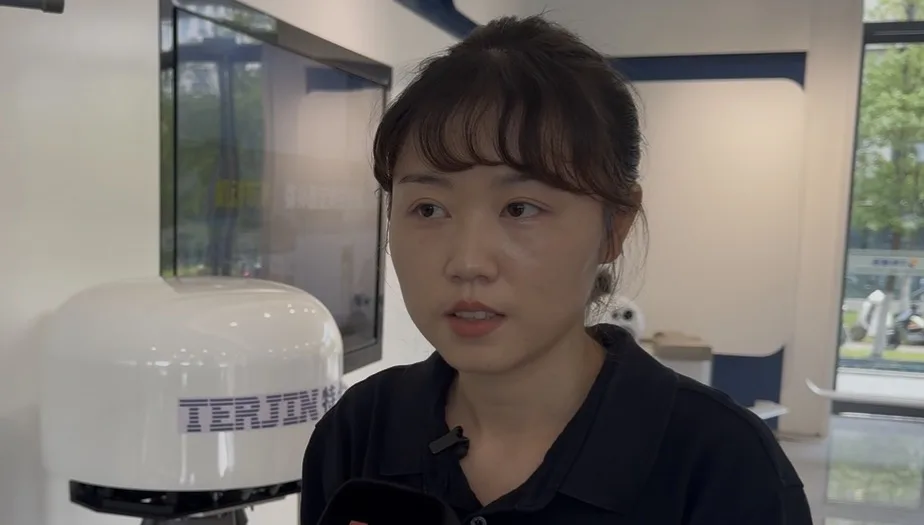
According to Shi, AI, “as a rapidly developing tool, plays a very important role when integrated with inspections carried out by drones. It helps us quickly filter a large volume of information, accurately locate the location of an incident and make the entire response process much more agile.”
The combination of aircraft, sensors and artificial intelligence expands the scope of operations. For Brazil, this technology can have applications in extensive areas of forest, rivers, roads and agricultural properties, as well as emergency operations during fires and floods.
At GEOVIS Zhiyuan, application diversification is one of the business characteristics. Yu Ran, from the company’s Ecology Center, works with ecological projects in China and abroad and with the dissemination of experiences developed by the group, and explained that the company already works with projects in Southeast Asia and initiatives related to logistics, environmental inspection and cross-border operations.
According to Yu, drones can be used in a series of activities. “Combined with artificial intelligence, they can detect garbage in rivers, irregular dumping and other environmental anomalies”, he explains.
The equipment can also receive sensors to monitor air quality and identify contaminating gases. Another possibility is to transport a variety of products. “Medicines, food, documents and other supplies. In situations of flooding or other natural disasters, they can also support rescue operations and the distribution of emergency aid.”

An industry of thousands of companies
Chinese leadership is not just concentrated in a few large companies. By the end of 2023, the country had more than 2,300 companies involved in the development of civil drones and more than a thousand mass-produced models. This industrial scale allows different manufacturers to work in specific segments.
China brings together manufacturers of aircraft, electronic components, batteries, sensors and digital systems. The integration between these sectors allows us to reduce costs and accelerate the development of new equipment.
Wang Minglong said that Anhui Hongjing’s equipment was developed for different risk situations. “Its applications span many sectors of everyday life, but are especially important in the areas of firefighting, emergencies and rescue operations.”
China wants to increase partnerships with Brazil
While some Chinese companies (such as Anhui Hongjing) already supply equipment to the Brazilian market, others (such as GEOVIS Zhiyuan) are still looking for partners and opportunities to enter the country.
The expansion of Chinese drones represents an opportunity for Brazil. Access to foreign equipment can be accompanied by investments in companies, research centers and national suppliers capable of participating in this chain.
The country has companies and research centers that develop aircraft, software and precision agriculture systems. Market growth can stimulate new production chains, maintenance services, data analysis, sensor development and professional training.
There are also complications, such as competitiveness with local industry and regulatory issues. The more drones stop being recreational equipment and start transporting loads, applying inputs, monitoring areas and participating in public operations, the greater the need for clear rules on safety, responsibility and control of airspace.
Source: www.brasildefato.com.br