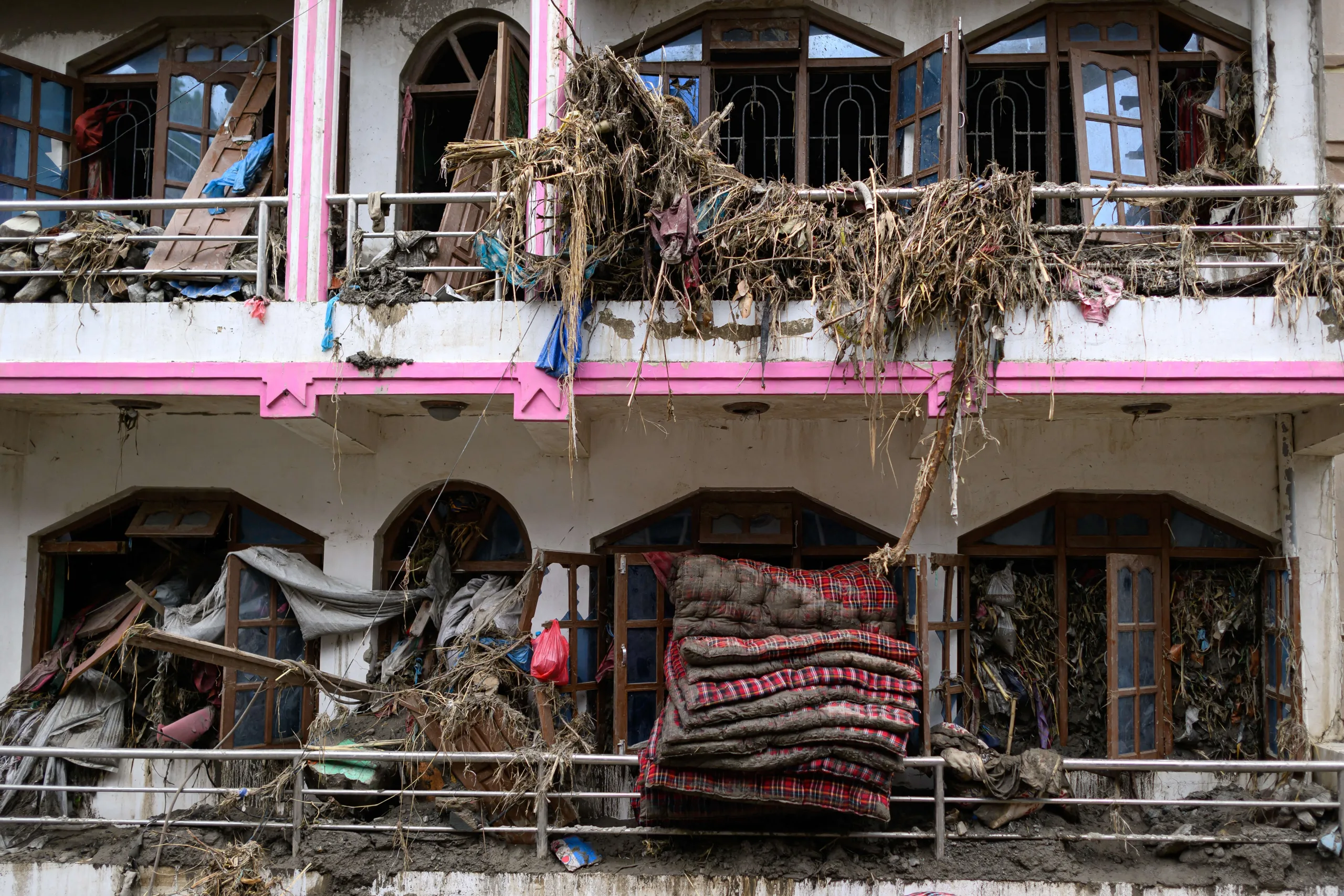
Rescue teams from Nepal and China continued operations this Saturday (29) to locate almost 3,000 people missing after a landslide caused by the collapse of a glacier on the Himalayan border. The phenomenon, which occurred on Wednesday (26), generated a flood of rocks, ice and mud that buried neighborhoods and caused damage to bridges and hydroelectric plants, with 682 confirmed deaths in both territories.
According to information published by the AFP news agency, of the total number of bodies recovered, 675 were registered in Nepal and seven in the Tibet Autonomous Region, in China. The number of people without contact includes 2,426 in Nepal, including hundreds of foreigners and Hindu pilgrims traveling to Mount Kailash in Tibet, and at least 550 in Gyirong County on Chinese soil.
The Indian government also reported having located seven bodies in rivers that flow from Nepal into Indian territory.
Rescue teams face physical difficulties caused by the thick layer of mud accumulated in the affected areas. To the AFP agency, Kawan Koirala, a member of the Nepal Disaster Response Team, explained that the search is progressing slowly due to the burial and that the ground is covered in mud.
One of the rescue operations takes place at a hydroelectric plant where around 100 workers are trapped inside blocked tunnels. The Nepalese Prime Minister’s Office reported that emergency teams have begun removing the rubble to free up access to the site.
At first, the Nepal government refused the help of international teams for general search and rescue operations because it understood that local rescuers could act alone. Hours later, the administration decided to accept outside help.
In response to requests for humanitarian aid, the Indian government sent three flights carrying around 60 tons of supplies, which include blankets, medicines, food and water purification tablets.
In the financial area, Canada announced the allocation of CAD 5 million (around R$18.6 million) and the European Union committed €2 million (around R$12 million) for humanitarian aid, while the president of China, Xi Jinping, formally offered Beijing’s support.
Concern about new floods extended to neighboring countries in the mountainous region. In India, Uttarakhand state disaster management minister Madan Kaushik ordered official departments to begin continuous monitoring of all known glaciers and glacial lakes along the border.
This Saturday, the administration of the Nepalese district of Chitwan reported that, given the advanced state of decomposition of some bodies and the risks to public health, local authorities will collect DNA samples and carry out collective burials in open areas.
Search work in border areas was temporarily suspended due to bad weather conditions, which saw rain and heavy fog in the region.
News updated at 2:36 pm
Source: www.brasildefato.com.br