The city of Longli, in Jinping County, in Guizhou, preserves a six-hundred-year-old tradition: the Hualianlong, or “dragon with painted faces”, a celebration maintained by a community of the Han ethnic group in a territory mainly of the Miao and Dong ethnicities.
The Longli fortress was created during the Ming Dynasty (1368-1644) to contain revolts by the Miao and Dong ethnicities. Until the founding of the People’s Republic in 1949, the city remained isolated from its surroundings and imposed bans on marriages with other ethnicities. Today the ancient city has around 4 thousand inhabitants and belongs to the Miao and Dong Autonomous Prefecture of Qiandongnan.
Hualianlong mainly takes place during the Lantern Festival. Thirteen acrobats and dancers paint themselves as characters from a legend about Emperor Zhao Kuangyin, founder of the Song Dynasty in the 10th century, and his “blood brothers”. Each then carries a segment of the articulated dragon.
To participate in the dragon dance, you must have your face painted. “If someone bumps into someone in the public without their face painted, they get angry. But if their face is decorated with traditional designs, residents just wave and laugh,” says Tao Bingjun, provincial representative heir of Hualianlong, a title in the Chinese intangible heritage system that designates who the government recognizes to preserve and pass on tradition.
The Han ‘island’
In 1386, under the imperial policy known as “Southern Consolidation”, the Ming Dynasty established a military garrison in Longli called “Longli Military Post”. Soldiers from Jiangxi and Anhui provinces arrived to consolidate imperial rule in a region of Miao and Dong communities, and never returned.
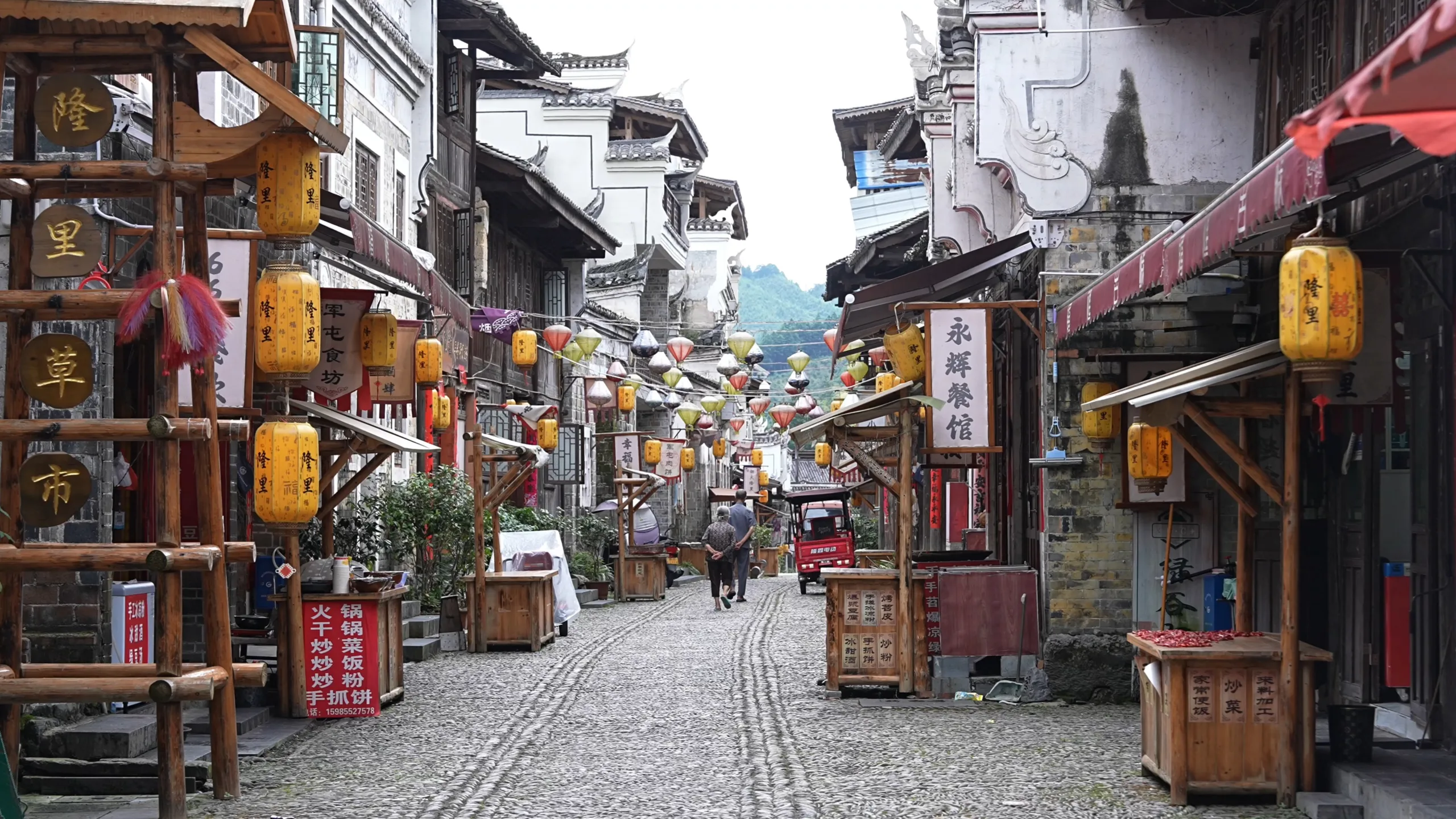
Inside, buildings from the Ming and Qing periods remain: houses, a study academy, wells, shrines and bridges.
Of the 72 original surnames, around 20 remain. Some of the descendants speak a dialect of Mandarin with features from the 15th century and live in houses in the Huizhou style, an architecture characteristic of the soldiers’ regions of origin.
“Our clan migrated from Anhui six hundred years ago. Since then, all local buildings have adopted the unified Huizhou architectural style. Longli started with a single main surname, which expanded to four through inter-family marriages,” says Wang Jianwei, a resident who belongs to the Suo clan.
Wang, who is also an artist, told the reporter that he has been renovating one of the clan’s old houses to turn it into an art center and café. One of the characteristics of the rural revitalization policy is the promotion of the renovation of old buildings to promote rural tourism, in addition to the conservation of the historical heritage itself.
In February 2026, the Longli Ancient City Protection Regulation came into force. The legislation establishes a system of protection by zones, expressly authorizes the role of the Public Prosecutor’s Office in public civil actions for damage to property and promotes the “population depressurization” of the central area, allocating 93 mu of land (around 6.2 hectares) for the resettlement of residents, encouraging the remaining inhabitants to use the historic buildings for inns, commerce and craft workshops.
Reshaping the faces
For six hundred years, Hualianlong was passed down from memory, and the faces varied from generation to generation. In the early days, participants wore gray, and everyone looked the same.
Tao Bingjun is the one who paints the acrobats’ faces. Between 1998 and 2005, he redesigned the thirteen faces, giving each one the personality of one of the emperor’s blood brothers, distributed across the dragon’s segments according to character, loyalty and function. He tried different paints, like watercolor and oil paint, and ended up sticking with acrylic paint, which creates a film that peels off when it dries. The thirteen faces were registered with the Guizhou provincial cultural heritage authority.
On the day of the festival, the character of the emperor’s younger brother carries a one to two meter rice straw broom, dipped in herbal liquid, to throw at the audience. According to Tao Bingjun, the gesture symbolizes blessings: good weather for harvests and constant promotions for employees.
Source: www.brasildefato.com.br