Two months after the double earthquake that hit Venezuela on June 24, work to remove the rubble is ongoing 24 hours a day. Amid the marks left by the force of nature, solidarity makes its way in Venezuela. Thirty young activists from nine Latin American countries crossed borders with a mission: to see reality up close and extend a helping hand to the Venezuelan people.
Vittória Paz, a member of the Landless Workers’ Movement (MST), is one of the members of the Fidel Castro Internationalist Brigade, organized by Alba Movimentos, which toured the areas most affected by the earthquake in the La Guaira region and on the shores of the Caribbean Sea, and paid tribute to the more than 6,500 victims of the tragedy.
“We came here to La Guaira to understand and walk the land that was most affected by the earthquake. To truly understand the level of destruction, to be able to see and get out of the narrative that the hegemonic media bring to us. But also to understand the level of popular organization, of organization on the part of the government that is supporting, helping and still counting its dead. So our coming here has a political sense”, highlights the landless activist.
“Our coming here is to bring solidarity, to think about solidarity, to think about what we can actually hear from people here, what we can do and what we can, from our countries, bring support and transform our solidarity into action”, he adds.
Heroes of January 3rd
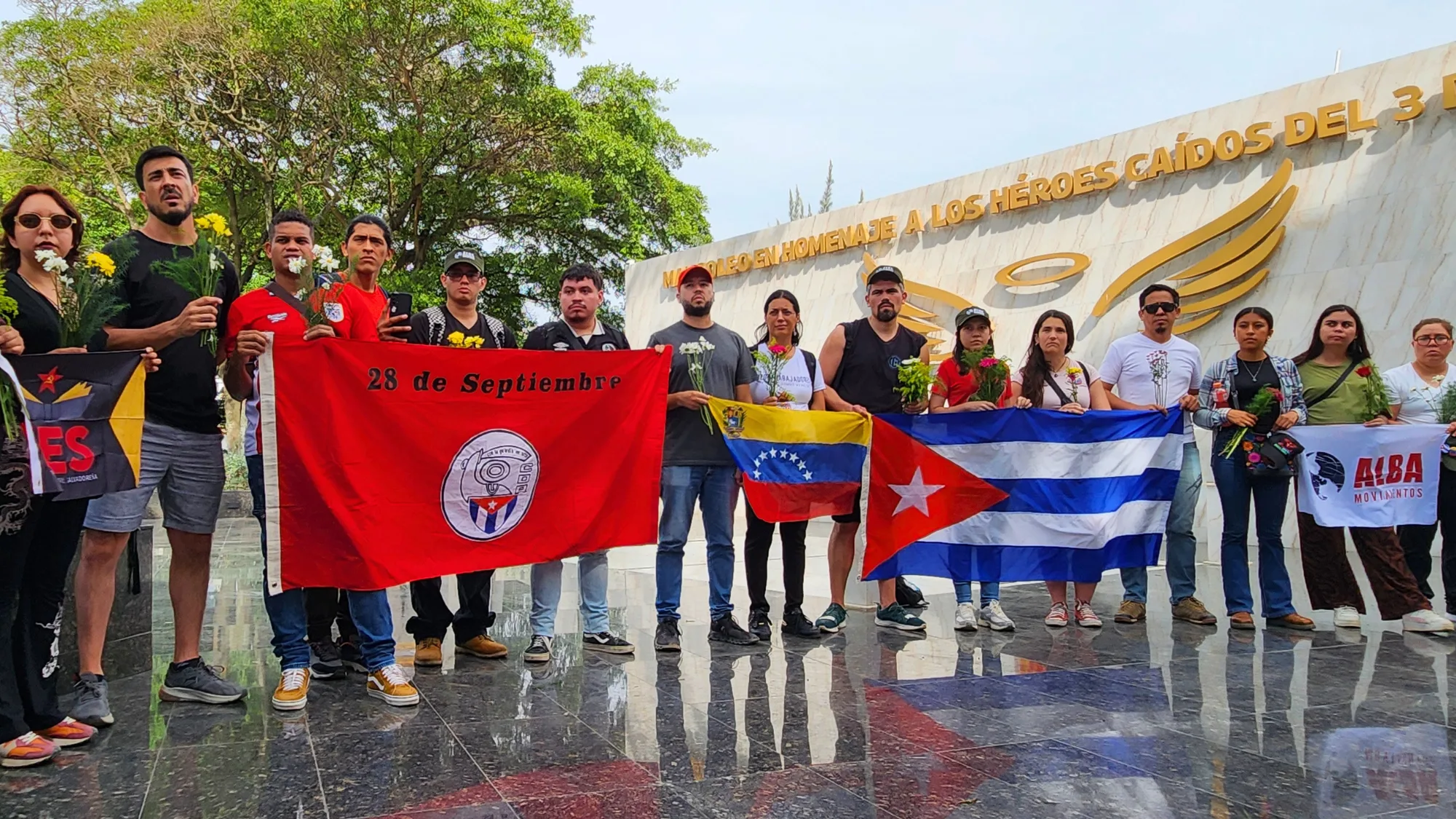
The commitment of internationalist youth is also remembered. In Caracas, the brigade visited the memorial to those who fell during the bombing and military invasion of the United States, which took place on January 3, an attack that culminated in the kidnapping of President Nicolás Maduro and his wife, Cília Flores. For Máximo Echaniz, an internationalist from Argentina, feelings of indignation and pride are mixed.
“We are here visiting Caracas, at the mausoleum of the heroes of January 3rd, seeking to pay homage to these people who gave their lives for a liberated homeland, for a country that constantly seeks the emancipation of its people and the peoples of the world”, says the young man, emotionally.
“It’s a feeling that mixes pride with a deep sadness for the people we continue to lose, for the number of lives we continue to give, because we are the ones who always lay the blood. Sadly, it has been like this throughout the history of the class struggle. But I also feel a deep pride in thinking that there are still people who give their lives for a cause, and that there are many of us. This makes me very happy and moves me”, says Echaniz.
Far from the distorted lenses of the mainstream media, everyday Venezuela resists the economic blockade and continues to insist on socialism as the only possible path for the country’s future. What surprised Argentine Leonel Renner, a member of the movement Our America.
“It was a very mobilizing and very enriching experience. I think the first important point, with the communication campaign that Venezuela has against itself, mainly promoted by the United States, is that being in the land of Bolívar, meeting with the Venezuelan people, allows us to really understand what the process is like internally, why it really continues, with the popular support it has, the level of organization and the level of political awareness it generated among these people, which, for the other countries in Latin America, is something truly surprising”, says the internationalist.
The Fidel Castro Brigade’s visit to Venezuela does not end with the return of young people to their countries. It becomes a trench of ideas, in the fight against misinformation and in the certainty that solidarity is, above all, action, as Karen Vargas, an internationalist from Mexico, says.
“It was ten days of a lot of learning, of seeing Venezuela as a beacon of hope for Latin America. Our task as organizations is to follow the legacy and continue demanding the release of Maduro and Cilia Flores from our countries and our territories”, he states.
“The Venezuelan people continue to resist with a lot of resilience and a lot of hope and are rising up because they knew how to form a community and are a community. And, as a people who unite, they continue to resist, together, and are moving forward”, adds the young Mexican.
Source: www.brasildefato.com.br