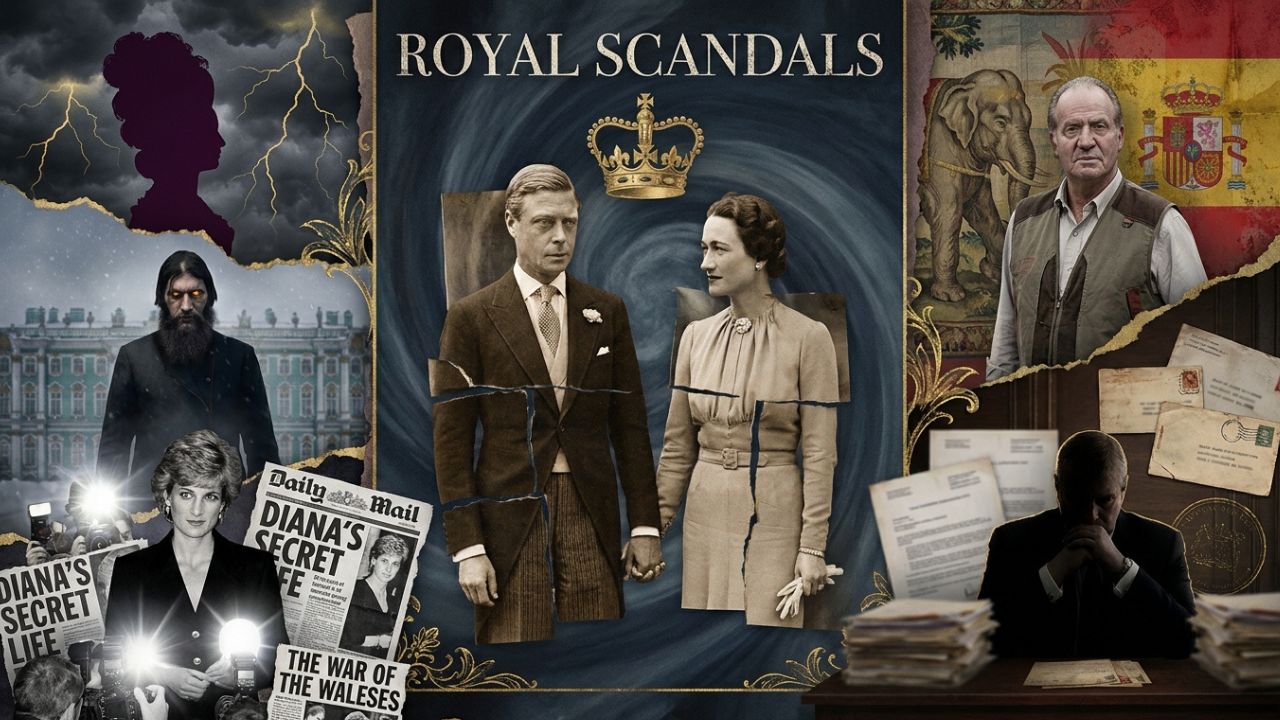
Throughout centuries, royal families have captivated public imagination with their grandeur, power, and mystique. Yet behind the gilded palaces and ceremonial splendor lay human dramas that shook kingdoms to their foundations. These scandals did not merely entertain gossip circles; they altered political landscapes, shifted alliances, and in some cases, brought down entire dynasties. Let us explore six royal scandals whose reverberations changed the course of history.
The Affair That Toppled a Kingdom: Louis XVI and Marie Antoinette 💔
Perhaps no royal scandal is more infamous than the one surrounding France’s last queen before the Revolution. Marie Antoinette, an Austrian archduchess who married the future Louis XVI at age fifteen, became the target of relentless public scorn. While many accusations against her were exaggerated or entirely fabricated, the perception of her extravagance during a time of widespread poverty proved catastrophic for the monarchy.
The most damaging episode was the so-called Diamond Necklace Affair of 1785. A con artist convinced a cardinal that Marie Antoinette wished to purchase an extraordinarily expensive diamond necklace secretly. When the scheme unraveled, the public believed the queen had attempted to defraud jewelers and engage in clandestine dealings. Though Marie Antoinette was innocent, the damage was irreversible. Pamphlets circulated throughout Paris depicting her as immoral, wasteful, and out of touch with suffering citizens.
This scandal crystallized growing resentment toward the monarchy and contributed directly to the French Revolution. By 1793, both Louis XVI and Marie Antoinette faced the guillotine, ending centuries of Bourbon rule in France. The revolution that followed reshaped European politics forever, inspiring democratic movements across the continent and demonstrating how royal misconduct could ignite revolutionary fire.
Edward VIII Abdicates for Love: The Crisis That Shook Britain 👑💍
In 1936, King Edward VIII made an unprecedented decision that stunned the world. After less than a year on the throne, he chose to abdicate rather than give up his relationship with Wallis Simpson, an American socialite who was twice divorced. This choice triggered a constitutional crisis that exposed deep tensions between personal freedom and royal duty.
The British government, led by Prime Minister Stanley Baldwin, made clear that Edward could not remain king while married to Mrs. Simpson. The Church of England, which the monarch headed, prohibited remarriage after divorce if former spouses were still alive. Moreover, political leaders feared that an American queen consort would undermine the monarchy’s stability and prestige within the Commonwealth.
Edward’s abdication speech, broadcast globally on December 11, 1936, declared that he could not fulfill his duties without the support of the woman he loved. His younger brother became King George VI, thrust unexpectedly into a role he had never anticipated. This succession change proved historically significant when George VI’s daughter Elizabeth eventually became Queen Elizabeth II, reigning for seventy years and becoming one of Britain’s most beloved monarchs.
The abdication demonstrated that even absolute royal privilege had limits. It forced the monarchy to confront modern expectations about marriage, personal happiness, and public responsibility. The incident also revealed how media scrutiny could pressure royal decisions, foreshadowing the intense public examination that would characterize later royal controversies.
Rasputin’s Influence Over the Romanovs: Mysticism and Murder 🕯️
Grigori Rasputin, a Siberian peasant who claimed mystical powers, gained extraordinary influence over Tsar Nicholas II and Tsarina Alexandra through his apparent ability to alleviate their son Alexei’s hemophilia. This strange relationship between a holy man and Russia’s imperial family became the subject of wild rumors and genuine political concern.
Rasputin’s access to the tsar and tsarina allowed him to influence appointments and policy decisions, angering nobles, politicians, and ordinary Russians alike. Many believed he controlled the royal couple through dark magic or sexual manipulation. During World War I, while Nicholas commanded armies at the front, Rasputin’s alleged interference in government affairs further eroded confidence in the monarchy.
A group of aristocrats, including Prince Felix Yusupov, decided Rasputin must be eliminated to save the dynasty. In December 1916, they invited him to a palace, poisoned his wine, shot him multiple times, beat him, and finally drowned him in the Neva River. Despite these efforts, Rasputin reportedly struggled violently before dying, adding to his legendary status.
His murder came too late to preserve the Romanov dynasty. Within months, the February Revolution of 1917 forced Nicholas II to abdicate, ending three centuries of Romanov rule. The subsequent Bolshevik Revolution brought communism to Russia and executed the entire imperial family. Rasputin’s scandalous reputation became symbolic of the corruption and detachment that doomed imperial Russia.
Princess Diana’s Divorce and Death: Media Frenzy and Public Mourning 📸
Princess Diana’s marriage to Prince Charles began as a fairy tale but dissolved into one of the most publicized divorces in history. Their separation in 1992 and eventual divorce in 1996 exposed deep problems within the House of Windsor and raised questions about the institution’s relevance in modern society.
Diana gave explosive interviews that revealed Charles’s affair with Camilla Parker Bowles and described her own struggles with bulimia, depression, and self-harm. Her candidness broke royal protocols and won her enormous public sympathy while embarrassing the monarchy. She became known as the People’s Princess, using her platform to advocate for AIDS patients, landmine victims, and other marginalized groups.
Tragically, Diana died in a car crash in Paris on August 31, 1997, while being pursued by paparazzi. Her death triggered unprecedented global mourning and fierce criticism of tabloid journalism. Millions lined streets in London and around the world to pay respects. The royal family’s initially restrained response drew public anger, forcing Queen Elizabeth II to address the nation and acknowledge Diana’s significance.
The aftermath transformed the monarchy’s approach to media relations and public engagement. Prince William and Prince Harry, Diana’s sons, grew up under intense scrutiny but also inherited her humanitarian legacy. The scandal ultimately pushed the royal family toward greater transparency and emotional openness, changes that continue to shape the institution today.
King Juan Carlos’s Elephant Hunting Trip: Spain’s Monarchy Under Fire 🐘
In April 2012, during Spain’s severe economic crisis, King Juan Carlos I embarked on an elephant hunting safari in Botswana. When news leaked that he had broken his hip during the trip and required emergency medical evacuation paid for by taxpayers, public outrage erupted. Spaniards questioned why their monarch enjoyed luxury vacations while millions faced unemployment and austerity measures.
The scandal compounded existing concerns about the royal family’s integrity. Investigations later revealed that Juan Carlos’s son-in-law, Iñaki Urdangarin, had been involved in corruption schemes. Additionally, the king’s longtime mistress, Corinna zu Sayn-Wittgenstein, received substantial gifts and payments that raised questions about improper influence.
Under mounting pressure, Juan Carlos abdicated in June 2014 in favor of his son, Felipe VI. The abdication aimed to restore credibility to the Spanish monarchy, but damage had been done. Republican sentiment grew significantly, particularly among younger Spaniards who questioned whether monarchy suited a modern democracy.
This scandal demonstrated how royal behavior perceived as tone-deaf or corrupt could threaten institutional survival. It forced the Spanish royal family to adopt stricter transparency measures and distance themselves from controversial associations. The episode remains a cautionary tale about the importance of public perception in maintaining monarchical legitimacy.
Prince Andrew’s Association with Jeffrey Epstein: A Royal Reckoning ⚖️
Prince Andrew’s friendship with convicted sex offender Jeffrey Epstein became one of the most damaging scandals to affect the British royal family in recent decades. Andrew maintained ties with Epstein long after his initial conviction for soliciting prostitution from a minor, attending parties at Epstein’s properties and appearing in photographs with young women whose ages raised questions.
The situation intensified when Virginia Giuffre, one of Epstein’s victims, accused Andrew of sexual abuse when she was seventeen. Andrew gave a disastrous BBC interview in November 2019 attempting to defend himself, but his explanations appeared evasive and insensitive. He claimed not to sweat, denied remembering meeting Giuffre, and suggested she might have fabricated her account. Public and media reaction was overwhelmingly negative.
Facing immense pressure, Queen Elizabeth II stripped Andrew of his royal duties and military titles in January 2022. Later that year, he settled a civil lawsuit with Giuffre for an undisclosed sum, though he admitted no wrongdoing. The scandal damaged the monarchy’s reputation and raised serious questions about accountability for senior royals.
This controversy highlighted challenges facing modern monarchies in addressing allegations against family members. It demonstrated that royal status no longer provides automatic protection from scrutiny or consequences. The episode continues to influence public attitudes toward the institution and its members’ responsibilities.
Conclusion: Lessons from Royal Scandals
These six scandals reveal patterns that transcend specific times and places. Royal families exist in tension between tradition and modernity, privacy and public accountability, privilege and responsibility. When scandals occur, they expose vulnerabilities that can weaken or even destroy monarchical institutions.
Yet these crises also force adaptation. The British monarchy survived Edward VIII’s abdication and Diana’s tragedy by evolving its practices. Spain’s royal family attempted renewal through abdication. Each scandal teaches that public trust, once lost, requires genuine reform to restore.
In an era of instant communication and relentless media coverage, royal families face unprecedented scrutiny. Their survival depends not merely on ceremonial functions but on demonstrating integrity, empathy, and relevance. The scandals that changed history remind us that power without accountability proves fragile, and that even the most exalted positions remain subject to human failings and public judgment.
The lessons extend beyond royalty. Any institution claiming authority must earn and maintain public confidence through transparent, ethical conduct. Royal scandals serve as dramatic case studies in this universal principle, showing how quickly reverence can turn to rejection when trust breaks down. As societies continue questioning traditional hierarchies, these historical episodes offer valuable insights into the delicate balance between privilege and responsibility. 🌍✨