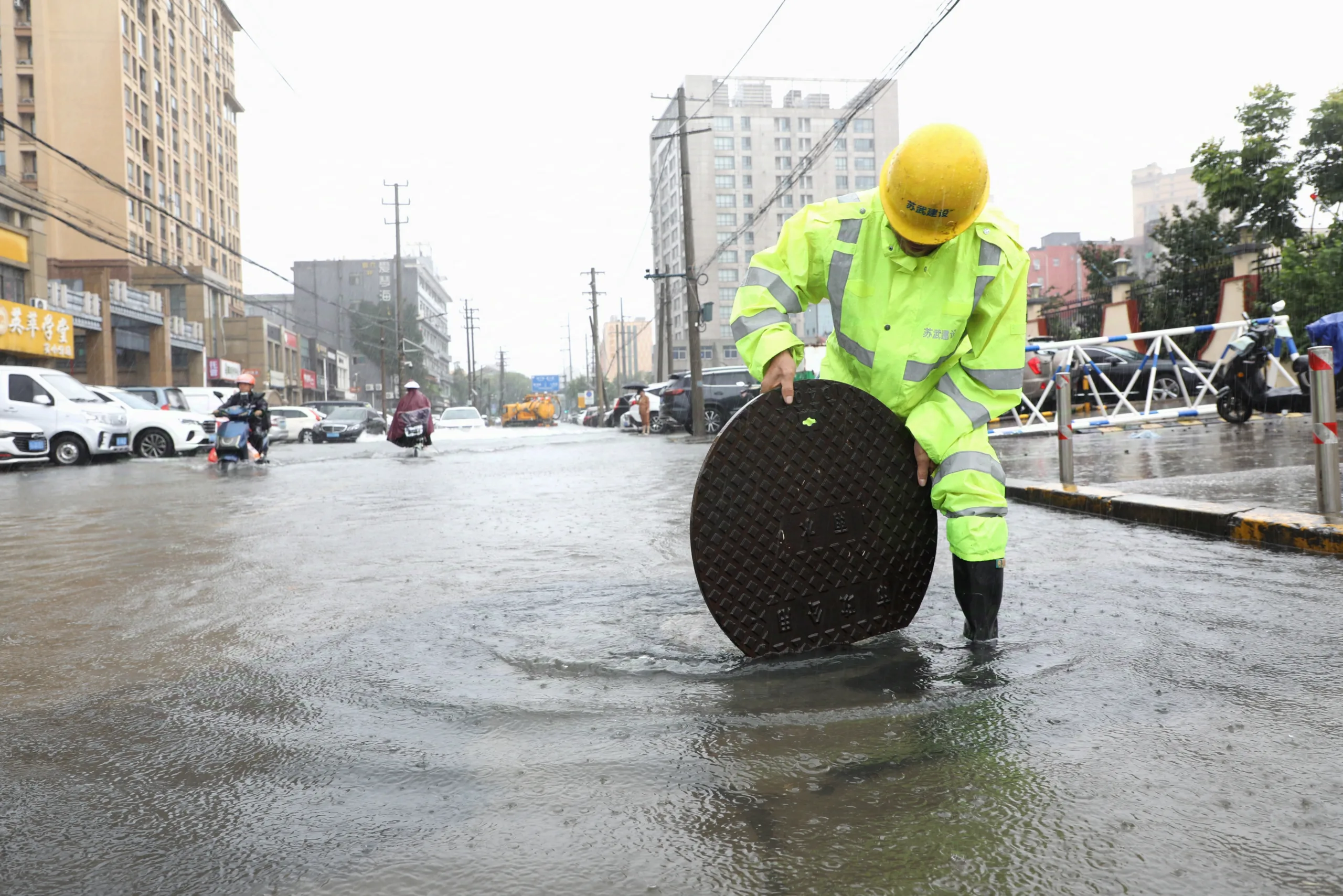
Typhoon Dolphin hit the coast of Zhejiang province, in eastern China, in two places on Sunday night (9), with winds of more than 150 kilometers per hour, and continues to cause heavy rain in more than ten provinces as it advances into the interior of the country, according to the Chinese National Meteorological Center.
The center forecasts rain until Wednesday (12) in the provinces of Zhejiang, Jiangsu, Henan and Hebei, with a risk of storms and gusts in some areas. From Thursday (13), the typhoon, with less strength, is expected to head north and interact with masses of cold air, bringing significant rain to Beijing, Tianjin, Hebei and Liaoning.
This is the 13th typhoon of the year in China. It arrived via Yuhuan, in the city of Taizhou, and reached Yueqing, in the same province of Zhejiang, about 70 minutes later. Wenzhou, Taizhou and Ningbo have activated level I emergency response, the highest in the Chinese government’s four-grade system.
In Shanghai alone, 215,600 people had been moved to safe areas by 5pm on Sunday, according to the city’s Flood Control Command. Taizhou, in Zhejiang, had evacuated around 390,000 residents before the typhoon hit. In Fujian province (neighboring Zhejiang), 167,900 people were evacuated as of Monday morning (10), according to the Xinhua.
In Zhejiang, Hangzhou canceled 388 flights and Ningbo and Wenzhou airports suspended all flights for the day, with 345 and 291 cancellations, respectively. In Shanghai, more than 1,300 flights were canceled at Pudong and Hongqiao airports, almost 60% of those scheduled. In Fujian, 658 train trips were suspended and 234 tourist attractions were closed, according to the Xinhua. Ferry services were also disrupted in part of the Yangtze River Delta.
Risk in the next 72 hours
Meteorologists from the Chinese National Meteorological Center warn of the risk of flooding and landslides in medium and small rivers in the affected regions. The system lost strength after touching the coast, but remains dangerous as it advances northwest. The typhoon’s circulation extends for about 1,300 kilometers, meaning rain and wind reach regions hundreds of kilometers from the point where the system made landfall.
Beijing plans to activate level II flood control response on Tuesday morning (11). Hebei, Tianjin and Henan have stepped up safety inspections at mountain and river tourist attractions, according to the Xinhua.
Source: www.brasildefato.com.br