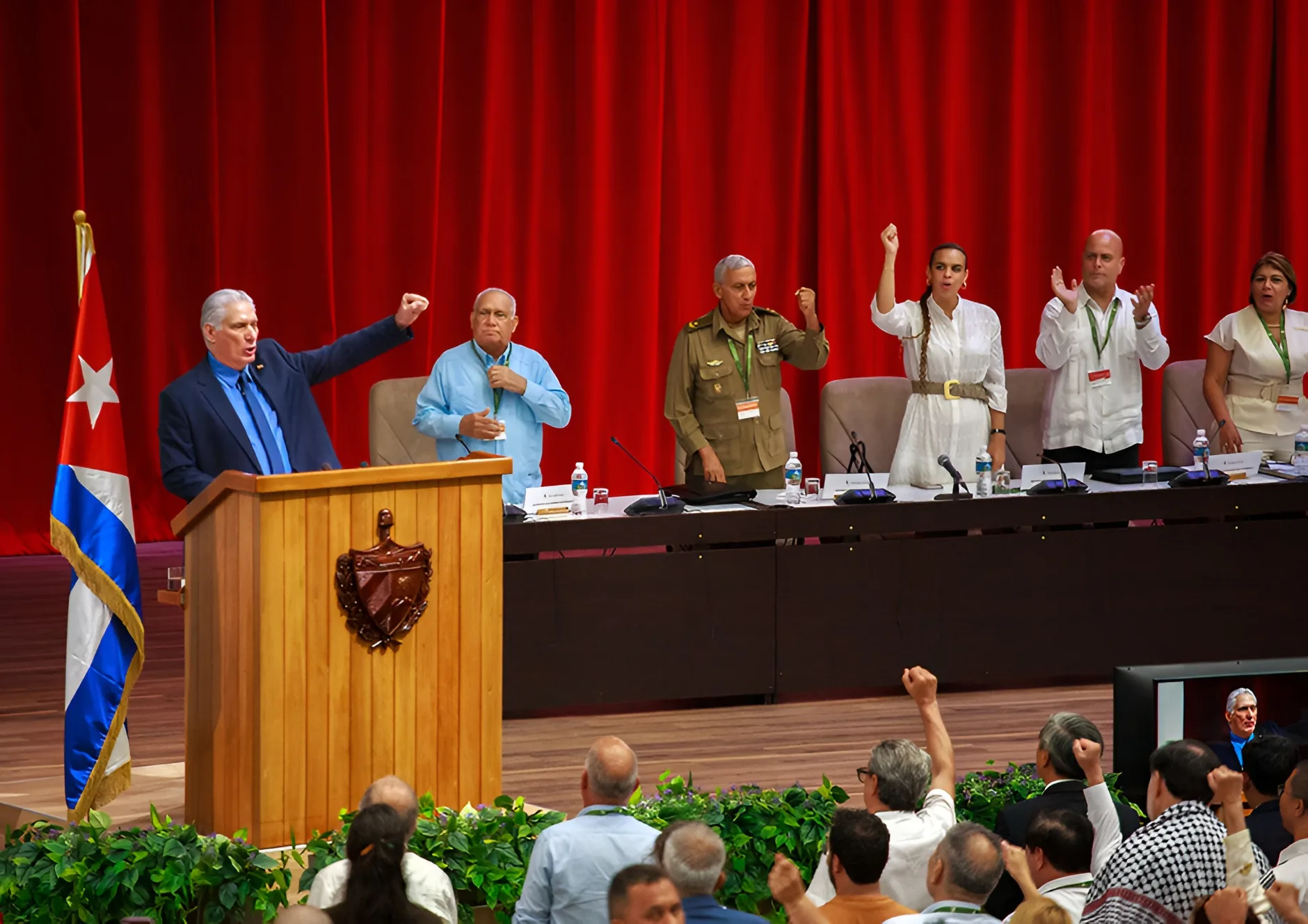
With the participation of more than 1,500 delegates from all over the world, the 1st International Colloquium “Fidel Castro Ruz: legacy and future” began this Monday (10), in Havana, on the eve of the centenary of the birth of the leader of the Cuban Revolution.
The meeting brings together academics, researchers and activists with the purpose of honoring, debating and systematizing Fidel Castro’s theoretical and practical legacy, as well as analyzing his impact on contemporary history and the relevance of his thinking in the face of current challenges.
“Here are the people of Martí and Fidel, resisting, attached to their history, in the conviction that our island defines itself and defends itself in the destinies of the moral world”, stated during the opening René González Barrios, director of the Fidel Castro Ruz Center, one of the main organizing entities of the colloquium.
Through debate tables, presentations and book and research launches, the event seeks to articulate rigorous and systematic research with the political work of left-wing movements and parties around the world. In reference to the spirit of the meeting, González Barrios called: “Let us return to Fidel, to his legacy, let us use his ideas and his revolutionary praxis. And, together with him, let us reflect on how to face a future that inevitably belongs to our people.”
“The most accurate compass”
The central opening speech was given by the Cuban president and first secretary of the Communist Party of Cuba, Miguel Díaz-Canel Bermúdez. When greeting the international delegations, he stated that “coming to Cuba today, amid the resurgence of the blockade and imperial hostility, is a gesture of militant solidarity that honors Fidel’s legacy” and constitutes, according to him, “the best and most solid monument that the ambassadors of truth can raise, the witnesses that Cuba does not surrender, the companions on the journey of a revolution that transcends borders”.
In a context marked by one of the most difficult moments of the Cuban Revolution, given the war policies promoted by the United States against the island, Díaz-Canel stated that the colloquium does not intend to limit itself to nostalgia for the past, but to recover Fidel’s thoughts as a tool to face the present.
“We are not here to manage nostalgia,” he stated, highlighting that Fidel Castro’s ideas continue to be “the most accurate compass” to overcome the situation currently experienced by the Cuban people.
During his intervention, Díaz-Canel took an extensive tour of some of the most emblematic moments of Fidel Castro’s youth, from his role as a young lawyer dedicated to the defense of the poor and workers to his self-defense after the events of Moncada, in a speech later known as “History will absolve me”in which he condensed the political program of the Revolution. He also highlighted his role in organizing the Rebel Army and in the revolutionary victory against the dictatorship’s army, as well as his subsequent international projection as leader of Cuba.
“What did the Commander in Chief give us? He gave us the certainty that dreams are achieved by defending ideas; he left us the lesson that internationalism is an attitude that should distinguish us; he taught us the conviction that socialism is the only way to save humanity from the abyss.”
Díaz-Canel also highlighted some of the main political lessons that, in his assessment, Fidel Castro left behind: the defense of the environment and humanity as part of the fight for socialism; the need to place science at the service of the majority, and not of capital; and the importance of preserving unity among revolutionaries above tactical differences.
“Fidel left us a way of thinking and acting. He didn’t leave recipes; he left a method. And this method was born from praxis, not just from the library”, he stated.
When highlighting the ethical dimension of his figure, the Cuban president added: “He lived as he thought and died as he lived. This, in a world where politics has become a spectacle of hypocrisy, is a permanent challenge to conscience.”
“The future is not written, we have the power to write it”
Faced with aggression from the United States, Díaz-Canel recalled a statement made by Fidel on July 26, 1978, in Santiago de Cuba: “We are willing to resist the imperialist blockade with dignity and selflessness for as many years as necessary. If others give in, if others allow themselves to be bribed, if others betray, Cuba will know how to remain an example of a revolution that does not capitulate, that does not sell out, that does not surrender, that does not go to its knees.”
A few hours before the celebration of the 100th anniversary of Fidel’s birth, Díaz-Canel stated that, for revolutionaries, especially young people, the meeting in Havana should not be understood as a ritual celebration, but as a duty: to think of Fidel not as a figure from the past, but as a strategist whose work transcends his time.
“The future is not written, we have the power to write it. Yes, the empire is powerful, but history is on the side of the people”, he stated in light of the enormous challenges faced by the left and revolutionary movements.
Along these lines, he called for accepting Fidel’s thoughts as a tool to face the challenges of the present and build the future, and not simply as a set of ideas to be evoked during the celebrations. “Fidel’s centenary is a starting point. It is the moment to accept that his legacy is not in the past, but in the present and in the future that we are building. It is not enough to remember him; we must study him. It is not enough to admire him; we must emulate him.”
Source: www.brasildefato.com.br