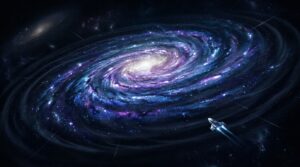
When we gaze up at the night sky, we are often struck by a sense of peace and wonder. The stars appear as static, distant pinpricks of light, offering a comforting constancy in an otherwise chaotic world. Yet this serene perception is a profound illusion. The universe is not a quiet museum of celestial artifacts but a violent, dynamic, and often terrifying arena where physics pushes matter to its absolute limits. While many cosmic events occur on timescales so vast they seem irrelevant to human life, there are several phenomena happening right now, in our current epoch, that are genuinely frightening in their scale, power, and implications for our existence. These are not science fiction scenarios but observable realities that challenge our understanding of safety, stability, and our place in the cosmos. From black holes that devour entire star systems to rogue planets wandering through the dark, the universe is actively engaging in processes that are as beautiful as they are horrifying.
The Silent Devourers: Supermassive Black Holes Feeding in Galactic Centers
At the heart of nearly every large galaxy, including our own Milky Way, lies a supermassive black hole. These gravitational monsters possess masses millions or even billions of times greater than our sun. While Sagittarius A*, the black hole at our galaxy’s center, is currently in a relatively quiet state, it is not dormant. It is constantly interacting with the surrounding interstellar medium, pulling in gas, dust, and occasionally entire stars. This process, known as accretion, is not a gentle sip but a violent tear. As matter spirals toward the event horizon, it heats up to millions of degrees, emitting intense radiation across the electromagnetic spectrum.
What makes this phenomenon particularly unsettling is its invisibility until it is too late. We cannot see the black hole itself, only the effects of its gravity on nearby objects. Astronomers have observed stars orbiting invisible points with such speed that only a black hole could explain their trajectories. Recent observations have captured moments when these cosmic giants flare up, consuming clouds of gas with energy outputs that dwarf entire galaxies. If a star ventures too close, it undergoes tidal disruption, stretched into a long stream of plasma in a process spaghettification. This is happening right now in galaxies across the observable universe. While we are safe from immediate threat due to our distance from Sagittarius A*, the knowledge that such a predator lurks at our galactic center serves as a humbling reminder of the precarious nature of orbital stability. Furthermore, active galactic nuclei powered by feeding black holes can emit jets of particles traveling at near-light speeds, capable of sterilizing any planetary systems in their path. We are living in a galaxy with a sleeping dragon at its core, and while it may not be breathing fire today, it is always hungry.
The Rogue Wanderers: Planets Ejected into Interstellar Darkness
Our solar system feels like a well-ordered family, with planets orbiting the sun in predictable paths. However, this order is the exception rather than the rule. Astronomical surveys have revealed a startling truth: there may be more rogue planets drifting through interstellar space than there are stars bound to galaxies. These orphan worlds were likely formed in young planetary systems but were ejected due to gravitational interactions with larger planets or passing stars. Now, they wander the galaxy alone, frozen in eternal darkness, untethered to any source of heat or light.
The sheer number of these rogue planets is staggering. Estimates suggest that there could be billions of them in the Milky Way alone, outnumbering stars by a significant margin. Some of these worlds may be Earth-sized, or even larger, yet they remain completely invisible to traditional detection methods because they emit no light. They are detected only through rare microlensing events, where their gravity briefly bends the light of a distant star. The implication is chilling: our solar system is surrounded by a sea of dark, cold worlds moving at high velocities. While the probability of one entering our solar system is low, the consequences would be catastrophic. A rogue planet passing through our inner solar system could disrupt planetary orbits, potentially ejecting Earth from its habitable zone or causing massive climatic shifts. Even a near-miss could send comets from the Oort cloud hurtling toward Earth. We are sailing through a cosmic minefield of invisible giants, unaware of their presence until they are dangerously close. This reality transforms the night sky from a canvas of beauty into a map of potential threats lurking in the void.
The Stellar Cannibals: Binary Systems Where Stars Consume Each Other
In binary star systems, two stars orbit a common center of mass. While many such systems are stable, others engage in a deadly dance of stellar cannibalism. When one star evolves into a red giant, it expands dramatically, often engulfing its companion. The smaller star then spirals inward, transferring mass to the larger one or being completely consumed. This process, known as common envelope evolution, is violent and chaotic. Friction between the companion and the giant’s outer layers causes the orbit to decay rapidly, leading to a merger that can result in a supernova or the formation of exotic objects like blue stragglers.
Even more terrifying are systems involving white dwarfs, neutron stars, or black holes. In these cases, the compact object strips material from its companion star, forming an accretion disk that glows with intense X-rays. These X-ray binaries are among the brightest objects in the sky, yet they represent a slow death sentence for the donor star. Over time, the companion is stripped bare, leaving behind only a degenerate core. In some cases, the accumulated mass on a white dwarf can trigger a Type Ia supernova, a thermonuclear explosion that completely destroys the star. These events are so powerful they are used as standard candles to measure cosmic distances, yet they are born from the intimate destruction of a stellar partnership. We observe these systems throughout our galaxy, witnessing the gradual unraveling of stellar bonds. The universe is filled with stars that are literally eating each other alive, a process that is both mesmerizing and horrifying in its brutality.
The Gamma-Ray Bursts: Cosmic Snipers Targeting Random Coordinates
Gamma-ray bursts (GRBs) are the most energetic explosions in the universe since the Big Bang. They occur when massive stars collapse into black holes or when neutron stars merge. For a few seconds, a GRB can release more energy than our sun will emit in its entire ten-billion-year lifespan. This energy is focused into narrow beams of gamma radiation, traveling at the speed of light. If one of these beams were pointed directly at Earth, it could strip away our ozone layer, exposing the surface to lethal levels of ultraviolet radiation from the sun. This would trigger a mass extinction event, similar to what may have caused the Ordovician extinction hundreds of millions of years ago.
The terrifying aspect of GRBs is their unpredictability and speed. They arrive without warning, traveling at light speed, meaning we would have no time to react. While the probability of a nearby GRB hitting Earth is low, it is not zero. Astronomers detect several GRBs every day from distant galaxies, reminding us that these weapons of mass destruction are firing constantly across the cosmos. We are living in a universe where random coordinates are being targeted by beams of pure annihilation. The fact that we have survived so far is a matter of luck, not design. Every moment we live under a clear sky is a reprieve from a cosmic sniper that could end all complex life on Earth in an instant. This realization adds a layer of existential anxiety to our view of the heavens, transforming the stars from symbols of hope into potential triggers of apocalypse.
The Vacuum Decay: The Universe Could End Without Warning
Perhaps the most abstract yet terrifying phenomenon is the possibility of vacuum decay. According to quantum field theory, the vacuum of space is not empty but filled with fields that have specific energy levels. The Higgs field, which gives particles mass, may not be in its lowest possible energy state. If it is in a metastable state, a quantum tunneling event could cause it to drop to a lower energy level, creating a bubble of true vacuum. This bubble would expand at the speed of light, rewriting the laws of physics as it goes. Inside the bubble, atoms would cease to exist, chemistry would become impossible, and life would be instantly extinguished.
This scenario is purely theoretical, but it is consistent with our current understanding of particle physics. The mass of the Higgs boson and the top quark suggests that our vacuum might indeed be metastable. If this is true, the universe could end at any moment, anywhere, without warning. There would be no pain, no awareness, just instantaneous cessation of existence. The bubble would expand outward, consuming everything in its path, including galaxies, stars, and planets. We would never see it coming because it travels at light speed. This possibility hangs over our existence like a Sword of Damocles, a reminder that the fundamental fabric of reality may be fragile. While the probability of such an event occurring in our lifetime is infinitesimally small, the fact that it is physically possible adds a profound layer of uncertainty to our cosmic narrative. We are living on borrowed time, not just from biological or environmental threats, but from the very structure of spacetime itself.
Embracing the Cosmic Horror
These five phenomena illustrate that the universe is not a benign backdrop for human history but an active participant in a drama of creation and destruction. Black holes feed, rogue planets wander, stars consume each other, gamma rays snipe, and the vacuum itself may decay. Yet, there is a strange beauty in this terror. Understanding these forces allows us to appreciate the rarity and fragility of our existence. We are here, against all odds, on a small planet orbiting a stable star in a quiet corner of a vast galaxy. This knowledge should not paralyze us with fear but inspire us to cherish our time and continue exploring the cosmos. The universe is scary, yes, but it is also magnificent, and our ability to comprehend its horrors is a testament to the power of human curiosity and intellect. We look up not just in awe, but in respect for the forces that shape our reality, knowing that we are part of something far greater and far more dangerous than we ever imagined.