Lula government keeps Pix and ethanol out of negotiations and intends to politically explore Flávio Bolsonaro’s actions after the announcement
The administration of President Luiz Inácio Lula da Silva (PT) works with the scenario that the additional 25% tariff from the United States on Brazilian products due to alleged unfair trade practices is inevitable. The government will only decide how to respond, including possible reciprocity, after the publication of the United States’ decision, scheduled for this Wednesday (July 15, 2026). Only then will you know the affected sectors.
The unpredictability of United States President Donald Trump’s (Republican Party) trade policy prevents the government from making projections before official publication. Therefore, Palácio do Planalto avoids anticipating how it will respond to different scenarios.
The USTR presented the tariff proposals on June 1 and 2, 2026. They are:
- 25% – for alleged unfair trade practices. The measure results from a commercial investigation opened against Brazil on July 15, 2025;
- 12,5% – due to the alleged lack of restrictions on the import of products made with forced labor similar to slavery. The measure follows a global investigation conducted by the USTR.
The government’s technical assessment is that the use of Section 301 of the US Trade Act of 1974 legally strengthens the US position. Unlike the 2025 tariff, imposed based on emergency powers granted to the president and later blocked by the United States courts, the new measure results from a formal commercial investigation conducted by the USTR. In the opinion of government technicians, this reduces the possibility of judicial reversal.
The economic team keeps the technical channels open and tries to facilitate one last high-level meeting with the USTR (Office of the United States Trade Representative) before the legal deadline. The objective is not to reverse the decision, but anticipate its reach and identify the sectors included in the final version.
In addition to the affected sectors, the government is awaiting the publication of the list of exceptions. Strategic products for the United States may be preserved, as happened in previous tariff measures.
Negotiations between the 2 countries may continue even after the decision this Wednesday (15.Jul.2026). Pix and ethanol remain out of negotiations for the Brazilian governmentregardless of the outcome of the negotiations. Brazil’s trade agreements with Mexico and China are also not under discussion. The government does not consider breaking treaties with other countries to serve the interests of the United States.
Planalto tries to keep conversations with Americans restricted to the commercial area, without opening space for discussions about Judiciary decisions or members of the family of former president Jair Bolsonaro (PL).
Last year, Trump used the announcement of the trade investigation against Brazil to criticize the STF (Supreme Federal Court) and claim that Jair Bolsonaro was the target of a “witch hunt”. At the time, he linked the opening of the investigation and the imposition of tariffs to his criticism of the treatment given to the former Brazilian president.
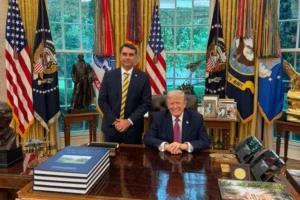
Executive members attribute part of the new round of tariffs to the actions of Senator Flávio Bolsonaro (PL-RJ) with the North American government.
Planalto intends to explore the episode during the election campaign, associating pressure from the United States with the senator’s actions. PT members claim that the measures represent an attempt to interfere in the 2026 elections and attribute part of the North American pressure to the coordination of the Brazilian opposition with the White House.
On the institutional front, the government will maintain the discourse that the senator’s actions were electoral in nature and contributed to legitimizing the commercial investigation against Brazil. Last week, after the senator’s participation in a USTR public hearing, Planalto released a statement in which it stated that Flávio Bolsonaro acted against national interests by supporting the North American trade offensive.
The government decided not to participate in the public hearing because it understood that this could legitimize a unilateral process by the United States. Instead, it maintained technical dialogue with the American body and prioritized negotiations conducted privately between the countries.
Also read:
Source: https://www.poder360.com.br/poder-governo/planalto-ja-conta-com-novo-tarifaco-de-trump-e-calibra-reacao/