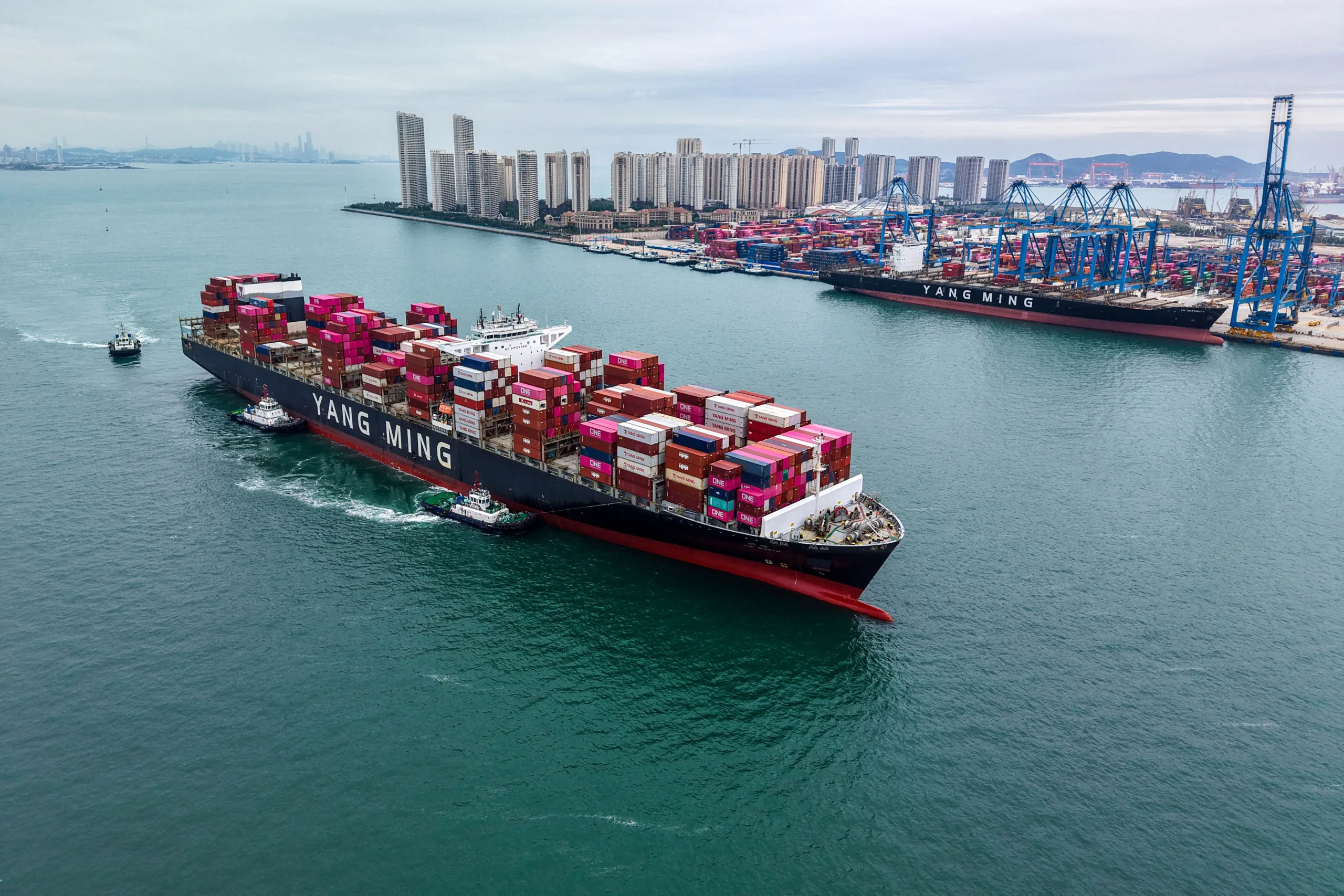
China’s foreign trade grew 16.9% in the first half of 2026 and surpassed the mark of 25 trillion yuan (around R$19.4 trillion) in one semester for the first time, according to data released this Tuesday (14) by the General Administration of Customs.
Imports grew the most, 22.1%, totaling 10.74 trillion yuan (R$8.2 trillion), while exports rose 13.4%, to 14.73 trillion yuan (R$11.2 trillion).
Trade with neighboring countries grew 20.6% and with Africa, 19.6%, both above average, while Latin America grew 16.2% and the United States accounted for 7.9% of the total. In the African case, growth exceeds that of the same period in 2025, when trade had increased by 14.4%.
The data was presented by the deputy director-general of the General Administration of Customs, Wang Jun, and by the spokesperson and director of the agency’s statistics and analysis department, Lü Daliang.
Latin America, Africa and neighboring countries
Trade with China’s neighboring countries totaled 9.44 trillion yuan (R$7.2 trillion), and Asean (Association of Southeast Asian Nations), the country’s largest trading partner, grew 18.2%, reaching 4.34 trillion yuan (R$3.3 trillion). The Belt and Road Initiative countries together accounted for more than half (50.9%) of Chinese foreign trade, with 12.97 trillion yuan (R$9.9 trillion) and an increase of 14.8%.
With the World Cup underway, sporting goods exports to Latin America rose 18.9%, and the sector’s sales to Africa rose 8.1%.
China’s expansion of zero tariffs since May 1 to all products from 53 African countries played a role in this first half’s numbers. In the first two months of the measure, imports from Africa totaled 193.8 billion yuan (R$147 billion), an increase of 23.5%, with emphasis on fish, textiles and fruit: purchases of avocados more than doubled, and purchases of apples grew 89.6%.
China, in turn, exported 534.1 billion yuan (R$406 billion) in electromechanical products to Africa, an increase of 28.8%, with emphasis on solar panels, power transmission equipment and auto parts.
Resumption of the pace of trade with the USA
Trade with the United States totaled 2 trillion yuan (R$1.5 trillion) in the semester and registered the first turnaround since Donald Trump’s tariffs, which taxed Chinese products by 145% in 2025: after falling 18.7% in the first quarter, bilateral trade grew 13.7% in the second. Growth, however, does not replace the losses recorded.
Lü Daliang attributed the timid recovery to Trump’s visit to China in May. “The meeting between the heads of state defined a new position for relations between the two countries, gave stable expectations to the economic and commercial relationship and injected a positive dynamic”, he stated.
Smaller surplus
Asked about the European Union’s position in relation to the Chinese surplus, Lü Daliang replied that the balance shrank by 4.7% in the semester. “We are not only the largest exporter in the world, we are also the second largest importer,” he stated.
European Union leaders have lamented the Chinese surplus, which reached around 360 billion euros (R$2.2 trillion) in 2025, according to data from the bloc itself. In June, at the G7 summit in France, the president of the European Commission, Ursula von der Leyen, classified the advance of Chinese industry in global markets as a “new shock from China”. On July 1, the bloc put into effect new rules regarding steel products and taxes on small e-commerce orders, measures that mainly affect imports of Chinese products.
Among the drivers of foreign purchases, Wang Jun cited the improvement in domestic demand, with industrial production on the rise and the acquisition of inputs for industry: imports of metallic ores grew by 22.6% and those of electronic components, by 45.6%. The deputy director general also mentioned zero tariffs and the authorization for new foods to enter the Chinese market this year, such as cashews and dried peppers from African countries, pecan nuts from Uruguay and apples from Belgium.
The spokesperson recalled that China and the European Union maintain a regular consultation mechanism on trade and investment, which held its first meeting in recent days and discussed the so-called “upward rebalancing” of trade with the bloc. Trade with Europeans grew 10.2% in the semester.
Private companies and high technology
Private companies continued to be the main driver of Chinese foreign trade, with 14.53 trillion yuan (R$11 trillion), an increase of 17% and 57% of the total. More than 660 thousand private companies registered import or export operations in the semester.
The country’s high-technology exports grew 39%, reaching 3.26 trillion yuan (R$2.5 trillion), and products linked to artificial intelligence infrastructure, such as electronic components and computer parts, generated 5.13 trillion yuan (R$3.9 trillion), an increase of 56.6%. Among robots, which gained their own customs classification this year, sales of industrial machines grew 18.6% and reached 141 countries, and sales of surgical robots more than quadrupled, to 480 million yuan (R$365 million).
For the second half of the year, Wang Jun cited projections from the International Monetary Fund, which predict a slowdown in the growth of global trade in goods and services from 5% in 2025 to 3.5% this year, in addition to inflationary pressure and an increase in trade barriers. Even so, he stated: “We have confidence and capacity to maintain the good momentum in foreign trade.”
Source: www.brasildefato.com.br