Published 03/06/2026 11:19 | Edited 06/03/2026 12:19
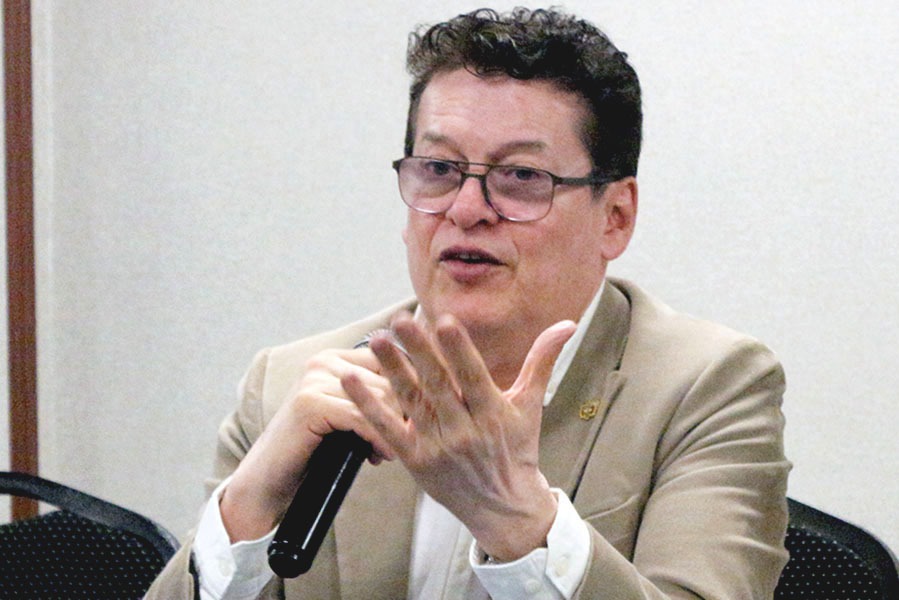
The international spokesperson for Iván Cepeda’s campaign, Alirio Muñoz, stated that the Colombian extreme right resorted to “massive vote buying”, digital disinformation and international support to try to prevent the victory of the Historic Pact in the first round of the presidential elections held on Sunday (31).
In an interview given in Bogotá this Monday (1st), Muñoz declared that sectors linked to former president Álvaro Uribe worked to strengthen the candidacy of lawyer Abelardo de la Espriella through the so-called “useful vote”, while fellow Uribista Paloma Valencia would have been left in the background in the final stretch of the campaign.
“Appealing to a massive purchase of votes, Álvaro Uribe organized the presidential campaign in such a way that he had two cards up his sleeve and did everything he could to win in the first round”, stated the leader of the Historic Pact.
“So they burned candidate Paloma Valencia – which really surprised us – and strengthened Abelardo de la Espriella’s, using the supposed useful vote,” denounced Muñoz.
Alirio was forceful in attacking the digital strategy of defamation attacks “coming from abroad” against the candidacies of the Historic Pact and the Alliance for Life, praising the decisive role that both Cepeda and his deputy Aida Quilcué played in the construction of the “Total Peace” policy.
The initiative was decisive in putting an end to more than 50 years of armed conflicts, which bled the country more during the democracies than the dictatorships of the Southern Cone,
“There were many defamation stories, abundant disinformation that, apparently, was paid for in the United States, Spain and other countries. There was also international interference and pressure from the USA, Ecuador and other sides”, highlighted the federal deputy for Bogotá in the Pacto Histórico coalition, adding that “it was a massive digital campaign” in favor of the extreme right.
According to Alirio, it is clear that “this electoral dispute is not just a decision about what Colombians want, but the fight between progressivism and international fascism”.
“Foreign media supporting fascism and neoliberalism”
An example of this, condemned Alirio Muñoz, “is that the large communications multinationals helped to guide networks and move algorithms in favor of the right-wing campaign, supporting fascism and neoliberal measures against our people”. On the other hand, he maintained, “we have to recognize that this government managed to communicate thanks to alternative means, thanks to social networks and community media, which democratized, in some way, information”.
Given this scenario, the leader pointed out, we assess that based on the almost 10 million votes we obtained, we now need to “redesign the campaign, the messages, the communicative, media and political strategies to win over the electorate that did not vote and attract those of the other candidates”.
Abstention last Sunday was 43%, with approximately 20 million Colombians not attending the polls – as there is no obligation – almost equaling the number of votes for the candidate with the most votes.
The first counts place drug traffickers lawyer and millionaire Abelardo de la Espriella with 43.7% of the votes against 40.9% for progressive Iván Cepeda and 6.9% for uribista Paloma Valencia,
In the words of Sérgio Fajardo, fourth place in the presidential elections, with around 4% of the total, de la Espriella is a ‘puppet’, a ‘shit’, ‘a cheater and an inventor of lies’, not deserving of any credibility.
“Petro is a reference in the rejection of imperialism”
Forceful statements by President Gustavo Petro “against the invasion of Venezuela, repudiating the blockade of Cuba and rejecting imperialism”, asserted Alirio Muñoz, “made our government lead an agenda for peace at an international level, to reduce climate change, for the self-determination of peoples and for national sovereignty”.
“I believe that Colombia is playing an important role for Latin America, for the world, and obviously, internally. With this commitment, many social policies are being adopted for the benefit of the population, which have to do with issues of integral rural reform, labor rights, public and free higher education, among other relevant achievements”, exemplified Alirio, which has put the forces of reaction in an uproar.
For Cepeda’s international spokesperson, “the dispute in this second round pits a future of sovereignty and democracy against the past of a mafia state, corruption and violence”.
“Colombia is at risk of falling into the hands of the extreme right”
According to the former mayor of the capital, Diana Patricia, candidate for president for the independent movement Imparável, “Colombia today faces the risk of losing its democracy, of falling into the hands of the extreme right, anti-rights, against women, against diversity, against pluralism”.
“There is a serious risk, dear Colombians, of losing democracy, the result of global authoritarianism”, warned the candidate for president, who identifies Abelardo de la Espriella with “crude, authoritarian and prejudiced Trumpism”. Faced with this situation, he called on everyone who abstained to go to the polls, “because I wouldn’t vote for de la Espriiella even if I died”.
Paloma Valencia’s vice-presidential candidate, Juan Daniel Oviedo, had also criticized de la Espriella for statements made by his wife, Ana Lucía Pineda, to Semana magazine, where she reported that if they did not win the presidency they already had a plan to deal with the defeat.
“Well, we have two paths: win or lose. And, if we lose, it’s not the end of the world, because we already have our lives organized, we live wonderfully, we work together, we have our children, we live in another country, if we want we can go back to Colombia, if not, no”, she sneered.
To work with ease and commitment to defend drug traffickers, Abelardo de la Espriella has trinationality. She achieved this by being born in Colombia, obtaining Italian citizenship due to her maternal grandparents’ Italian descent and living for 15 years in the United States, mainly in Miami.
Editing: Lucas Toth
Source: vermelho.org.br