Published 28/07/2025 14:24 | Edited 28/07/2025 14:33
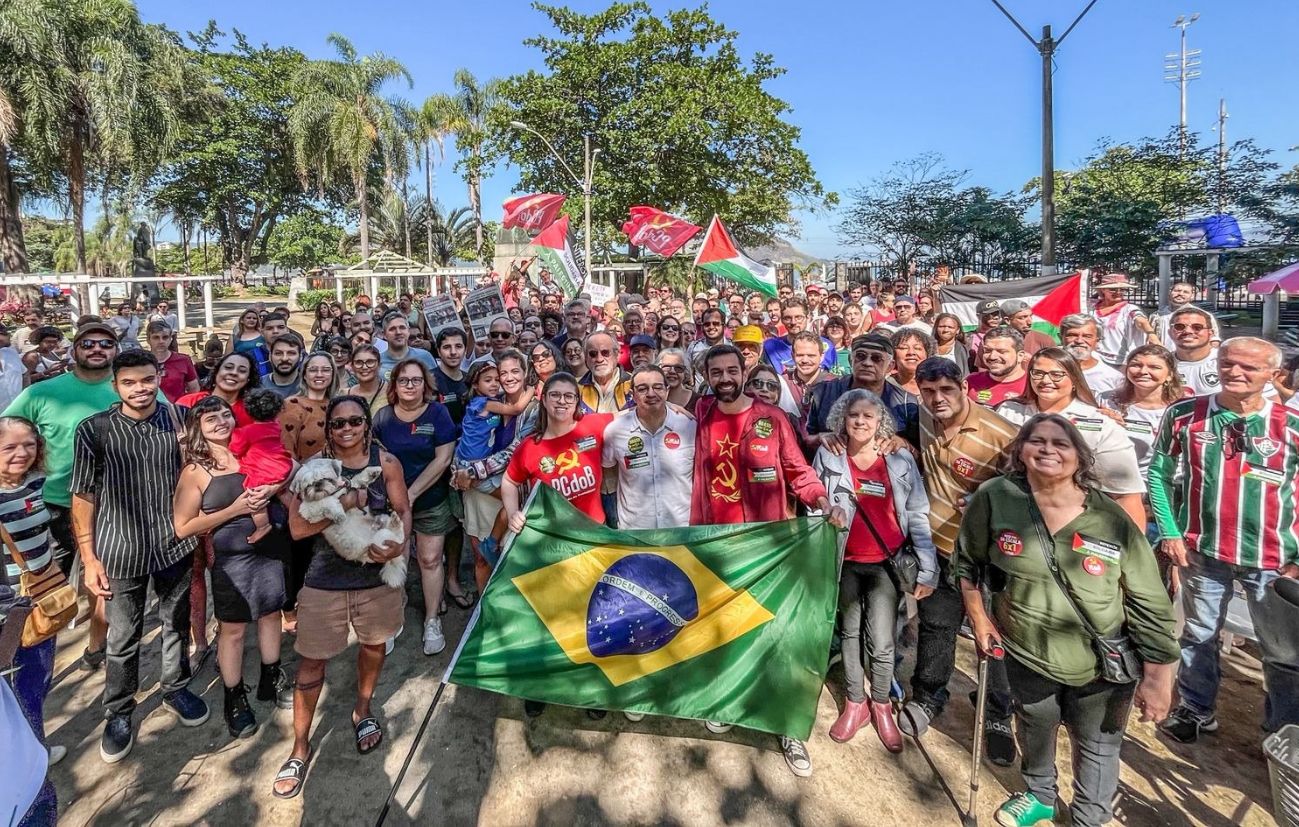
Hundreds of people participated, on Sunday (27), in Icaraí, Niterói (RJ), of the public class taught by economist and teacher Elias Jabbour about the recent tariff imposed by the US and its direct and indirect consequences for Brazil.
The activity is part of an economist’s initiative to promote face -to -face meetings with the population and stimulate public debate on strategic issues of the national and international conjuncture, such as the repositioning of Brazil in the global geopolitical board, the dispute between economic blocks and the new domination methods used by western powers.
The debate cycle has also occurred in Laranjeiras and Grajaú, in Rio de Janeiro. In Icaraí, the activity was attended by councilor Leonardo Giordano, from PCdoB.
In his speech, Jabbour pointed out that Brazil is already in a hybrid war process that tends to intensify in the coming months. According to him, it is a type of modern conflict that combines multiple attacks of attack, such as large-scale misinformation, economic sanctions, infrastructure sabotage, lawfare and articulated diplomatic pressures.
Also read: Lula criticizes tariff support: “They are clinging to the Trump boots”
“Brazil is at the center of a new type of war, which is not crashed with conventional weapons, but with narratives, tariffs, fake news and attacks on economic sovereignty. We are already living this, and the process will deepen until next year’s elections,” said the economist.
He warned that with the growing political polarization and the advancement of external interests on Brazilian strategic resources, society must be attentive and politically engaged. For Jabbour, the only way to resist these onslaught is with popular organization and critical information.
“The people need to understand what is happening. We are not talking about conspiracy theory, but a real strategy, applied in several countries. Hybrid war aims to governments, institutions and consciences. Either we react, or we will be captured,” he added.
The class had active public participation, which interacted with questions and contributions throughout the exhibition. At the end, Jabbour reinforced the importance of popular mobilization and said that new editions of the public class are scheduled for other cities in the state in the coming months.
Source: vermelho.org.br