Published 04/08/2026 11:34 | Edited 04/08/2026 13:22
The two-week temporary ceasefire between the United States, Iran and Israel, announced on Tuesday night (7) and put into effect in the early hours of Wednesday (8), already faces a strong threat of collapse. Just hours after the agreement, Iran issued a stern warning that it could withdraw from the truce if Israel continues its attacks in southern Lebanon. The Tasnim agency, linked to the Islamic Revolutionary Guard Corps (IRGC), cited an Iranian security source as saying that Tehran “evaluates the possibility of leaving the agreement” if the “Zionist regime” persists in violations.
The Iranian threat came in response to Israel’s explicit position that the ceasefire does not include Lebanon. Prime Minister Benjamin Netanyahu and Israeli Army spokesman Avichay Adraee confirmed that operations against Hezbollah continue at full steam. Today, Israel carried out the largest wave of air and ground attacks since the start of the war, hitting more than 100 targets in southern Lebanon, Beirut and surrounding areas, with hundreds of deaths and injuries reported by the Lebanese Ministry of Health.
Despite growing fragility, the initial announcement of the ceasefire caused an immediate and sharp drop in oil prices. Brent plummeted between 13% and 16% in the early hours of today, fluctuating around US$92.80 to US$95.42 per barrel (from peaks above US$110-120 during the conflict). WTI fell to a similar level. The relief in the markets reflects the expectation of reopening of the Strait of Hormuz – a corridor through which around 20% of the world’s oil passes –, one of the central conditions of the agreement.
Without victory, head of the North American state celebrates fragile ceasefire
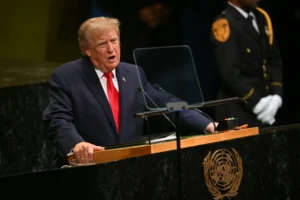
Same without apparent gains, US President Donald Trump celebrated the movement on its social network, classifying the date as a “great day for world peace” and stated that the ten-point proposal presented by Tehran is a “viable basis”. “Iran wants this to happen, they’ve had enough! The US will help deal with traffic in the Strait of Hormuz. There will be a lot of positive action,” Trump said, signaling a pragmatic retreat from the global energy bottleneck.
Iranian sovereignty and resistance
On the Iranian side, the tone is one of political victory and reaffirmation of sovereignty over its territorial waters. Foreign Minister Abbas Araghchi confirmed that the Strait will be reopened, but under strict protocol. “Navigation will be carried out in coordination with Iranian forces”, said Araghchi, highlighting that the interruption of hostilities is the precondition for maintaining the flow of around 20% of the world’s oil.
Nonetheless, The fragility of the agreement lies in Israel’s belligerent stance. Benjamin Netanyahu’s government was quick to declare that the commitment made in Washington does not extend to Lebanese territory. Ignoring the first point of the draft — which requires the cessation of hostilities on all fronts — Israeli forces intensified bombings against the city of Tire and southern Lebanon.
Logistics and the end of damming
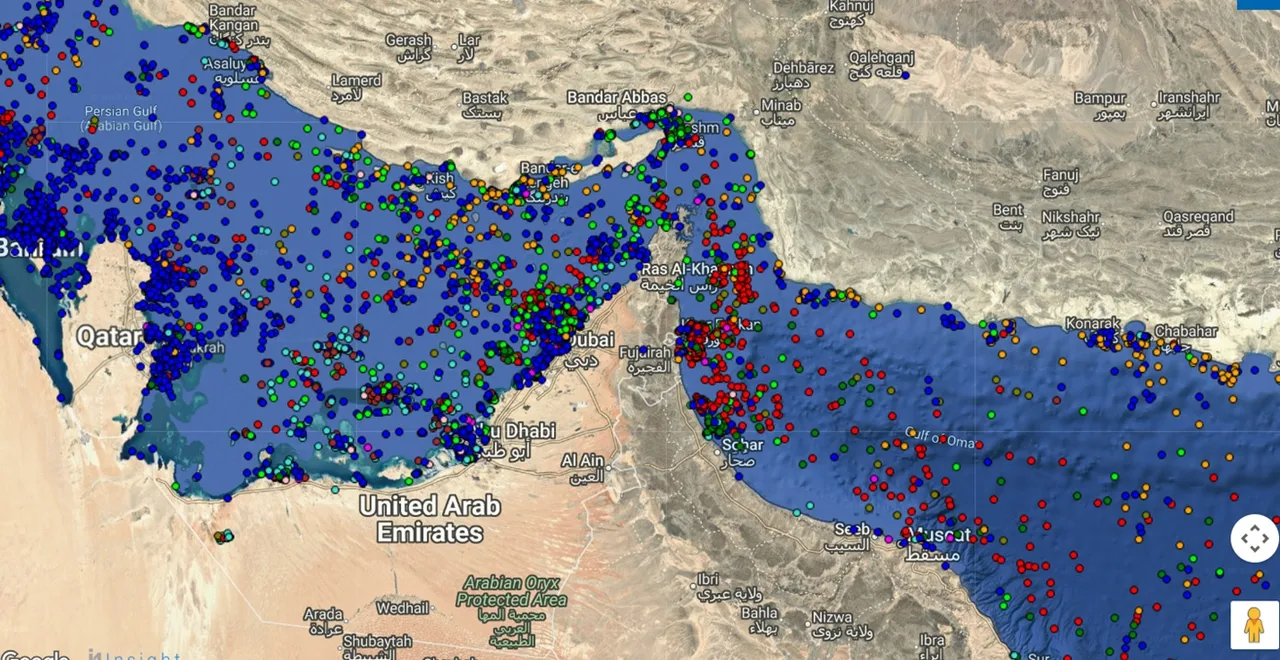
In addition to the drop in prices, the biggest immediate benefit of the agreement is the logistical unlocking of a billion-dollar fleet. Data from monitoring platforms MarineTraffic e Windward indicate that approximately 1,300 vessels trade are trapped in the region. Of these, approximately 800 ships are stuck in the Persian Gulf awaiting exit authorization. The cost of this damming is critical: an impact between US$50 thousand and US$150 thousand per day per vessel in charter rates and war risk insurance. Full normalization, however, is expected to take weeks, due to the need to renegotiate insurance policies and coordinate flow in a channel just 21 nautical miles wide.
If Iran does not interrupt the talks, due to Netanyahu’s attacks, direct negotiations to consolidate the ten points of the agreement should begin this Friday (10), in Islamabad. The success of Pakistani diplomacy and China’s role as a trade guarantor will be tested by the US’s ability to contain the expansionist drive of its main ally in the region. Reports from The New York Times and the Associated Press indicate that a last-minute intervention by Chinese diplomats was what convinced Tehran to accept the terms of the truce in Islamabad.
Analysts still debate the reasons for Trump’s retreat: it would have been tactical-military (in the face of a strategy that was not clear from the beginning), to avoid a regional and global escalation; a political maneuver to respond to internal and external pressures; an action to avoid the global economic shock and inflationary pressures that were already announced? There are those who even mention signs of speculative financial operations going against what the market expected. Market reports, such as those from Forbes Money and indicators of S&P 500point out that the “great day for world peace” celebrated by Trump hides a scenario of strong speculative financial operations that already anticipated the truce. What is a fact is that progress towards sealing an agreement remains fragile while Lebanon remains under attack from Israel.
Source: vermelho.org.br