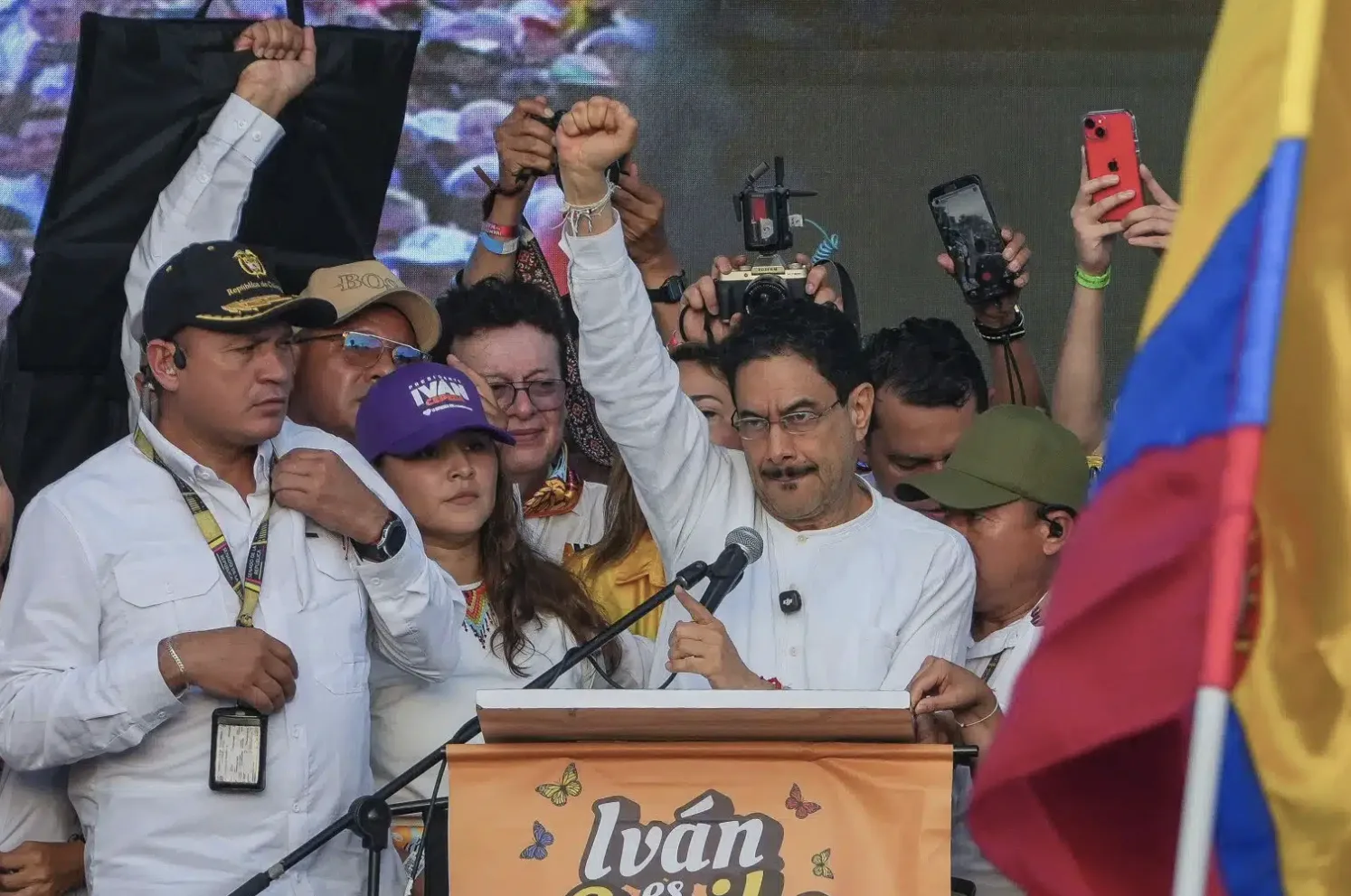
The government candidate Iván Cepeda, who is running for president of Colombia with Abelardo de la Espriella, must challenge the official preliminary result that indicated the opposition’s victory last Sunday (21).
Cepeda disagrees with the results of around 33,000 polling stations, arguing that the preliminary count should not express definitive results.
“We recognize the ‘pre-count’ [um sistema de apuração rápida] as data that is not yet official or binding. We recognize your first result, but then we must inform you that our group of observers, tens of thousands of lawyers, is prepared to challenge 33 thousand tables across the country”, said the candidate.
Cepeda made recognition of the result of the presidential election conditional on the conclusion of the official vote. At this stage, provided for in Colombian legislation, the country’s authorities validate the results of the elections.
Scrutiny in Colombia
The condition recalled by the candidate of the situation in Colombia has to do with the country’s own electoral structure, known for the use of printed votes. In practice, jurors at each electoral table must count the votes manually, recording the results on official forms and, finally, transmitting the information to the electoral authority.
To optimize the dissemination of the preliminary results of the election, Colombia carries out a pre-count (or preconteoin Spanish), normally released shortly after the polls close.
Last night, the pre-count showed that Abelardo de la Espriella received 49.66% of the votes, while Cepeda received 48.70%. In quantitative terms, the difference indicated is around 240 thousand votes.
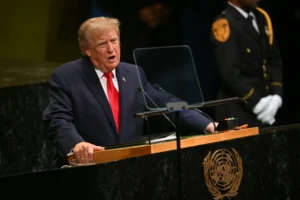
The opposition candidate anticipated the official results, celebrating the fact that Colombia had won “its most important game”. The president of the United States, Donald Trump, and Argentina, Javier Milei, also celebrated the oppositionist’s victory.
But Cepeda highlighted that his team of lawyers will follow the scrutiny, showing caution in the face of preliminary numbers. This process begins the day after the vote.
Despite the connection with the counted votes, the pre-counting system is still subject to errors. Depending on how voters filled out their ballots or how election agents transmitted their votes, the numbers released may not be confirmed in the future. Exactly because of this condition, yesterday’s data is not official.
In order to resolve doubts, scrutiny is a procedure for checking physical documents sent by the electoral boards. The process, which is monitored by representatives of the campaigns in dispute, is subject to challenge. One of them is the identification of divergences or other irregularities.
The process develops at different levels. In the first, the results are determined at the municipal and district levels. Then there is the review at the departmental level. Finally, there is the national count, under observation by the National Electoral Council (CNE), in Bogotá, the Colombian capital.
The country’s legislation does not provide a deadline for carrying out the vote, which can take days. The procedure is carried out by scrutinizing commissions, made up of electoral delegates, including judges and notaries. This year, there are 9,300 members of the electoral commissions, according to the Colombian National Registry.
At the end of the election, the TRE officially declares the winner. In practice, this is the moment when the final count of the elections is considered.
History
In the last Colombian presidential elections, the defeated candidates recognized the results at the end of the preconteo. In 2022, for example, Rodolfo Hernández acknowledged his defeat to Gustavo Petro before the election, just as Petro himself did against Iván Duque in 2018.
In general, the differences between the pre-count and the official result tend to be minimal. In the first round of this year’s election, held on May 31, the variation did not reach 0.1%.
To the Brazil in factPietro Alarcón, Colombian lawyer and member of the Historic Pact, Cepeda’s party, defended the candidate’s position, saying that yesterday’s data does not represent a definitive result.
“The Historic Pact’s legal team must go to Bogotá to monitor the final scrutiny and make the respective complaints. At this moment, there is no way to recognize the result. It is not a definitive result”, he recalled.
Gustavo Petro pointed to the risk of external interference in this year’s election. According to him, there would be evidence “of a change in the IP address of several national registry servers”. The Colombian leader highlighted that “the only [país] in the world with the capacity to do this is the state of Israel.”
This year’s election defines who will govern Colombia between August 2026 and August 2030.
Source: www.brasildefato.com.br