United States Treasury Secretary Scott Bessent announced that, in negotiations with Chinese Vice Prime Minister He Lifeng, the two countries decided to extend for another two months the so-called “trade truce” agreed at the meeting in Busan, South Korea, in October last year. The temporary suspension of commercial measures and countermeasures, announced in an interview given by the secretary to Fox Newsexpired on November 10th and moved to January 10th.
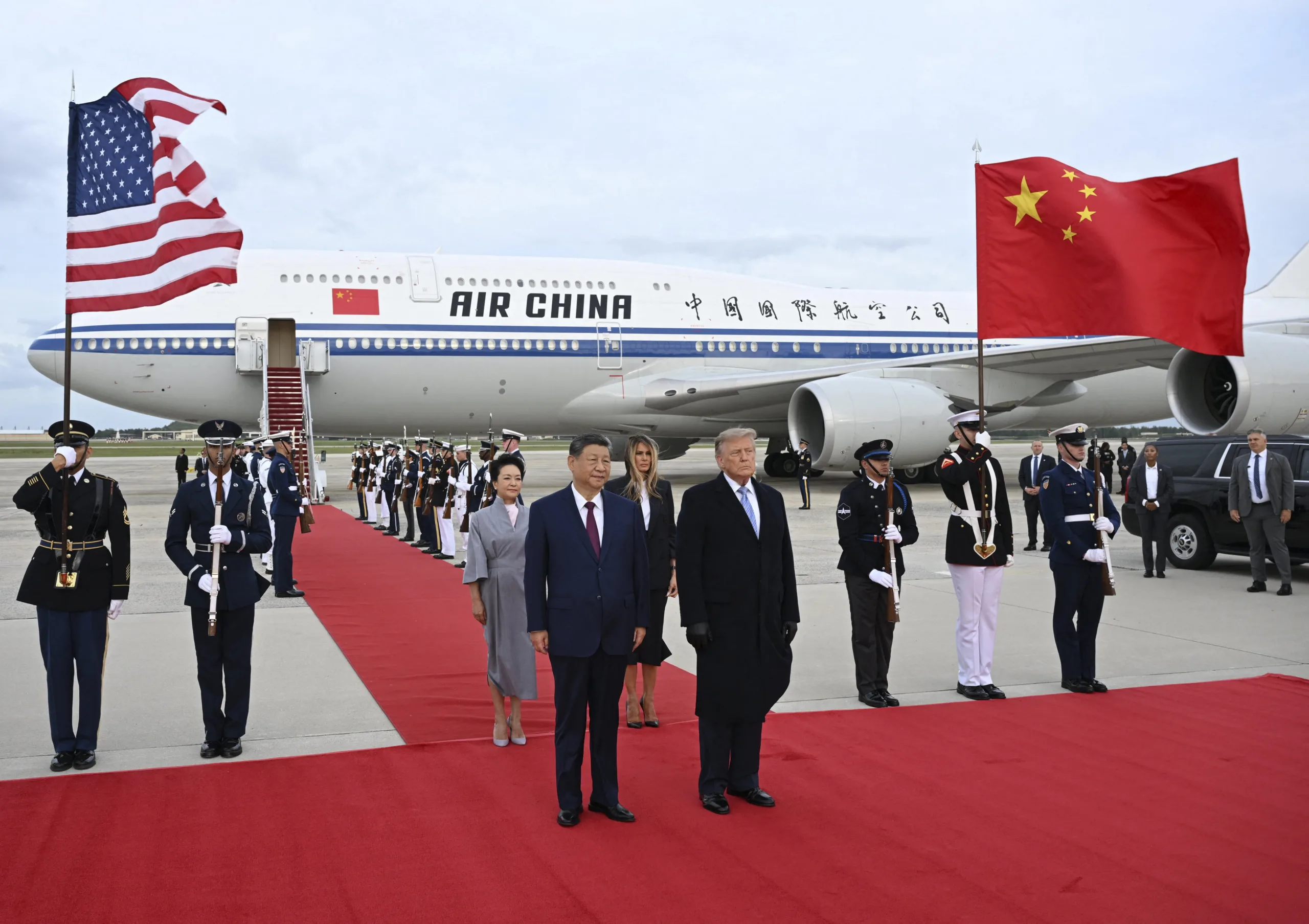
The announcement was made shortly after Chinese President Xi Jinping’s arrival on Wednesday (23) in Washington for a state visit, Xi’s first in more than a decade.
The Chinese president’s last trip to the US was in 2023, when he participated in the 30th Asia-Pacific Economic Cooperation (APEC) Economic Leaders’ Meeting and met with President Joe Biden, without it being formally considered a state visit.
Bessent and He met at the World Bank headquarters in Washington on Wednesday. On Sunday, both met with US Trade Representative Jamieson Greer for 12 hours in New York.
“We were left with some unfinished work. We met today to see if we could come to a bigger deal rather than a series of smaller things,” Bessent told the US broadcaster.
The ’30 for 30′ deal
Bessent also mentioned the mechanism he called “30 by 30”: the elimination of tariffs on goods worth US$30 billion (around R$165 billion) on each side. Each country chooses or suggests products to reduce tariffs or eliminate them. The agreement excludes so-called sensitive products for national security. Both countries have applied export restrictions to this type of product, although China has taken these measures more in response to impositions from the US government.
The proposal emerged from the meeting that Xi and Trump held in Beijing in May this year. Bessent said he expected announcements on financial services and agricultural purchases. Regarding the commitments made on imports from the agricultural sector, the secretary said that China has fulfilled most of them, but is behind on some: it purchased 25 million tons of soybeans, but would still have to purchase around US$17 billion (around R$93 billion) in other agricultural products.
Meeting of representatives
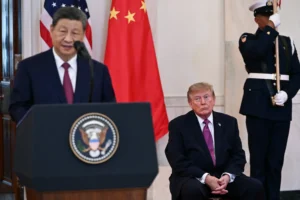
Xi and Trump meet this Thursday morning (24) at the White House. The agenda includes a state dinner, in which Sam Altman, from the artificial intelligence company OpenAI, Jensen Huang, from chipmaker Nvidia, and Elon Musk, from Tesla, are expected to participate. The latter two traveled with Trump to Beijing in May of this year.
Bessent highlighted that it is possible that the two leaders will meet in person four times this year. Trump will travel again to China to participate in the 33rd APEC Economic Leaders’ Meeting in Shenzhen, in the south of the country, on November 18-19, 2026; and Xi is expected to go to Miami for the G20 meeting.
The Busan Agreement
The suspension of part of the tariffs and countermeasures between the world’s two largest economies had been agreed on October 30, 2025, when Xi and Trump met in Busan, South Korea. The agreement eliminated the 10% additional tariff imposed by the US on the grounds of fighting fentanyl and suspended the 24% reciprocal tariff on goods from China, Hong Kong and Macau for 12 months.
Beijing, in turn, suspended equivalent countermeasures, including export controls in the rare earths sector. The agreement also suspended US investigations into the Chinese maritime, logistics and shipbuilding sectors for a year.
Source: www.brasildefato.com.br