“China is following Cuba’s energy transition and supporting its efforts to improve the people’s living conditions with concrete actions,” said the Chinese ambassador to the island, Hua Xin, when announcing the arrival of a new donation from the Asian country.
These are 5,000 photovoltaic solar systems donated by the Chinese government and transported in 200 containers. The equipment will be used for a project to bring electricity to homes and public centers located in rural and remote areas of Cuba.
This is the third donation of 5,000 photovoltaic systems sent by China to Cuba in recent months. The first arrived in November 2025 and the second, in August this year. Both were intended mainly for institutions that provide essential services, including health centers, daycare centers, homes for children without family support and bank branches.
In a message published on social media, Cuban Foreign Minister Bruno Rodríguez thanked “the Party, the Government and the people of China for their solidarity and sincere material assistance, at a time when the US government intensifies its blockade against Cuba and maintains an energy siege that causes considerable damage to the population.”
The arrival of the donation coincides with Chinese President Xi Jinping’s state visit to the United States. The president arrived in Washington on Wednesday, September 23, and was personally received by President Donald Trump at Andrews Air Force Base, in Maryland. It was the first time since 1962 that a United States president personally received a foreign head of state at an airport.
Energy cooperation
The donations of autonomous solar systems are part of broader cooperation between China and Cuba in the area of energy. In this context, the two countries agreed on a program for the installation of 92 photovoltaic solar parks throughout the national territory, with the goal of reaching around 2 thousand megawatts of installed capacity. Chinese state-owned and technology companies participate in providing panels, inverter technology and technical support for the development of this program. It is estimated that 75 of these plants are already built.
Added to this program are autonomous systems intended for isolated residences and centers that provide public services. In March of this year, following aggression from the United States, the Ministry of Energy and Mines reported on a plan to install solar systems in centers considered vital in the country’s 168 municipalities and in isolated homes, including those that had never had access to electricity.
Accelerating the energy transition
The transition process to renewable sources is part of an energy development plan that Cuba has been implementing for several years. However, difficulties in guaranteeing the supply of fuel led the country to accelerate the incorporation of alternative sources.
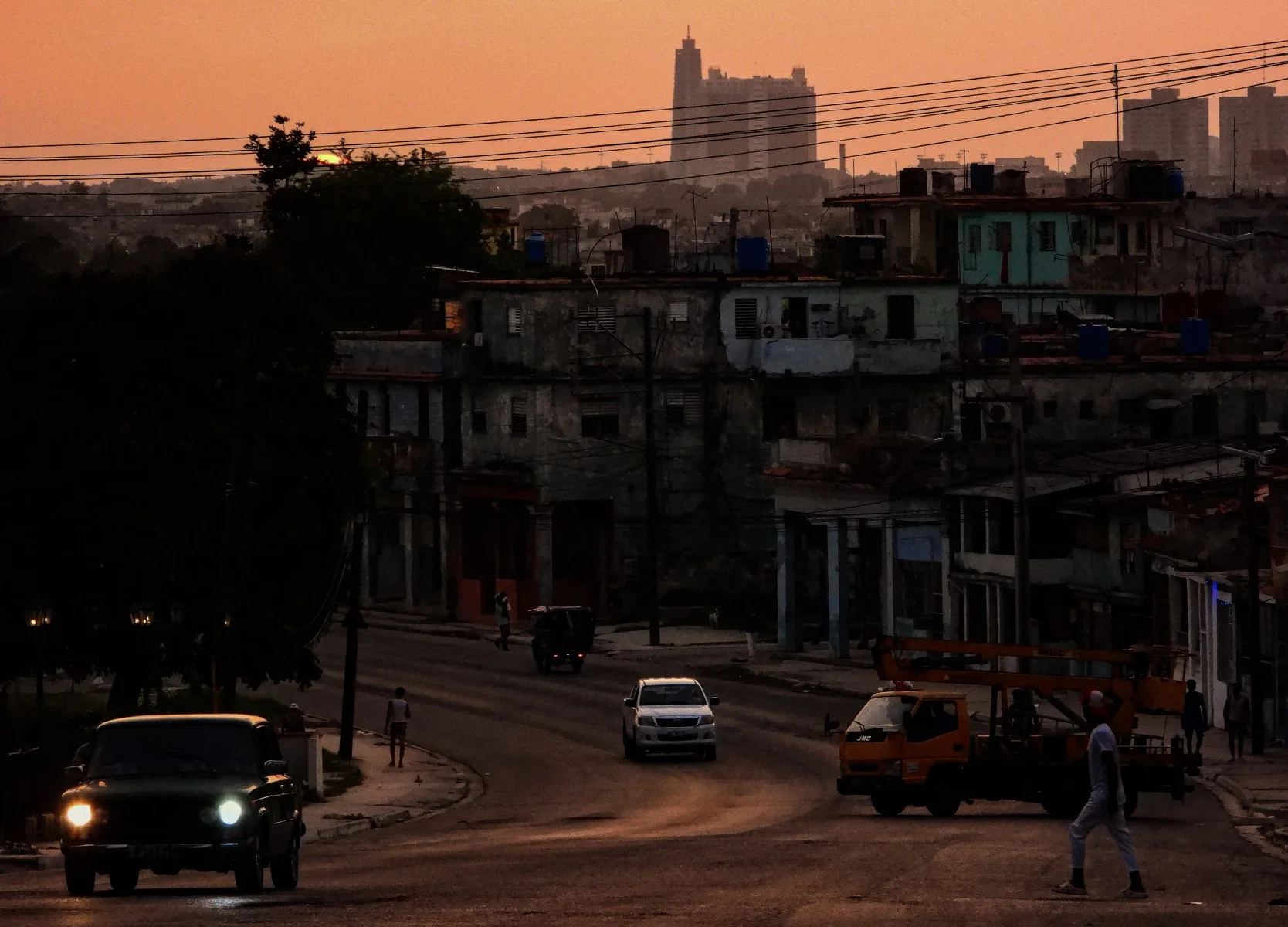
At the end of January, the United States government expanded the blockade on Cuba by threatening any country that sells or supplies oil to the island, directly or indirectly. The measure imposed energy suffocation on the island. Cuba maintains a high dependence on imported fuels: around 65% of the fuel consumed on the island is imported.
The reduction in oil supply, combined with breakdowns in thermoelectric plants and difficulties in acquiring fuel, caused prolonged electricity cuts, which hampered the population’s daily lives and the country’s production, in addition to successive collapses of the National Electric System.
During the radio program Shared Criterionbroadcast on Wednesday (23), President Miguel Díaz-Canel reported that Cuba currently has 1,418 megawatts (MW) of installed photovoltaic capacity, distributed across 144 parks, and stated that the country expects to surpass 1,500 MW by the end of the year.
According to Díaz-Canel, renewable sources currently represent 21.4% of the country’s electricity generation. The president also stated that these facilities are already present in practically half of Cuban hospitals, in 89% of nursing homes and grandparents’ homes and in 16% of state-run homes for children without family support.
Source: www.brasildefato.com.br