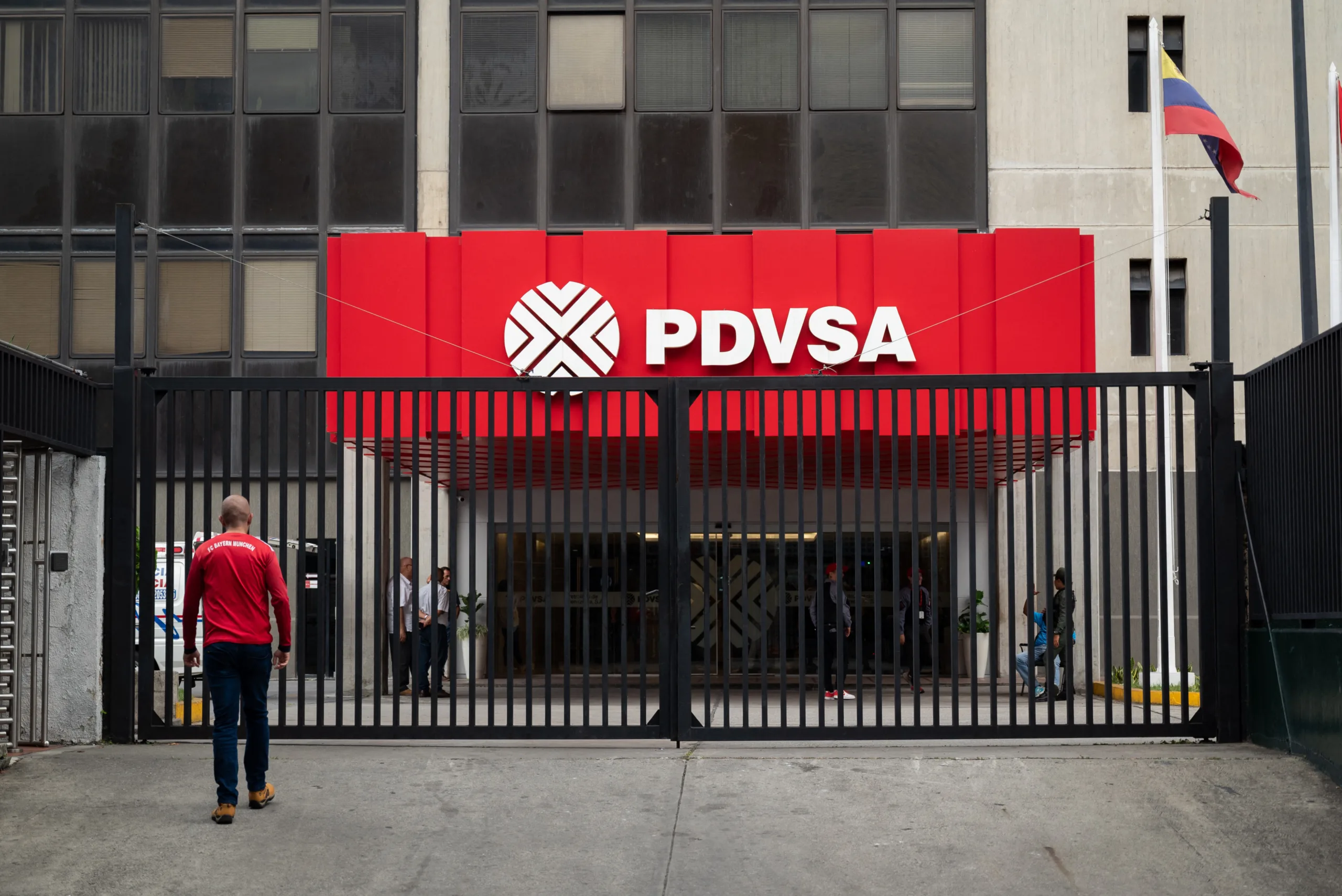
The United States Treasury Department’s Office of Foreign Assets Control (OFAC) issued this Monday (14) a new license that authorizes commercial transactions with the state-owned Petróleos de Venezuela (PDVSA) and its subsidiaries, under specific conditions.
The flexibility now allows certain operations with the Venezuelan government necessary for the execution of oil activities, in addition to opening the way for foreign companies to export or supply Venezuelan oil and oil products to other countries outside the United States, as long as they submit reports on volumes, values and payments to the North American authorities ten days after the first operation and periodically every 90 days.
On the other hand, the rule requires that any contractual disputes and litigation be resolved in courts in the corporations’ countries of origin. The rule also preserves the corporate structure and control over overseas assets, including Citgo Petroleum Corporation.
The document also establishes strict financial and operational obligations. Payments going to blocked people must be deposited in government funds designated by Washington. The measure is in line with Executive Order 14373, imposed by the US government a few days after the US bombing of Venezuela, which determines that all funds from the Venezuelan government and its agencies, such as the state-owned Petróleos de Venezuela (PDVSA), derived from the sale of natural resources or diluents, are retained in accounts held by Washington, and are transferred to the Venezuelan government after special authorization or license.
Furthermore, the new license maintains strict prohibitions on trading in securities and debts of the Venezuelan government or PDVSA. Transactions with listed people or entities from countries such as Russia, Iran, North Korea and Cuba remain prohibited, as do partnerships with companies from China.
Dropper
The Venezuelan expert in oil geopolitics, Miguel Jaimes, states that, although the easing of sanctions is being announced “in a drip”, the measures seek to correct a strategic error by the United States, which cut off trade flow with its main and historic supplier.
“We had warned that the very bureaucratization of these measures based on untrue elements would harm and tie down the United States itself, and that, sooner or later, this would return. This is not surprising”, says the analyst, who analyzes the issue from the perspective of energy geopolitics.
“All of this is part of a great work with many actors, involving a considerable number of countries that also announces many things to us. One of them is war, confrontation and the impossibility of having another way out in the face of the countless conflicts that the United States is promoting in the world.”
Jaimes considers that, although it is not the “best moment”, Venezuela must be prepared to take advantage of the possibilities that seek to strengthen the country’s development.
“Venezuela needs to be very agile and the Ministry of Hydrocarbons must be very attentive. There are some transcendental and important decisions that Venezuela could take at this moment, such as, for example, making the control cabin of the Venezuelan oil industry be directed directly by the Presidency of the Republic”, he argues.
Sanctions still weigh on the economy
On the other hand, Miguel Jaimes warns that a significant number of sanctions remain in force, which will need to be reviewed not only by the United States, but also by other countries that have taken measures against the Venezuelan economy.
“The sanctions that still exist against the Venezuelan economy represent the capture of important resources, such as those of Citgo, a company over which the United States government still does not authorize Venezuela to change its management; the issue of the 31 tons of gold that Venezuela has, assets located abroad in many countries; nations that took advantage of Venezuela to take and capture resources that are retained”, he points out.
Jaimes also recalls that, as a result of the sanctions, there was an exponential increase in the country’s external debt, reaching close to US$240 billion, which will need to be renegotiated, in addition to highlighting the violation of international law by the United States in the military aggression of January 3, 2026.
“The issue of negotiation regarding external debt is not at all clear so far, and a large part of this represents a huge amount of frozen resources. Obviously, there is also the damage committed on January 3, when Venezuela was invaded, more than 130 people were murdered and President Nicolás Maduro and the first lady were kidnapped, in an unusual action, outside of any type of criteria or respect for international law”, says the expert.
US has ‘deep control’
Miguel Jaimes points out that the United States created a “very difficult” scenario for Venezuela, and highlights that one of the most serious measures against the country is Executive Order 14373.
“It is nothing more than a decision in which profound control and obstacles are imposed on the management of resources generated from the revenue of the oil business, controlling its routes, its commercialization and also its finances and credits”, he argues.
“However, nothing prevents strategic action when making decisions, knowing how to wait, work, build and design new scenarios”, adds the expert who, although he recognizes the “guardianship” over the decisions taken by the government in office, considers that caution is needed in the analysis, considering, above all, the precedent of military aggression and the suffocation of the Venezuelan economy.
“There are many protected decisions there; however, there are measures that mean a breather for the country and that the Venezuelan government must know how to handle and carry out, as it is either that or it is an invasion. The situation does not look good; therefore, it is necessary to be very careful, knowing how to wait and carefully observe each of the steps and decisions taken”, concludes Jaimes.
Diplomatic relations
The United States Department of State confirmed last Saturday (12) that Venezuela will be able to re-accredit diplomats on US territory. The advance stems from the agreement signed on March 5, 2026, focused on the progressive reestablishment of diplomatic and consular relations between the two countries.
The Venezuelan embassy and consulates on US soil were closed on January 24, 2019, after the Venezuelan government announced the bilateral rupture in response to Washington’s recognition of an interim government, at the time, led by deputy and self-proclaimed president, Juan Guaidó.
Although the new accreditation of diplomats represents an initial step, there are still no definitions regarding the calendar or consular services for renewing passports and documents for the Venezuelan community abroad.
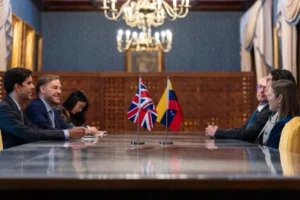
Donald Trump’s government invited Venezuela to participate in the G20 Energy Ministers meeting that takes place until next Wednesday (16) in Houston, in the state of Texas. The Venezuelan delegation is led by the Minister of Hydrocarbons, Paula Henao, and the executive vice-president of PDVSA, Jovanny Martínez.
Although it does not participate in closed-door ministerial meetings, the country’s representation has an agenda of bilateral meetings, parallel activities and meetings with executives from the oil sector. The initiative takes place under the American presidency of the G20 and signals a rapprochement in the energy field.
Source: www.brasildefato.com.br