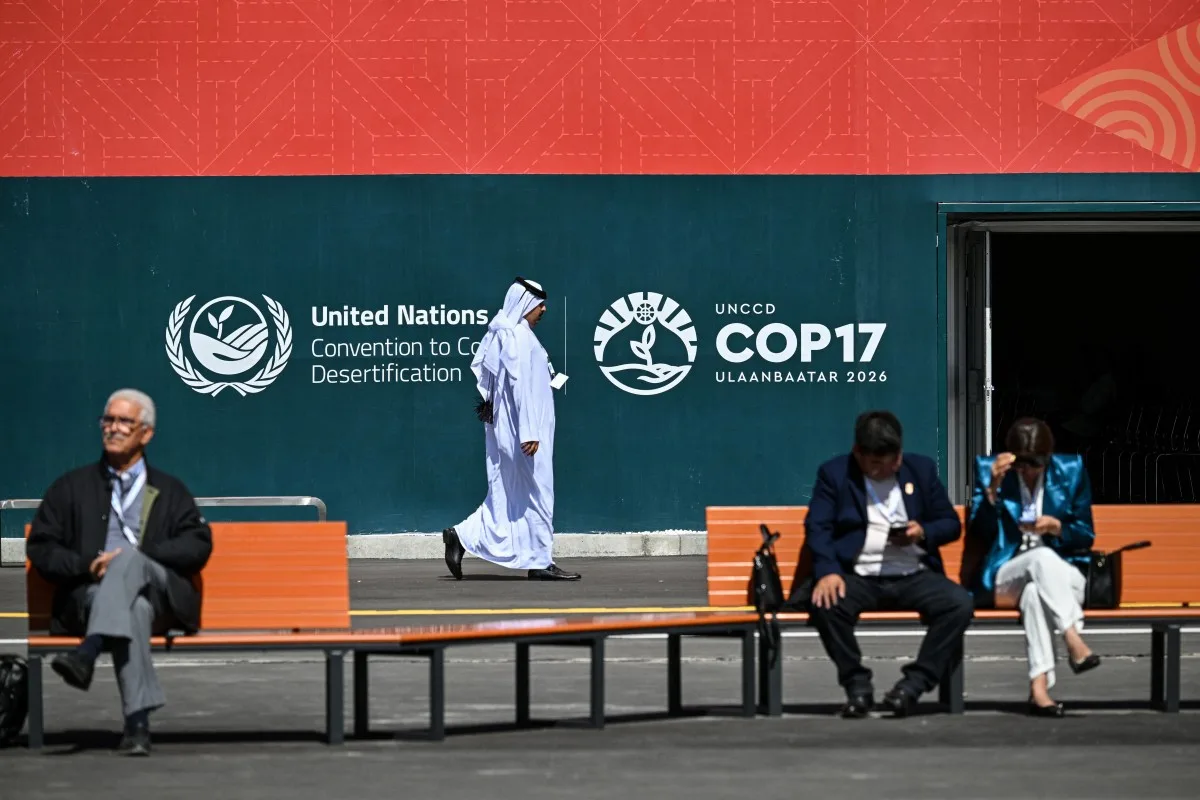
During the 17th session of the Conference of the Parties (COP17) of the United Nations Convention to Combat Desertification (UNCCD), held in Mongolia, the session “International cooperation in the area of media as a driver of the sustainable development agenda – The BRICS TV media diplomacy space” was promoted. Participants discussed the role of international media in promoting the Sustainable Development Goals (SDGs), increasing society’s awareness of the problems of soil degradation and disseminating practices to solve them.
The session was moderated by the executive director of the UN Global Compact National Network in Russia, Natalia Dorpeko. She highlighted that the implementation of environmental conventions depends, to a large extent, on raising awareness in society and that the media play a fundamental role in this process.
“The implementation of the Sustainable Development Agenda and, in particular, the United Nations Convention to Combat Desertification and other UN environmental conventions, at national and international levels, is based on our common responsibility, awareness and knowledge. And it is precisely the media that plays a huge role in this process. At the same time, the media must recognize their fundamental responsibility for the content disseminated: the information must be correct and fair. […] It is important to develop international communications and partnerships between media outlets to cover the agenda in different countries”, he stated.
The international project manager at TV BRICSUliana Bejenar, highlighted that the media becomes a link between solution developers and those who apply them in practice. According to her, the work of the media is not an auxiliary tool, but one of the conditions for achieving the Sustainable Development Goals. She highlighted the importance of horizontal exchange of experiences between countries in the Global South and added that international cooperation creates a space for media diplomacy.
“Today, the TV BRICS represents a new multilateral information exchange system between countries in the BRICS+ space and the Global South. The partner network brings together more than 300 organizations from 35 countries. […] The environmental agenda receives special attention. Topics such as biodiversity preservation, green energy development, food security, sustainable development and combating desertification are systematically addressed, both in the context of the national experiences of the BRICS+ countries and within the scope of international cooperation. […] A TV BRICS also participates in the SDG Media Compact, a UN initiative aimed at uniting the media community in support of the SDGs. The main task of all this work is to take the SDGs out of the realm of abstract conceptions and make them part of everyday life,” declared Bejenar.
In 2026, the TV BRICS acted as an international information partner for the “Silk Road Caravan” initiative of the United Nations Convention to Combat Desertification. The result of the extensive media campaign was the production of the documentary “Terra – Linhas da Vida”, whose premiere took place shortly after the session.
The film is dedicated to the Russian part of the “Silk Road Caravan” route: the territories of the Republic of Dagestan, the Republic of Kalmykia and the Astrakhan region. The project presents successful pasture management practices, biodiversity preservation and rational use of water resources, as well as examples of interaction between government, science and local communities.
After the screening, participants shared their impressions. The director of the Department of Land Policy, Viatcheslav Leonov, drew attention to the problem of disinformation, highlighted the importance of the media’s work and positively assessed the professional performance of the team at TV BRICS. The chairman of the UNCCD “Central Asia–Russia” Interregional Group Office, German Kust, called on the media, including the TV BRICSfrom modern translators of the complex language of the SDGs and the climate agenda into a language accessible to the public. He also suggested that the film be shown to students and young people. The general director of the “Volnoe Delo” Foundation, Irina Bakhtina, highlighted that, despite the complexity of the topic, the film is easy to follow and conveys hope in solving problems through the use of modern practices and solutions.
In an exclusive comment to TV BRICSthe film’s participant, Olympic judo athlete and ambassador for the United Nations Convention to Combat Desertification, Asmaa Niang, shared her opinion about the project.
“The ‘Silk Road Caravan’ project is important because it unites people. During my participation in the project, I personally discovered different ways of treating and recovering soil and combating desertification. […] The role of the media in this is extremely important, especially when we talk about involved and committed vehicles that help to show the truth about what is happening. […] Within the scope of the ‘Silk Road’ project, the presence of these media outlets was very valuable, as it ensured greater visibility for the initiative and allowed everyone to understand the challenges we face and what the fight against desertification consists of,” he stated.
The documentary of TV BRICS “Terra – Linhas da Vida” will later be adapted into the main languages of the BRICS countries and made available to the media network’s partners for international distribution.
Source: www.brasildefato.com.br