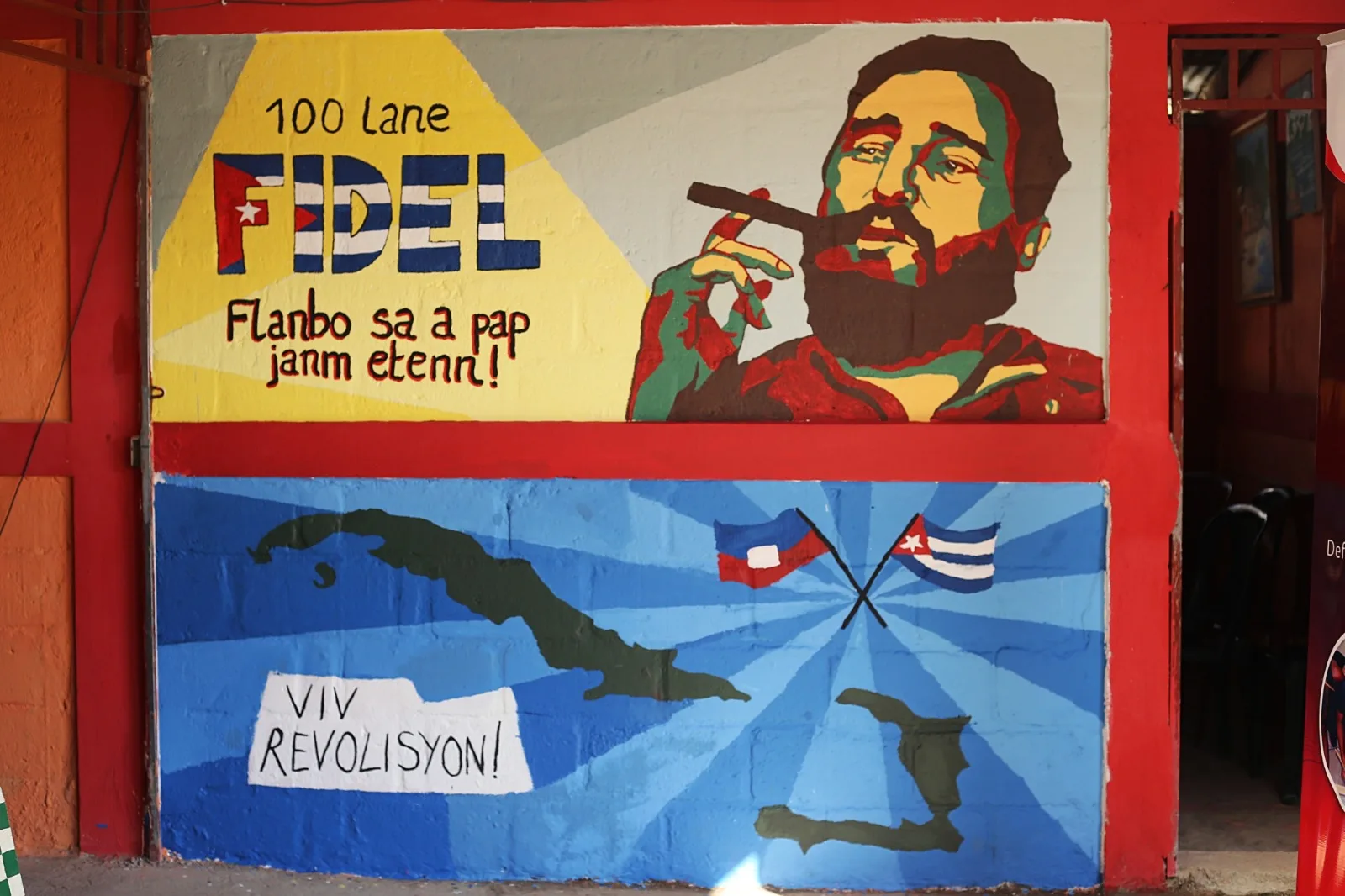
Among the more than 7 thousand islands, 13 sovereign countries and 17 dependent territories, that exist in the Caribbean Sea, the region of the world with the highest concentration of tax havens, Cuba and Haiti are black sheep. With their revolutionary and independent, abolitionist or socialist trajectories, they attracted the ire of the dominant powers who never forgave such audacity.
Despite their geographic proximity — only 80 kilometers separate the tip of the Môle Saint Nicolas, in northwest Haiti, from Punta de Maísi, on the east coast of Cuba —, the forced isolation of these two countries is so great that it is necessary for a Haitian to make two or three international stops, shell out more than US$1,000 and chase several visas to finally be able to land at José Martí airport in Havana.
This was the itinerary that economist and professor Camille Chalmers, coordinator of the Haitian organization PAPDA, had to follow to be present at the IV Continental Assembly of Alba Movimentos. Organized in the Cuban capital this month, the meeting celebrated, alongside the Cuban people and dozens of international popular organizations, the centenary of Fidel Castro’s birth.
For Chalmers, no effort could be spared to reaffirm the permanence of the Haitian-Cuban friendship and the bonds of solidarity that unite the two countries in such adverse contexts. “Our presence in the Assembly is part of a continuous attitude of solidarity [com Cuba]. But today, especially, we think there is an urgency and a need to be present in Havana […] to add to all the efforts that the Cuban people have made to defend themselves against imperialist aggression”, he declares, in an interview with Brazil in fact.
Today, the economic blockade that Cuba has faced for 60 years, imposed by the United States to suffocate the socialist revolution, has reached its most critical point. With the invasion of Venezuela on January 3, the island lost one of its most important allies and oil suppliers. The lack of energy affects not only people’s daily lives, but also the functioning of institutions, schools, transport and hospitals, with dramatic consequences for human lives.
In Haiti, the means of intimidation used by imperialism are different, but the purpose is the same: successive coups, liquidation of food sovereignty and supply to armed groups that terrorize the population and impede the exercise of democracy aim to destroy the rule of law and the return of a certain neocolonial order in the “back yard” of the United States.
According to Chalmers, systematic isolation, misinformation and historical erasure are also part of this silent war. “People cannot know that these two countries made revolutions, that enslaved workers [haitianos] managed to devise a strategy to overthrow the three largest empires of the time and that Cuba managed to carry out a revolution transitioning to socialism just 140 kilometers from the greatest capitalist power. Nobody can know that. And when it’s talked about, it’s meant to be seen as a failure, something that didn’t work.”
Cuban doctors
However, what these two peoples also have in common is a strong spirit of dignity and commitment to the struggle. In this sense, the best response they can give to imperialist threats and oppression is precisely through mutual help and mutual appreciation, whether in the cultural, human or scientific sphere. Since 1998, this is what the Cuban Medical Brigade has done in Haiti, with 65 health professionals working throughout the southern region of the country.
Dr. Guillermo Mora García, coordinator of the Brigade, highlights that these 28 years have been of uninterrupted presence, facing, together with the Haitians, all the difficulties that the country has gone through, from the earthquake and climate disasters, through the Covid-19 pandemic, to the political and security crisis that continues to paralyze the region’s development.
“We are in Haiti sharing our knowledge, our science and the same pains, the same sacrifices that the Haitian people suffer”, explains García to the Brazil in fact. The focus of the brigade’s mission is in the most remote areas, furthest from public health infrastructure and where living conditions are most precarious. “We are in the most difficult to reach places, always together with Haitian comrades, and working for the people in a spirit of humanist solidarity and a vocation for the promotion and prevention of diseases.”
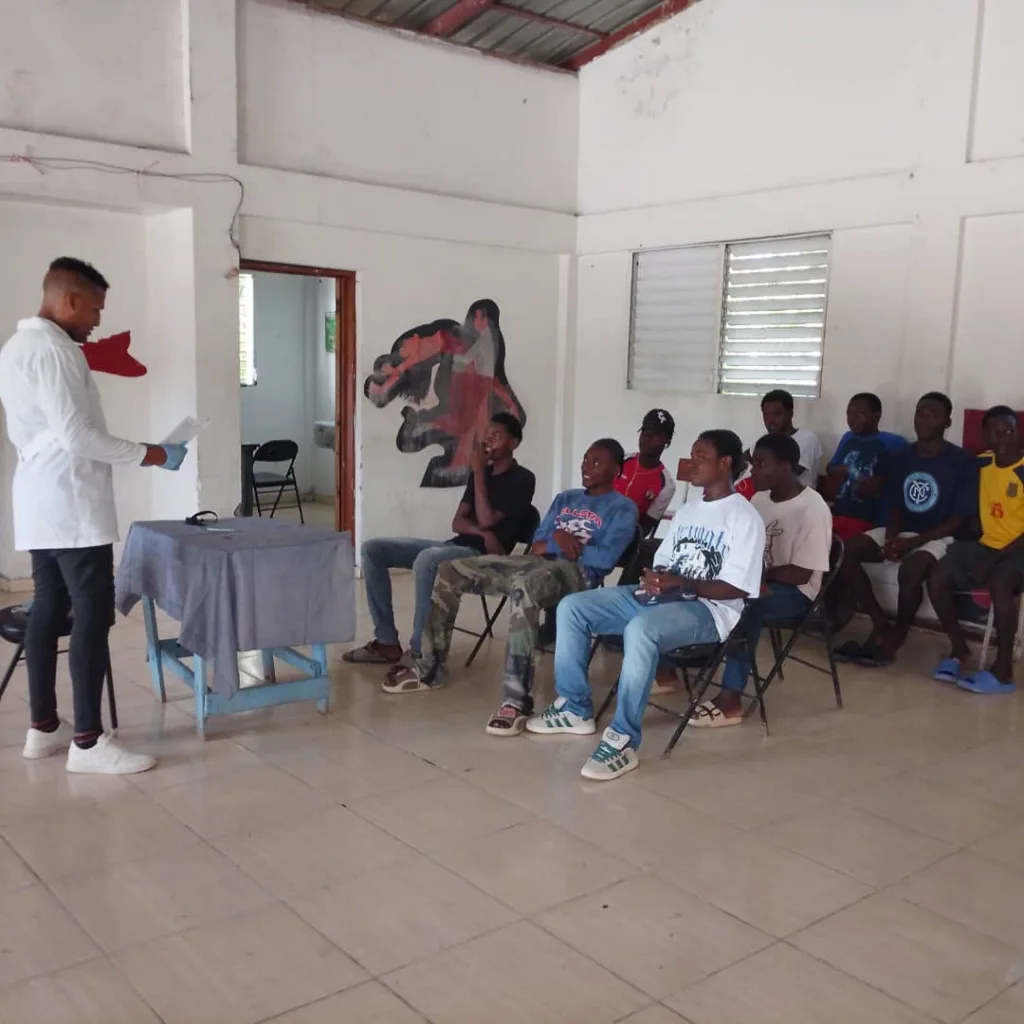
This stance of working together instead of wanting to impose its way of doing things or replace the Haitian State, as many international organizations do, is the Brigade’s fundamental hallmark. It operates through an agreement with the Haitian Ministry of Public Health and Population, within the Public Health network, always alongside national doctors and health professionals.
“Our work would not be possible without the support and presence of Haitian professionals with the highest scientific qualifications, who are always at the forefront together with our doctors”, reinforces the brigade coordinator, reinforcing that the country has prestigious health institutions. The main shortage in the sector is the number of doctors available, with only three for every 10,000 inhabitants in Haiti — by way of comparison, there are 30 in Brazil and 100 in Cuba.
The brigade’s areas of activity range from general medicine to surgical intervention, including training and participation in specific health promotion programs by local authorities. Scientific exchange also constitutes a fundamental axis of the Cuban presence in Haiti, with the organization of bilateral days and seminars. As for the brigadistas, they generally spend around three years immersing themselves in the country, learning the Creole language and working at the service of the population.
“In Cuban brigades around the world, the professionals who provide services to the population do so with love, with dedication, and because part of our training as doctors includes proletarian internationalism,” notes García. “For Cubans, Haiti is a people that deserves all the respect, consideration, our friendship and, obviously, the attention of our health professionals, who will always, or as long as the people decide, be here in this sister land.”
It is important to highlight that Cuban solidarity in relation to Haiti has also been manifested in other areas over the last few decades, with contributions in agriculture and food sovereignty, in education, through the “Yes, I Can” literacy program, or in academic collaboration, which has allowed the training of more than a thousand Haitians in Cuban universities, most of them in a career in medicine.
Historical brotherhood
“We need to say that, between the Cuban and Haitian peoples, there is a long history of solidarity that began in 1495, when a Tainó chief went to Cuba to warn about the crimes committed by the Spanish and ask the Cuban Tainos to organize resistance”, says Camille Chalmers, referring to the indigenous peoples who inhabited the two islands before the arrival of Christopher Columbus. “And history has shown that the area in which this chief arrived was where the greatest resistance against Spanish colonization took place”, he highlights.
Throughout the 19th and 20th centuries, the trajectories of the two rebel nations crossed and interacted at different times. The Haitian Revolution, which abolished slavery and led to the country’s independence in 1804, inspired the uprising of enslaved Cubans led by José Antonio Aponte in 1812. Later, the friendship and mutual admiration between José Martí and Haitian anthropologist Antenor Firmin fueled the project for the liberation of the Cuban nation, of which Martí was a pioneer.
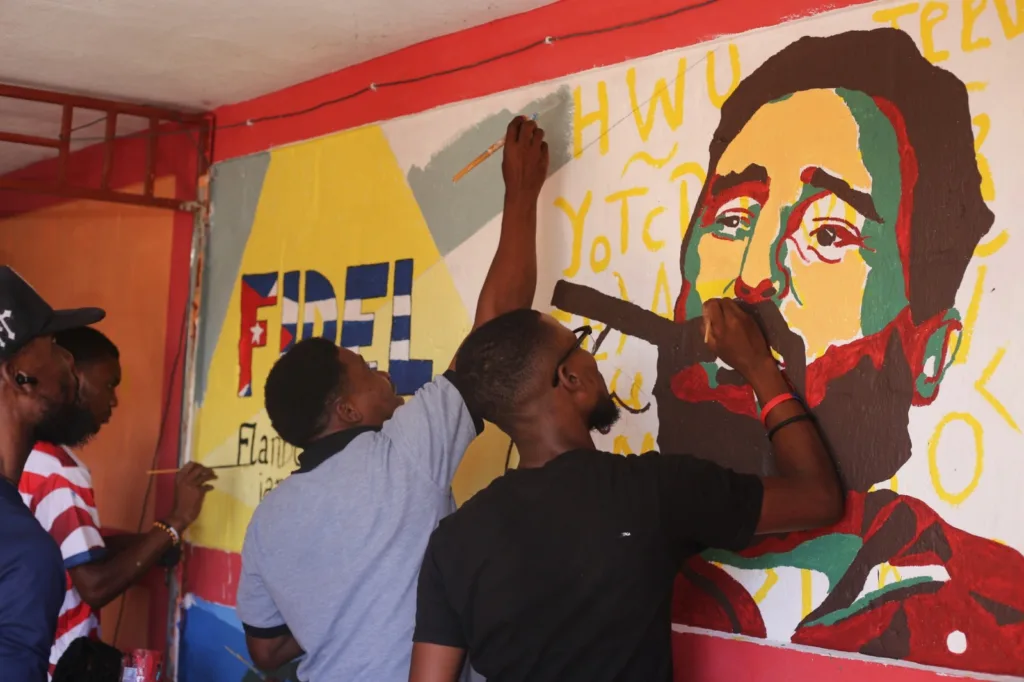
Chalmers narrates that, “when José Martí died in combat, he had in his backpack a book by Antenor Firmin entitled ‘The equality of the human races’”. He also insists on the crucial role that dialogue between various intellectuals in the region played in shaping the identity of the Caribbean peoples. “José Martí, Antenor Firmin, Ramón Betances, Máximo Gomes and others were working on the idea of a confederation of the Antilles, with the aim of creating a relationship between the peoples of the Caribbean that is different from the segmentation that colonization wanted to create.”
Fidel Castro himself reported, in the book “Fidel and Religion”, the result of a conversation with Frei Betto, that his political and revolutionary consciousness was formed, still in childhood, from contact with Haitian migrants who worked on Cuban mills. Contact with these families allowed him to learn about the culture and history of Haiti, at the same time as it made him aware of the injustices they suffered, the precariousness of their living conditions and the enormous social inequality that structured Cuban society at the time.
When the Cuban Revolution of 1959 took place, Haiti was living under the dictatorship of François Duvalier, who, at the behest of the United States, broke off relations with the new government. It was only in 1997 that President Jean-Bertrand Aristide reestablished diplomatic contact with Fidel Castro, allowing the opening of a Cuban embassy in Port-au-Prince and the beginning of collaboration that has lasted to this day.
“Haitians and Cubans are two brotherly peoples who, since 1495 and throughout history, have never abandoned each other. They work towards the same sense of dignity, self-determination, defense of sovereignty, battle against slavery and all forms of oppression”, concludes Chalmers, also aware of the impact that Cuban resistance has on an international level. “The Cuban Revolution is a flame of freedom, of dignity, of hope for all people who wish to assert their sovereignty and who believe in the possibility of building a society that is not based on a logic of predation, a criminal logic of exploitation, like capitalism.”
Source: www.brasildefato.com.br