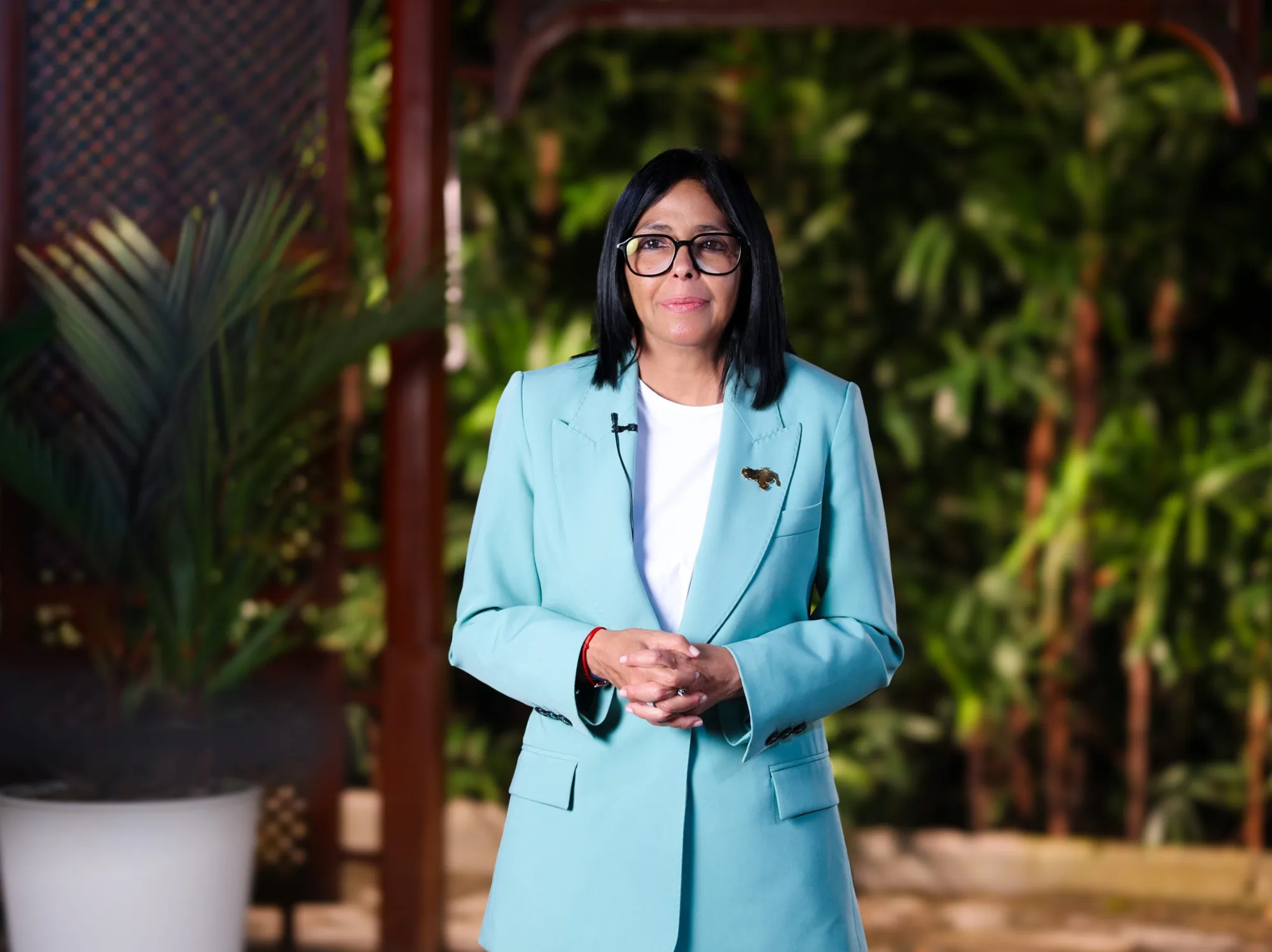
Two months after the double earthquake that hit Venezuela on June 24, the country’s acting president, Delcy Rodríguez, made a statement on national radio and television on Monday night (24). The representative presented a detailed balance of social, housing and economic recovery actions.
“On June 24, the earthquakes brought an emergency of a magnitude that we had not experienced in our history. Thousands of families saw their lives change in seconds. There were those who lost loved ones, those who lost their homes, those who still hope to be able to fully recover their daily lives,” said Rodríguez.
“I know that, for a family that has not yet been able to return home, no number is enough. And I also know that, for those who still have difficulties with water, electricity and services, knowing that we have made progress does not mean in any way that the problem has been resolved. That is why we continue working tirelessly, without letting up in our efforts”, he continued.
The double earthquake of magnitude 7.2 and 7.5 left an official death toll of 6,509, mainly affecting the coastal state of La Guaira and Caracas. From the first hours of the tragedy, popular mobilization and international cooperation were essential for rescue and medical care. According to Rodríguez, the health system served almost 20 thousand patients and more than 25 thousand people were temporarily housed in integral camps.
In assessing the infrastructure and housing initiatives, the president highlighted that the Despeje Digno e Seguro plan has already collected 28% of the rubble in the affected areas, which is equivalent to around 580 thousand tons of materials. Rodríguez emphasized that this work is done with extreme respect, as the rubble represents the history of each broken home.
“It is work that requires coordination and safety, but also a lot of care. This rubble is not simply material that must be removed. There were homes, memories and, in some cases, the entire history of a family. Therefore, we are doing this work with respect and dignity, as we move forward in the recovery of each community”, he stated.
In the area of housing, the acting president reported that the government delivered 335 new homes, directly benefiting 1,172 people, in addition to rehabilitating 1,001 properties, which ensured shelter for 3,503 citizens. The goal established by the president is to deliver more than 4 thousand new homes by the end of the year.
“However, I want to make an important observation: the work to improve public services did not begin with the earthquake nor does it end with reconstruction. We have a national plan to progressively improve electricity, water, health, schools, housing, public roads and services that are part of Venezuelans’ daily lives”, said the president, also promising the digitalization of public services and the elimination of bureaucracy.
Energy recovery and new trade agreements
Despite the immense difficulties imposed by the emergency, the Venezuelan economic and productive sector presented solid results during the period. Rodríguez announced that oil production was not interrupted and surpassed the mark of 1 million 230 thousand barrels per day, reaching the highest operational level recorded since February 2019.
The acting president also informed that Venezuela signed 50 strategic oil and gas agreements with private and international investments “to facilitate the development of 76 hydrocarbon producing areas in the national territory”.
In macroeconomics, the president highlighted that the exchange rate gap between the official dollar and the parallel fell from almost 30% to 12.3% in the last two months, facilitating financial planning for families and companies. Venezuelan economic growth is projected at 6.5% for this year by the Economic Commission for Latin America and the Caribbean, ECLAC, marking 21 consecutive quarters of growth.
“These are important numbers, but they are by no means the final objective, because there is still a long way to go to recover an economy seriously impacted by sanctions. The objective is that a growing economy can translate into jobs, better income for workers, services and opportunities for families”, declared Delcy Rodríguez.
Impact of rains and electrical planning
Recently, the country faced the impact of severe rains caused by tropical wave number 40, which caused severe damage in Caracas, Miranda and other states. The storms left at least five people missing and affected more than 150 homes, in addition to causing slopes to collapse and rivers to overflow in the capital.
During the emergency, the government mobilized Civil Protection teams and brigades to clear roads and provide immediate assistance. Rodríguez related the rains to the country’s energy planning, pointing out that high temperatures cause frequent electrical storms that have a strong impact on energy networks.
To face high climate demand and keep up with economic growth, the acting president reported the signing of agreements to add new megawatts to the national electrical system, highlighting the contract with the Argentine company Impsa, in addition to the execution of a national plan to significantly expand Venezuelan thermoelectric capacity.
“The earthquake worsened and made more urgent a task to which we were already committed: electricity,” said Rodríguez. “We have signed agreements that will allow us to incorporate new megawatts into the national electrical system, including the agreement with the Argentine-American company Impsa, and we are executing a plan to significantly expand our thermoelectric capacity with the aim of increasing available capacity, which will allow us to meet the high demand generated by the climate emergency and economic growth. But, behind each megawatt, there is a family, there is the student who needs light for their tasks, the hospital that needs to operate, the business that needs to open and the company that needs to produce and create jobs”, he stated.
Political and social advances
In the institutional field, the governor announced that urban police checkpoints will be eliminated in the coming days to make way for a more efficient and respectful preventive patrol system. It also mentioned that, in cooperation with the International Committee of the Red Cross, prison conditions are being reviewed.
In domestic politics, Rodríguez celebrated the first working agreement signed with a sector of the opposition represented in the 2015 National Assembly, focused on the renewal of the Judiciary and the recovery of the country’s assets. As a result of democratic coexistence, 1,046 citizens were released and 12 thousand received procedural benefits.
“The future is before us and belongs to us. In the end, this is the simplest criterion to measure our work: that things work better in the lives of each Venezuelan, that a family can have a safe home, that there is access to services, that a young person can study and find opportunities, that anyone who wants to undertake can do so without unnecessary obstacles, that Venezuelans who left can return to build their future and that we can think differently without ceasing to recognize ourselves”, he declared.
According to the president, the country is also making progress in regularizing its diplomatic relations and with international organizations, such as the World Bank, the International Monetary Fund (IMF) and the Inter-American Development Bank (IDB), to attract more technology and financing.
“Our relationship with the world must be guided by a simple idea: the interests of Venezuela and the well-being of Venezuelans”, highlighted the acting president.
Source: www.brasildefato.com.br