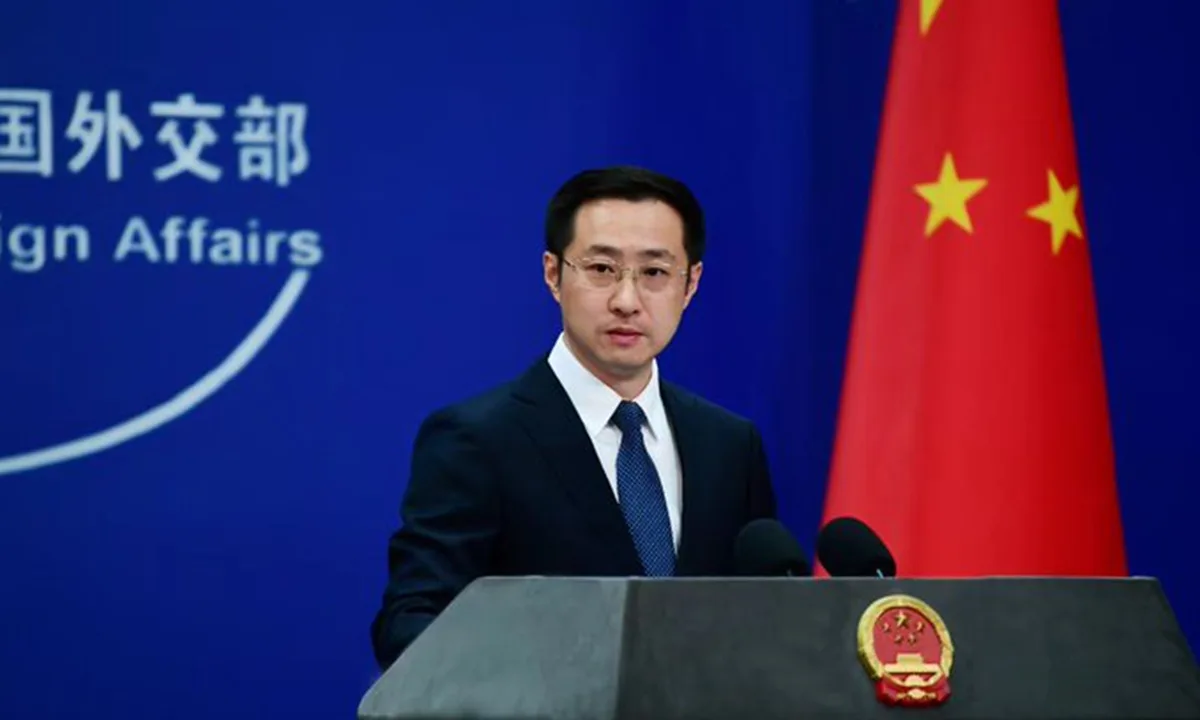
Shortly after the United States applied another round of sanctions against Iran, threatening countries that trade with the Persian country, China, the main buyer of Iranian oil, reacted. This Tuesday (25), the spokesperson for the Chinese Ministry of Foreign Affairs, Lin Jian, participated in a press conference and rejected the idea that trade between Beijing and Tehran is the target of interference.
“Cooperation between China and Iran has always been within the framework of international law and should not be subject to interference or disruption. China has stated on several occasions that it strongly opposes illegal unilateral assessments. China will take all security measures to firmly safeguard its rights and interests,” Lin explained.
The official did not comment on what measures might be taken, but the comment marks Beijing’s position in the face of the attempted siege imposed by the White House. The reason is strategic: currently, China is the destination for around 80% of Iran’s oil exports.
Closing of Hormuz
Since February, when the US and Israel began Operation Epic Fury against Iranian territory, generating the immediate closure of the Strait of Hormuz, one of the implicit objectives of the Donald Trump administration has been to harm the flow of trade in relation to China.
This flow was especially significant in 2025. According to data from consultancy Kpler, the eastern country purchased, on average, 1.38 million barrels of Iranian oil last year. The strategic need that China has to expand its crude oil reserves must also be weighed, whether due to the demand of its population or as a way of mitigating the risks of conflicts such as the one currently taking place in the Middle East.
In the first two months of 2026, for example, already aware of the possible escalation in the Middle East, China purchased 16% more oil than in the same period of 2025, according to the country’s customs administration. This set of factors has enabled the country to alleviate the problems arising from the conflict in the Middle East. The real volume of the strategic oil reserve is considered a state secret in China, but estimates from research organizations on the subject, such as the Institute of Energy Studies at the University of Oxford, indicated that the Asian country would have a reserve of 1.1 billion to 1.3 billion barrels by the start of the war.
New threats
In the United States, the next steps remain uncertain, whether in the military field or in the purely commercial sphere. This week’s threats concern Iran’s allies, but no country is mentioned by name. US Treasury Secretary Scott Bessent, responsible for releasing the package of sanctions against 60 individuals, entities and vessels for alleged commercial involvement with Iran, did not refer to any specific Chinese financial institution.
In a press conference on Monday (25), Bessent was asked about the generic tone in which he referred to the possible targets of the sanctions, but responded with a question: “Why would I want to implode the global financial system?”.
Trump, in turn, continues with a rhetorical endeavor in order to try to convince public opinion and American society itself that he would be able to beat Iran, both in the clash of military forces and in the economic field.
Previously, the US president even directly threatened countries in the North Atlantic Treaty Organization (NATO) that seemed reticent to the idea of contributing to military action against Iran, but he was unable to get the allies to embark on the actions. Now, according to Bessent, Trump “is calling world leaders with specific requests to cease their interactions with Iran.”
In the diplomatic field, a meeting between Trump and Xi Jinping is planned in Washington at the end of September, which could be the second meeting between the leaders of the two main economic powers in the world. The first happened in May, when the Republican traveled to Beijing.
Source: www.brasildefato.com.br