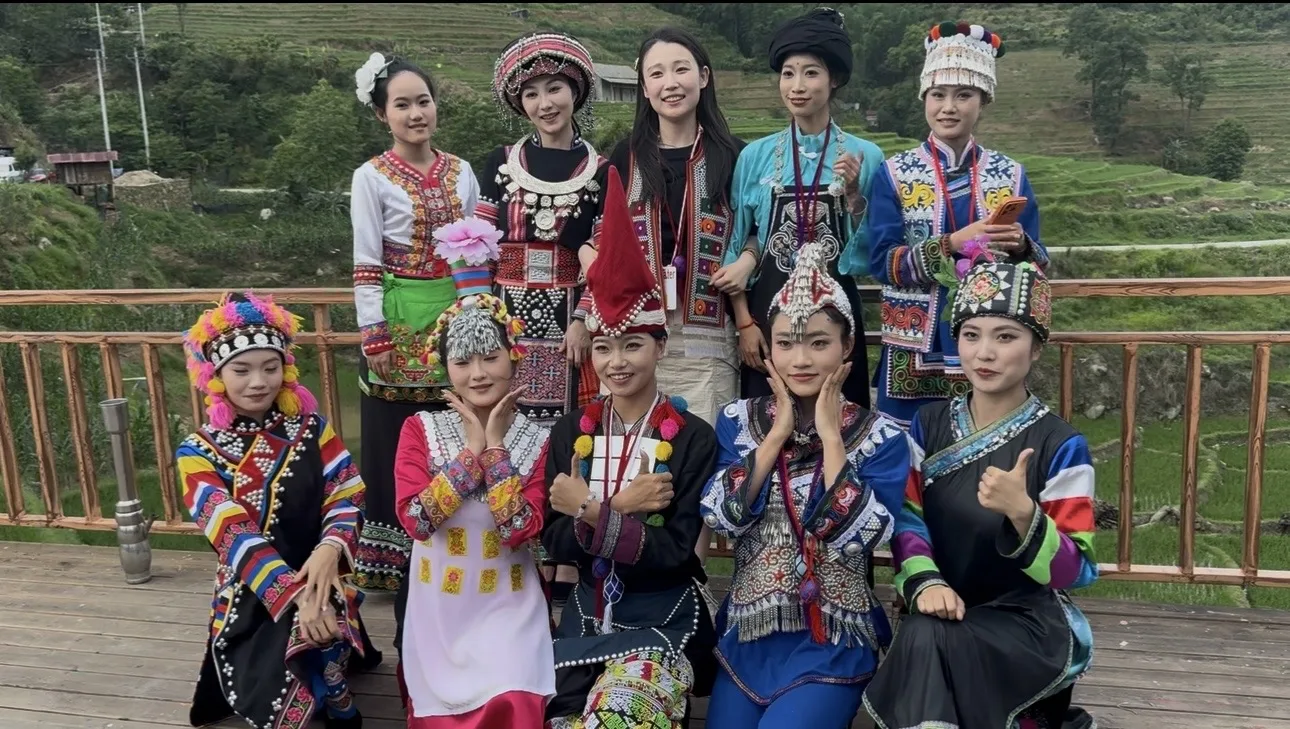
In southern China, in Yunnan province, a village inhabited by the Hani ethnic group has become an example of how public policies, community organization and digital innovation can be articulated to strengthen rural development.
In Kunyimi, Jinping County, initiatives involving the local government, peasant cooperatives and the RedNote digital platform combine cultural appreciation, creative economy and strengthening agricultural production as part of China’s rural revitalization strategy.
The video report was produced for the Good Livingprogram of Brazil in factand follows how the community seeks to transform its natural and cultural resources into new income opportunities for the local population.
Located in the extreme south of Yunnan, close to the border with Vietnam, Jinping County is a region marked by ethnic diversity, environmental richness and the presence of communities that preserve their own agricultural and cultural traditions. The Hani population, one of the ethnicities present in the territory, maintains practices linked to rice cultivation, handicrafts and the use of natural resources, elements that have been incorporated into new rural development strategies.
For decades, Jinping was a region marked by the challenges of development in mountainous and difficult-to-access areas. After the eradication of extreme poverty in the country, declared by the Chinese government in 2021, China began to focus efforts on the so-called rural revitalization, a policy aimed at modernizing agriculture, strengthening local economies, preserving cultural traditions and improving living conditions in the countryside.
According to official Chinese data, around 100 million people have escaped extreme poverty in the last decade. The new stage of rural development policy seeks to consolidate these advances by generating jobs, increasing farmers’ income and creating new economic chains in the interior of the country.
In Kunyimi village, agricultural production remains the basis of the local economy. Red rice, corn, mushrooms and other traditional products are part of the daily life of Hani families, who also preserve artisanal techniques, such as the use of natural pigments extracted from the banlangen – Chinese medicinal herb – for dyeing fabrics.
For Pumei, a member of the village committee and resident of the community, the preservation of local traditions is also linked to the economic development of the population.
“Our region produces rice, red rice, corn and other crops. banlangen it is an important feature of our community. The blue color used in clothes comes from this traditional dyeing process, which was passed down from older generations and continues to be part of our identity”, he explains.”
According to her, transforming this traditional knowledge into productive activities has created new opportunities for residents. “With the support received, we built a factory in our region. This allowed more residents to participate in the projects and many families to increase their income.”
Cooperatives played an important role because they helped connect farmers to new opportunities”, he states.
Pumei also highlights the impact of projects linked to banlangen and mushroom processing. “In our village we have a banlangen and mushroom factory, a cooperation project with Shanghai. This industry helped many residents, especially families who had escaped poverty”, he reports.
Art and creative economy in the countryside
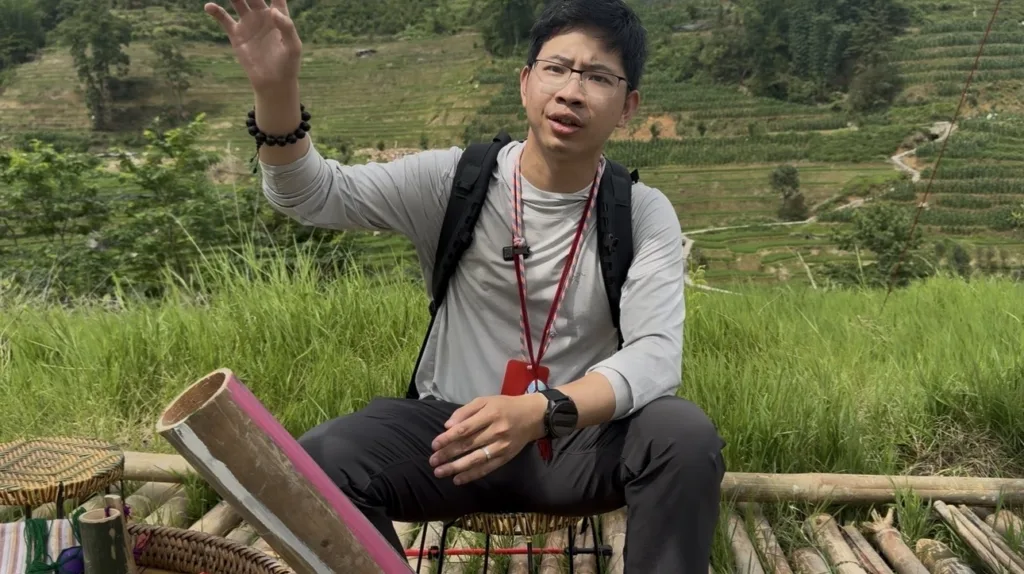
One of the characteristics of the project developed in Kunyimi is the integration between art and economic activities. The RedNote platform, a Chinese social network with more than 350 million users, mobilized artists, designers and creators to develop spaces that enhance the local landscape without breaking the traditional characteristics of the village.
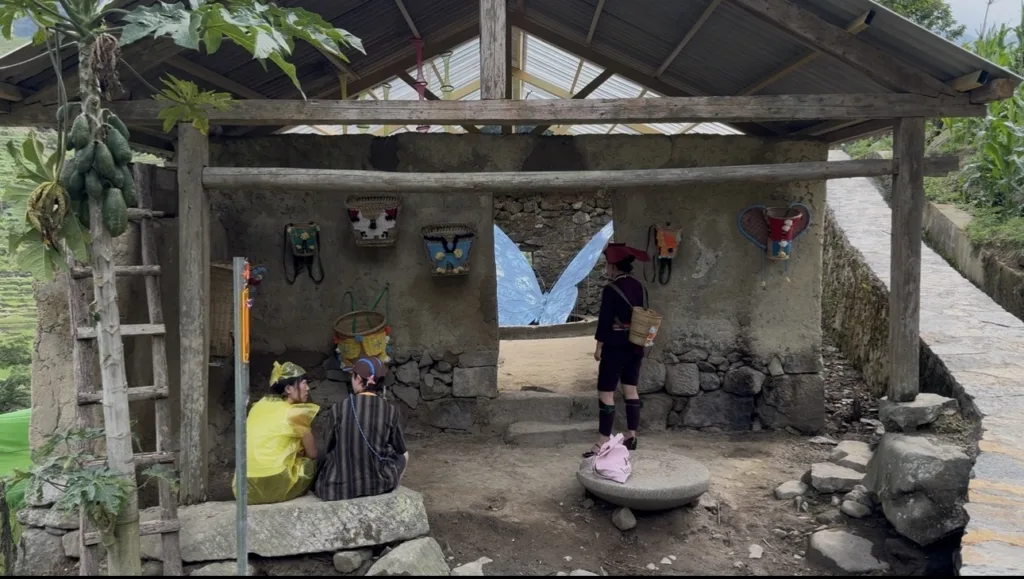
Artist Zhou Biqiang explains that one of the installations created at the site was designed to also meet the needs of the farmers themselves. “We called it the Nature Table because everything was made with organic materials: bamboo, cotton and natural pigments. We created this space because many farmers work here and need a place to rest, drink water and recover their energy”, he explains.
According to him, the proposal was to create a structure integrated into the environment. “The roof is shaped like a butterfly. When it’s windy, it looks like it’s going to fly. We also showcase local foods, such as mushrooms and fruits, so that people can discover and enjoy the natural products here.”
“When we do this type of project, we need to respect the original environment. We don’t want to change the appearance of the region, but to create something that is part of it and that can be used by the people who live here”, he adds.
RedNote and appreciation of local products
RedNote’s work in Jinping was not limited to the creation of tourist spaces. The Chinese platform, known for sharing content, digital commerce and connecting consumers and producers, started to work on community development projects using communication, design and dissemination tools.
In partnership with designer communities, the public brand “Jinping Gifts” was created, which brings together products such as Hani red rice, tea from ancient trees, coffee and mushrooms produced in the region.
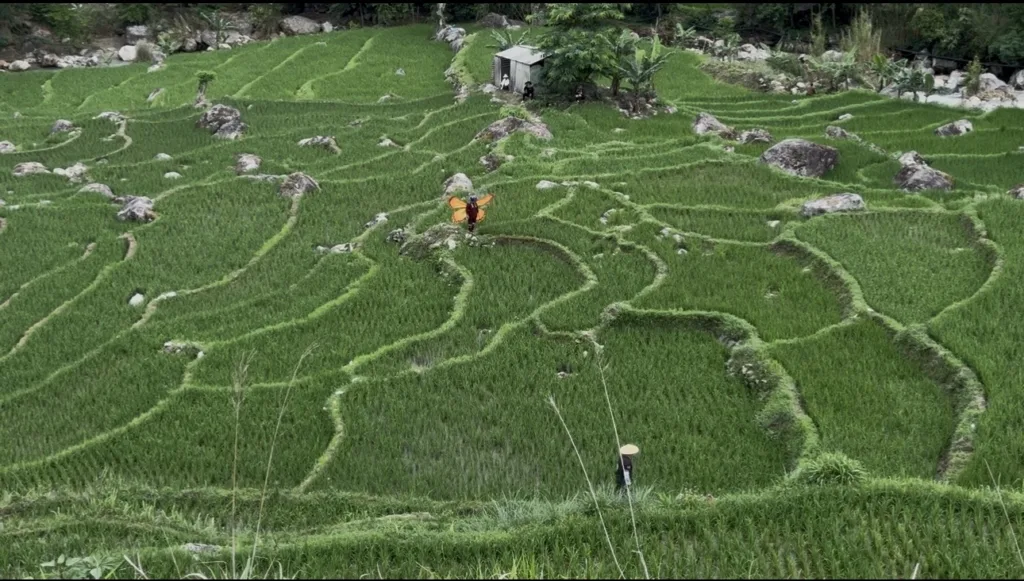
The design work sought to tell the stories behind each product, using images of Hani farmers, agricultural terraces and local cultural traditions. The proposal is to bring urban consumers closer to the reality of producing communities.
The initiative seeks to go beyond simply selling products. By connecting design, digital communication and agricultural production, the project seeks to transform cultural and territorial characteristics into economic value for local communities.
According to Jiang Tian, representative of RedNote’s Public Welfare Department, the initiative seeks to transform the quality of local products into new economic opportunities.
“Since RedNote started working in Yunnan, we have developed projects with local artisans and handcrafted products. Through our design capabilities, we have helped create new products and reach new markets,” he explains.
She states that the results can already be seen. “After two years of work, we helped artisans in the region increase their income. In some cases, this increase reached around 30%.”
According to Jiang Tian, the objective is to create a direct connection between local producers and new consumers. “Many producers work hard, but their stories are not known. Through design and communication, we want to help more people get to know who is behind these products and value this work”, he argues.
The model also created a social return mechanism: 1% of the revenue obtained from sales of the “Jinping Gifts” brand is destined for environmental restoration projects, development of cultural tourism and increasing residents’ income.
Rural development as State policy
Kunyimi’s experience is part of a broader shift in China’s rural development policies. After the eradication of extreme poverty, the focus became the consolidation of the achievements achieved, with initiatives aimed at generating income, modernizing agriculture, cultural appreciation and improving living conditions in rural areas.
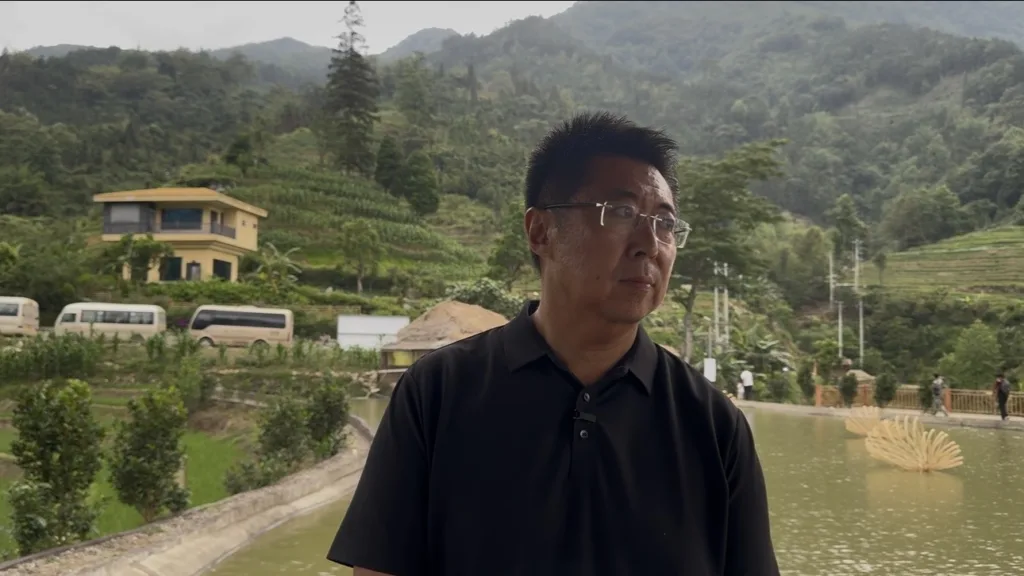
For Liu Xuan, deputy magistrate of Jinping County and representative sent by the Chinese Ministry of Foreign Affairs, Kunyimi’s experience represents a new phase of policies to support rural development.
According to him, initial investments were concentrated in areas such as education, industry and infrastructure. Now, the challenge is to create mechanisms so that the population itself can generate income from local resources. “At the beginning of the assistance period, our main focus was education, industry and infrastructure. But now, based on all of this, we also need to help people obtain benefits for themselves,” he says.
Liu highlights that the choice of Kunyimi also took into consideration the preservation of the local landscape and the possibility of creating new economic activities without breaking the characteristics of the community. “We found a place that maintains its original experience, especially the terraced fields. In a short time we were able to create this space without causing damage to the landscape”, he states.
For Liu, the project shows a new stage in rural revitalization. “This is a good example and a model. People here can build good businesses based on what we’re building.”
And there’s more
This edition of Bem Viver also features the Museum of Sexual Diversity, a fundamental space in the center of São Paulo that transforms memory and acceptance into promoting life for the LGBTQIAPN+ community.
Chef Gema Sotto teaches two unmissable recipes for winter: leek broth and pumpkin broth.
And the second episode of the series “Terreiros Urbanos em São Paulo”, discover the trajectory of Luciana Bispo de Oyá, Ialorixá of Ilê Oba Àse Ogodo in the fight against racism and religious intolerance.
When and where to watch?
No YouTube do Brazil in factevery Saturday at 1pm, has a new program. Just click here.
On TVT: Saturday at 1pm; with reruns on Sunday at 6:30 am and Tuesday at 8 pm on channel 44.1 – open HD digital signal in Greater São Paulo and channel 512 NET HD-ABC.
On TV Brasil (EBC), Friday at 6:30 am.
On TVE Bahia: Saturday at 12:30 pm, with a repeat on Thursday at 7:30 am, on channel 30 (7.1 on the device) of the digital signal.
On TVCom Maceió: Saturday at 10:30 am, with a repeat on Sunday at 10 am, on NET channel 12.
On TV Floripa: Saturday at 1:30 pm, reruns throughout the program, on channel 12 of NET.
On TVU Recife: Saturdays at 12:30 pm, with reruns on Tuesdays at 9 pm, on channel 40 UHF digital.
On UnBTV: Fridays at 10:30 am and 4:30 pm, in Brasília, on Channel 15 of NET.
TV UFMA Maranhão: Thursday at 10:40 am, on open channel 16.1, Sky 316, TVN 16 and Claro 17.
Tune in
On the radio, the Bem Viver program airs from Monday to Friday, from 7am to 8am, with repeats on Sundays, at 10am, on Radio Brasil de Fato. The tune is 98.9 FM in Greater São Paulo. In addition to being transmitted by Radio Agência Brasil de Fato.
The program also has a special podcast version, the Conversation Good Livingbroadcast on Spotify, Google Podcasts, iTunes, Pocket Casts and Deezer platforms.
Like other content, the Brazil in fact makes the program available Good Living free of charge to community radios, post radios and other broadcasters that express interest in broadcasting the content. To be included on our distribution list, please contact us using the form.
Source: www.brasildefato.com.br