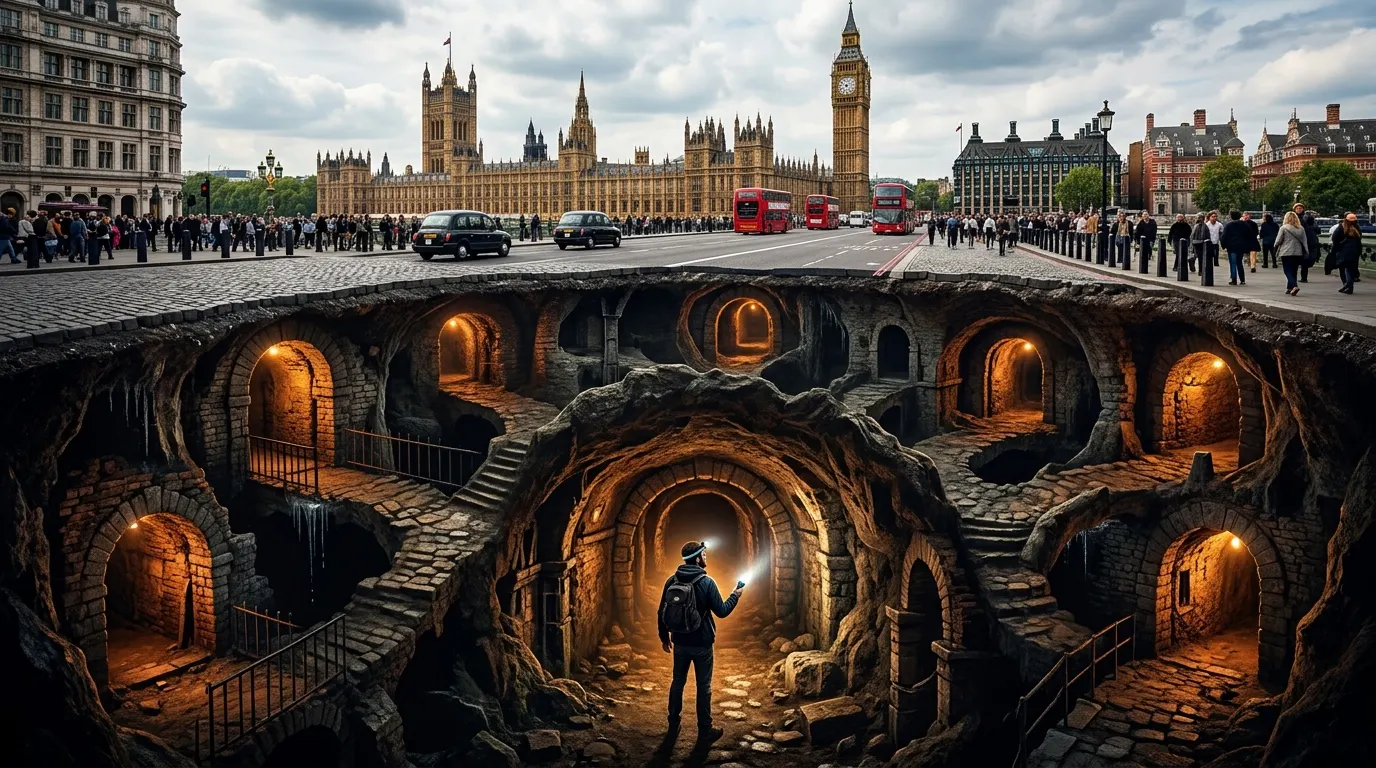
Beneath the bustling streets of the world’s most iconic metropolises lies a parallel universe. It is a shadowy realm of concrete, brick, and steel that few ever see but many rely upon for the smooth functioning of urban life. While tourists flock to surface-level landmarks and skyscrapers pierce the clouds, a complex network of secret tunnels winds its way through the bedrock below. These subterranean passages are not merely utility corridors or subway lines. They are historical artifacts, military fortifications, smuggling routes, and engineering marvels that tell the hidden stories of the cities above. From the catacombs of Paris to the forgotten bunkers of London, these underground labyrinths offer a glimpse into the secret history of urban development. Here, we explore six of the most intriguing secret tunnels under famous cities around the globe.
Paris, France: The Catacombs and the Underground Resistance
Paris is often called the City of Light, but beneath its glittering facade lies a city of bones. The Paris Catacombs are perhaps the most famous underground tunnel system in the world, yet they represent only a fraction of the subterranean network beneath the French capital. Created in the late 18th century to address the overflowing cemeteries of Paris, the catacombs hold the remains of more than six million people. The tunnels stretch for hundreds of kilometers, though only a small portion is open to the public. What makes this network particularly fascinating is its use during World War II. The French Resistance used the lesser-known sections of the catacombs as secret meeting places and hideouts, leveraging the maze-like structure to evade Nazi patrols. Today, urban explorers known as cataphiles continue to map new sections of this endless labyrinth, discovering forgotten chambers and historical graffiti that date back centuries. The air is cool and still, carrying the weight of history in every breath. The walls are lined with neatly arranged femurs and skulls, creating a macabre yet strangely serene atmosphere. This underground city serves as a stark reminder of mortality and the layers of history that accumulate beneath our feet. Beyond the catacombs, Paris also boasts a network of service tunnels that once carried steam from power plants to heat buildings across the city. These industrial arteries, now largely decommissioned, remain as ghostly reminders of a bygone era of urban infrastructure.
London, United Kingdom: The Churchill War Rooms and the Mail Rail
London’s underground history is deeply intertwined with its role as a global powerhouse and its resilience during times of conflict. While the London Underground is well known, there are secret tunnels that few Londoners even know exist. One of the most significant is the network of tunnels beneath Whitehall, including the Churchill War Rooms. During World War II, Prime Minister Winston Churchill and his cabinet operated from these fortified bunkers, protected from the Blitz above. The tunnels connect various government buildings and provide a secure route for officials to move between key locations without exposure to aerial bombardment. Another hidden gem is the Mail Rail, a driverless underground railway that once transported letters and parcels across London. Operating from 1927 to 2003, the Mail Rail ran through narrow tunnels beneath the city, connecting major sorting offices. Although it has been decommissioned, parts of the system have been preserved and opened to the public as a museum, offering a unique glimpse into the logistical backbone of the postal service. The tunnels are narrow and dimly lit, with old mail carts still sitting on the tracks, frozen in time. The silence in these tunnels is profound, broken only by the distant drip of water and the hum of ventilation systems. These subterranean passages highlight how London has always been a city that plans for the worst while striving for efficiency. The integration of military, postal, and transport infrastructure underground demonstrates the strategic importance of the space beneath the city.
New York City, USA: The Molasses Flood and the Hidden Steam Tunnels
New York City is a vertical metropolis, but its horizontal underworld is equally impressive. Beneath the streets of Manhattan lies a vast network of steam tunnels that distribute heat to thousands of buildings. Operated by Con Edison, this system is one of the largest district heating systems in the world. The tunnels are hot, humid, and dangerous, accessible only to authorized personnel. They crisscross beneath skyscrapers and parks, forming a thermal grid that keeps the city warm in winter. However, New York’s underground history also includes darker chapters. In 1915, a massive explosion in a molasses tank in Brooklyn sent a wave of sticky syrup rushing through the streets, killing twenty-one people. While not a tunnel itself, the incident highlighted the dangers of industrial infrastructure hidden in plain sight. More recently, abandoned subway stations and maintenance tunnels have become the subject of urban legend and exploration. The City Hall station, closed in 1945, remains intact with its beautiful tile work and chandeliers, visible only to those on certain train routes as they pass by. Additionally, during Prohibition, speakeasies used secret tunnels and hidden doors to evade police raids. Some of these passages still exist beneath older buildings in Greenwich Village and SoHo, serving as silent witnesses to the city’s rebellious past. The interplay between public infrastructure and private secrecy defines New York’s underground character. It is a place where utility meets mystery, and where every manhole cover could potentially lead to a hidden world.
Tokyo, Japan: The Flood Control Channels and the Imperial Bunkers
Tokyo is a city built on the edge of seismic activity, and its underground infrastructure reflects a constant battle against natural disasters. One of the most impressive secret tunnel systems is the Metropolitan Expressway Kanpachi Route flood control channel. Often referred to as the “underground temple,” this massive facility features colossal concrete pillars that support the ceiling of a vast reservoir designed to capture excess rainwater during typhoons. The scale of the engineering is breathtaking, with the chamber large enough to hold a stadium. While not entirely secret, access is restricted, and its existence is unknown to many residents. Beyond flood control, Tokyo also has a network of bunkers and tunnels associated with the Imperial Palace and military installations from World War II. Although much of this infrastructure was destroyed or sealed after the war, rumors persist of hidden passages that were never fully documented. The Japanese approach to underground space is characterized by precision and functionality, reflecting the country’s cultural emphasis on order and preparedness. The tunnels are clean, well-maintained, and integrated seamlessly into the urban fabric. They serve as a testament to Tokyo’s ability to adapt to its environment and protect its population from both natural and human-made threats. The contrast between the chaotic energy of the surface and the calm order of the underground is striking. It is a duality that defines the modern Japanese urban experience.
Berlin, Germany: The Flak Towers and the Cold War Bunkers
Berlin’s underground history is dominated by the scars of the twentieth century. The city is riddled with bunkers from World War II and the Cold War, many of which remain hidden beneath residential buildings and parks. One of the most notable structures is the Humboldthain Flak Tower, a massive concrete fortress that was converted into a hill after the war. Beneath the greenery lies a complex network of rooms and tunnels that once housed anti-aircraft guns and sheltered thousands of civilians during Allied bombing raids. Today, parts of the bunker are open to the public, revealing the thick walls and eerie acoustics of the underground chambers. During the Cold War, Berlin was divided, and both East and West constructed extensive bunker systems to prepare for potential nuclear conflict. Many of these facilities were kept secret until after the fall of the Wall. Some have been repurposed as data centers, art galleries, or nightclubs, while others remain abandoned and decaying. The underground spaces of Berlin are haunted by the memory of conflict and division. They serve as physical manifestations of the city’s turbulent history. Exploring these tunnels is like walking through a timeline of German history, from the Third Reich to the reunification. The air is heavy with the past, and the concrete walls seem to whisper stories of survival and fear. Berlin’s underground is not just a network of tunnels but a memorial to the resilience of its people.
Rome, Italy: The Ancient Sewers and the Mithraic Temples
Rome is a city where the past is always present, and nowhere is this more true than in its underground. Beneath the modern streets lie the remnants of ancient Roman infrastructure, including the Cloaca Maxima, one of the world’s earliest sewer systems. Built in the sixth century BC, this tunnel was designed to drain the marshes between the seven hills of Rome and carry waste away from the city center. While largely inaccessible today, archaeological surveys have revealed its impressive construction and durability. In addition to sewers, Rome is home to numerous Mithraic temples, dedicated to the god Mithras. These underground sanctuaries were often built beneath existing buildings to maintain secrecy, as the cult of Mithras was a mystery religion. One such temple was discovered beneath the Church of San Clemente, revealing layers of history that span nearly two millennia. The temple features intricate frescoes and altars, preserved in the cool, dry air of the underground. Rome’s underground is a palimpsest of civilizations, with each layer revealing new insights into the lives of those who came before. The tunnels are not just functional spaces but sacred ones, reflecting the spiritual and practical needs of ancient Romans. To descend into the underground of Rome is to travel back in time, encountering the ghosts of emperors, slaves, and priests. It is a journey that highlights the continuity of human presence in this eternal city.
Conclusion
The secret tunnels beneath famous cities are more than just empty spaces. They are repositories of history, engineering feats, and symbols of human ingenuity. From the bone-filled catacombs of Paris to the flood-control temples of Tokyo, these underground networks reveal the hidden dimensions of urban life. They remind us that cities are not just two-dimensional maps but three-dimensional entities with depth and complexity. As we walk the streets above, we tread lightly on the shoulders of giants who built these foundations. The next time you find yourself in a major city, consider what lies beneath your feet. There may be a secret world waiting to be discovered, filled with stories that have been hidden in the dark for centuries. These tunnels are the silent guardians of our urban heritage, preserving the past while supporting the present. They are a testament to the enduring human spirit and our relentless drive to build, protect, and connect. In exploring these hidden arteries, we gain a deeper appreciation for the cities we call home and the intricate webs that sustain them. The underground is not a place of fear but of wonder, inviting us to look beyond the surface and discover the secrets that lie below.