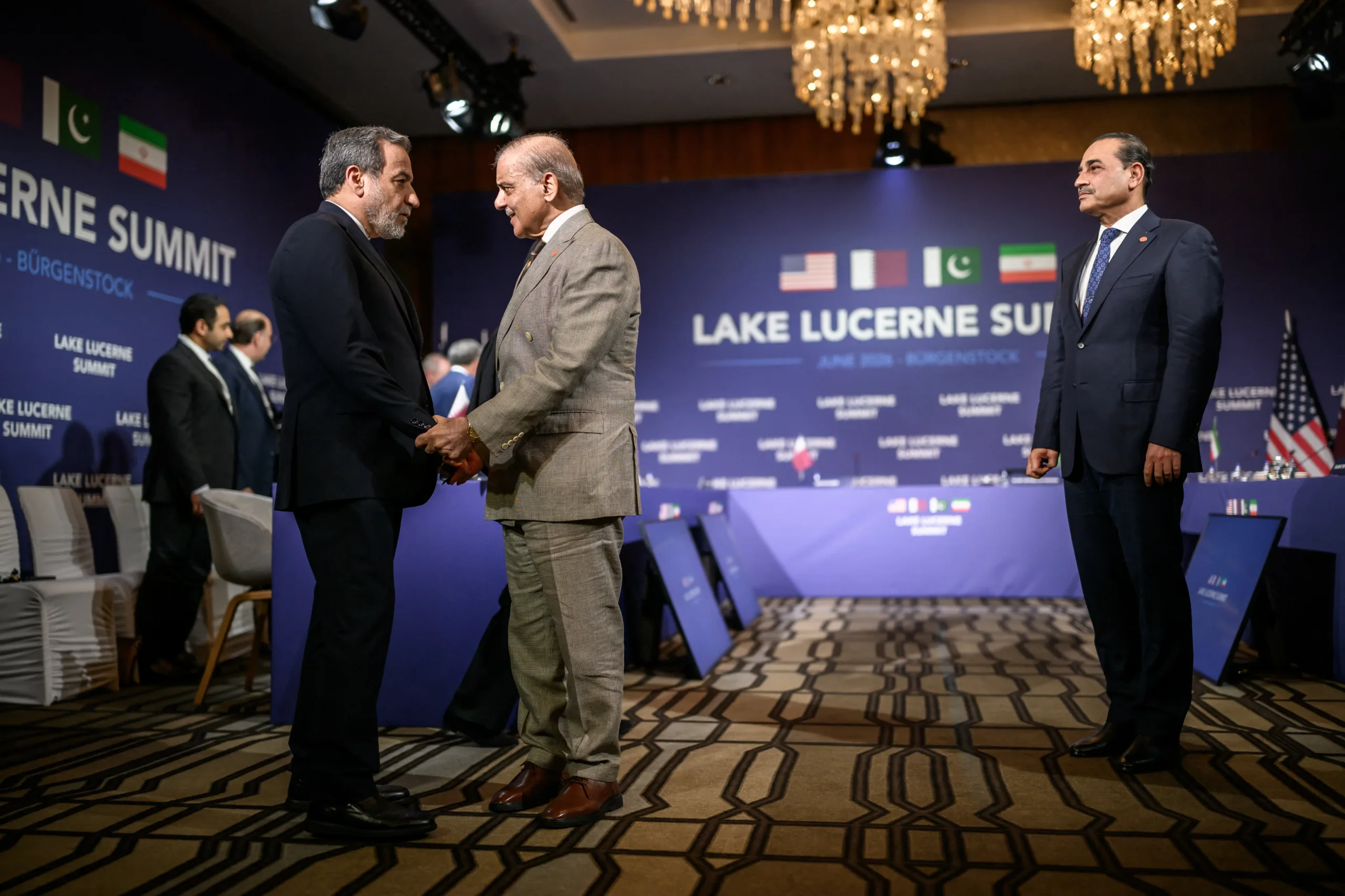
Iran and the United States agreed this Monday (22) on a roadmap to reach a definitive agreement within 60 days after the first round of high-level negotiations held in Switzerland. The understanding foresees the immediate opening of new technical negotiations, the creation of communication channels to avoid incidents in the Strait of Hormuz and a mechanism aimed at ending military operations in Lebanon, considered one of the central points for concluding the agreement.
In a joint statement, Qatar and Pakistan said the Lake Lucerne Summit took place in a “positive and constructive” environment and that “encouraging progress” had been achieved, including the creation of a mechanism for future technical negotiations.
According to the mediators, a High-Level Committee was created to oversee the mediation. The group will follow discussions on the Iranian nuclear program, sanctions and dispute resolution mechanisms. The parties also agreed on “a roadmap to reach a final agreement within 60 days, laying the groundwork for the immediate start of new technical negotiations.”
The agreement also provides for a line of communication between the countries to “avoid incidents and communication failures” and guarantee the passage of commercial vessels through the Strait of Hormuz. A coordination cell was also created involving the parties, the Lebanese government and mediators to ensure compliance with the end of military operations in Lebanon.
“The mediating parties will continue to do their utmost to ensure that negotiations continue to be conducted in a constructive environment, with the aim of reaching a final agreement,” reads an excerpt from the joint statement.
“The State of Qatar and the Islamic Republic of Pakistan express their sincere gratitude to the United States of America and the Islamic Republic of Iran for their continued commitment to diplomacy and a peaceful resolution of the conflict. The mediating parties further commend the brotherly and friendly countries for their continued support and valuable contribution to the ongoing negotiations”, the text concludes.
After the meeting, Iranian Foreign Minister Abbas Araghchi stated that “the tireless mediation of Pakistan and Qatar has brought great progress towards ending the war in Lebanon. Exports of oil and petrochemical products have been suspended, the blockade has been lifted, some frozen assets have been released and an important reconstruction and development plan has been launched for Iran.”
The release of frozen Iranian resources has also begun to advance. Iran’s Economy Minister Seyed Ali Madanizadeh stated that the Central Bank has already started procedures to release Iranian assets blocked abroad. According to Madanizadeh, the reserves belong to the Central Bank, and the unlocking process is underway, although he did not provide values or confirm whether part of the resources has already been released.
Madanizadeh also said that the government maintains reducing inflation as a priority. To this end, he advocated that long-term interest rates remain below short-term rates, arguing that the reverse situation fuels inflationary expectations.
The minister also presented the “Roish” plan, which seeks to attract investments in foreign currency to exchange-traded funds and direct these resources to production. According to him, the Central Bank has already authorized the initiative and the expectation is of strong demand for the funds.
Source: www.brasildefato.com.br