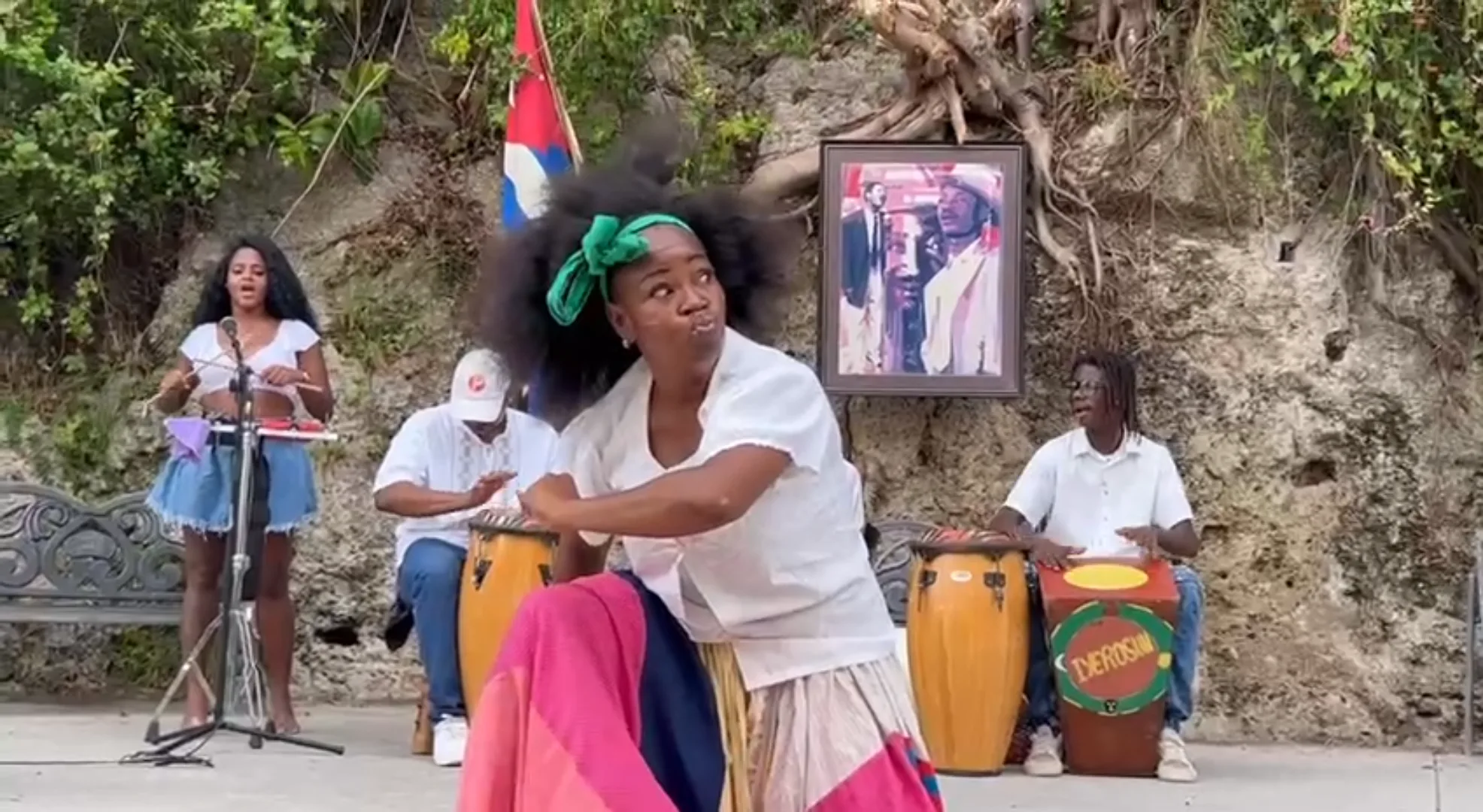
Dedicated to celebrating and reflecting on African culture and traditions, a new edition of the Timbalaye Festival: La Ruta de la Rumba was held in Cuba between the 20th and 23rd of August. The program took place in Havana, Matanzas, Mayabeque and Camagüey, with cultural, academic and community activities aimed at enhancing intangible heritage of African origin.
Founded in 1999 by dancers and folk promoters Ulises Mora and Irma Castillo, the Timbalaye International Festival is an annual cultural event dedicated to the safeguarding, dissemination and appreciation of rumba and traditions of Afro-Cuban origin. After the declaration of the Cuban rumba as an Intangible Cultural Heritage of Humanity by UNESCO in 2016, Timbalaye established itself as one of the spaces dedicated to its active safeguarding.
The festival brings together manifestations of music, dance, spirituality, research and community practices. It also includes the participation of representatives from other Caribbean and Latin American countries, with the aim of strengthening intercultural dialogue and regional cooperation.
In an interview with Brazil in factIrma Castillo explained that the central axis of the 2026-2027 activities was the cimarronaje, understood as the historical process of resistance, escape and self-liberation carried out by enslaved people of African origin in America and the Caribbean during the colonial period.
Cimarronaje: resistance, memory and cultural creation
“Cimarronaje is not only a process of escape in the face of adversity, of escaping pain and aspiring to a dignified freedom, but it must also be understood as a process in which, in the forests and palenques that were created, the Cimarrones built an alternative way of life, a cultural identity, ways of thinking and consciousness. And this is what we have today as a living heritage”, explains Castillo.
The history of resistance to slavery is also the history of a process of cultural creation. In the spaces built by the Cimarrones, forms of life, identities and ways of thinking developed, the mark of which remains in the cultural heritage.
Castillo highlights that the festival also constitutes a search for collective memory and an exercise in reflection on the need to imagine the future “with hope”, even in the face of the difficulties of the present. In this sense, joy becomes a form of resistance and celebration of life.
“Timbalaye is about celebrating who we are: who we were, who we are and where we want to go. Thinking about the future, thinking about a future with hope, despite the adversity and difficult times we are currently experiencing, with joy, because life is celebrated, life is enjoyed”, he states.
Even amidst the suffering of the barracks, enslaved people managed to sing, preserve their traditions and recreate the roots they had brought from Africa, giving rise to transculturation processes.
| Credit: Photo: Brasil de Fato
Dance as a form of knowledge
Timbalaye’s work takes dance and encounter as starting points for the construction of knowledge. Its methodological proposal seeks to “integrate the erudite with the popular, the scientific with the endogenous”, articulating ethnographic and anthropological studies with the knowledge of the cultivators and bearers who keep the heritage alive.
According to Castillo, this dialogue between different forms of knowledge allows communities to strengthen the feeling of belonging and cultural self-esteem. Research and cultural practice thus also become tools for learning and forming awareness, with the aim of making new generations recognize the value of these expressions and contribute to preserving them as part of living heritage and folklore.
The continuity of these activities also gains particular relevance in the current context. For Castillo, even in the face of the difficulties imposed by the blockade, the meeting between humble people continues to be a space of resistance.
“This is a very difficult time, but despite this, the artistic education system, the culture system and the institutions that sponsor and support us give us this opportunity and create the right moment for meetings like this at the Casa de Cultura, to enjoy this culture”, he states.
“And this is in the soul, because if there is something that cannot be blocked, something that cannot be destroyed, it is spirituality”, he maintains.
This memory of resistance remains alive through music, dance, spirituality and collective celebration. “The Cuban spirit is rumbero. We are Cimarrones and, therefore, rumbero is the motto of this festival. Despite this difficult moment, every time we can dance rumba and enjoy it, it is also an opportunity to live”, he concludes.
Source: www.brasildefato.com.br