On November 3rd, the United States will go to the polls for the midterm elections, in a journey in which all seats in the House of Representatives and a third of the Senate will be renewed, in addition to defining governors, state legislatures and other state and local positions across the country.
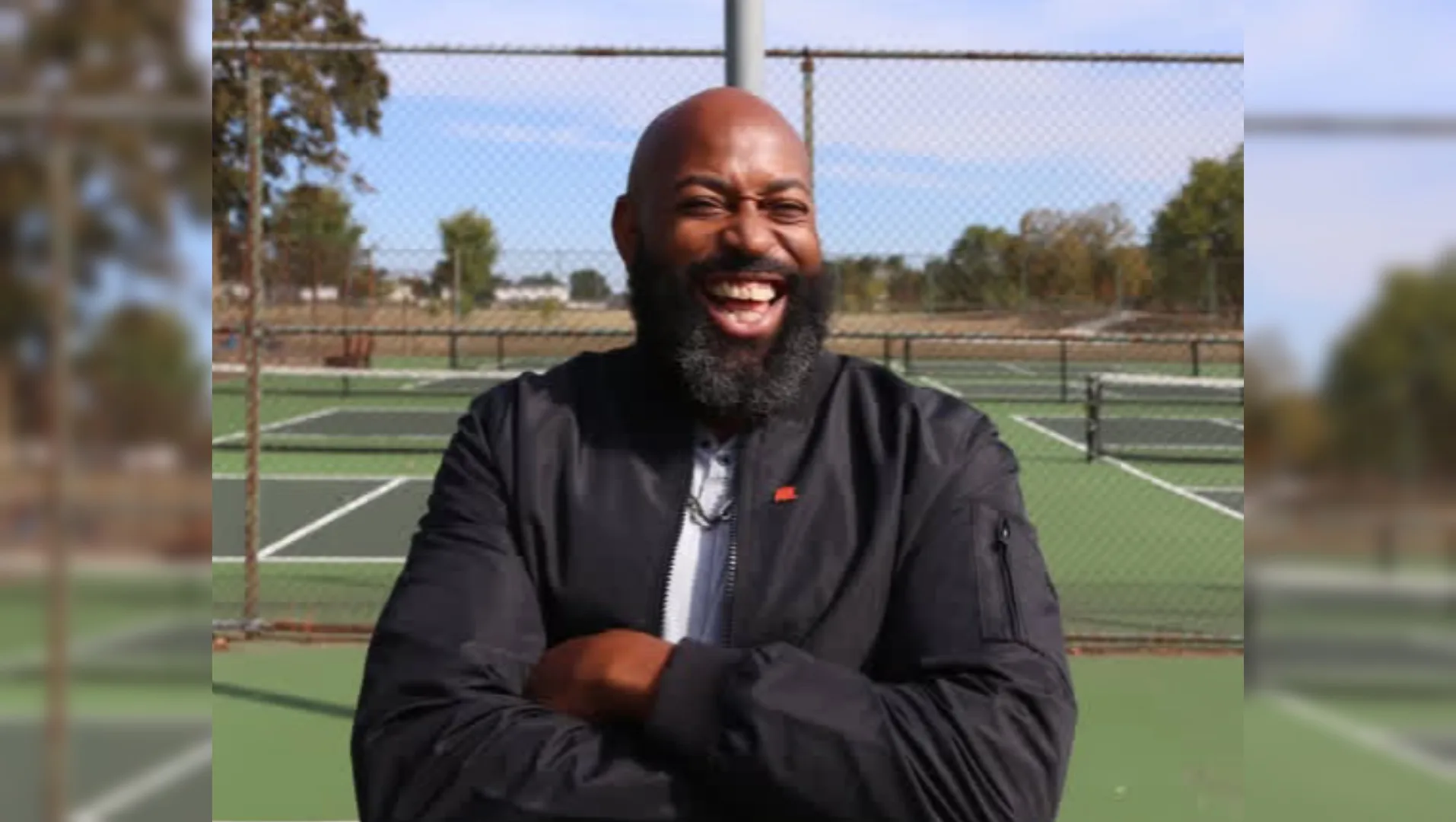
After his recent visit to Cuba, Gregory Levy, independent candidate for the Senate from Ohio and leader of the Party for Socialism and Liberation (PSL), spoke with the Brazil in fact. Born in Akron, in the so-called Rust Belt, Levy is participating in an election for the first time and seeks to compete for a space outside the two major parties, in a scenario of growing interest in left-wing ideas and questioning of the two-party system.
Check out the full interview:
Brasil de Fato: You were recently here, in Cuba, and we would like to know your general impressions. What is your reading of what is currently happening on the island, at this very complex time?
Gregory Levy: It really was an experience that had a profound impact on me. First and foremost are the material conditions experienced in Cuba as a result of the blockade and its current intensification. The damage being done to the Cuban people is very real. It’s something palpable: the lack of electricity, the impossibility of maintaining energy supply, the fact that hospitals, power grids and entire cities are without electricity, some for long periods.
This is a very serious material situation that is being imposed on the Cuban people. And it is something that, as an American citizen, I have to take responsibility for: the fact that this American government is imposing these conditions on the Cuban people. I don’t want to leave that aside.
The American people need to be aware of this situation, take responsibility and act accordingly, in the face of the impoverishment that the actions of the government and American imperialism, in a broader sense, are directly causing.
But on a personal level, I was very encouraged to be able to see and talk to the Cuban people. I was very impressed by his resilience, his spirit and his determination, as well as his extremely high level of organization to do everything possible to meet the needs of his people. This is something very different from what happens in the United States: seeing people who place a truly human logic at the center of decision-making, seeing the mobilization that exists to protect the Cuban people and seeing that they maintain enormous loyalty to this revolution and believe in their leadership.
The trip left an indelible impression on me: seeing a government that, in every way, truly works directly for its people. That’s what I saw in Cuba.
Despite Trump’s campaign promises to end wars, since he came to government we have seen an intensification of aggressions against other countries, at the same time that, within the United States, a real hunt for migrant communities has been launched. How do you perceive American society’s reaction to this scenario?
I think that, at this moment, the American people are very attentive to the relationship between war and the political situation. Aggressions against Iran are being very unpopular among the American population.
Americans can see that these attacks have a direct effect on the country’s economy and that, in reality, they do not benefit the population. Not to mention the devastating and genocidal effects they have on the Cuban and Venezuelan people, as well as the Iranian people.
I think this is a particular moment in which Americans are coming out of a kind of lethargy that has lasted too long. It is our responsibility to shout this from the rooftops: these aggressions and war crimes committed against the sovereignty of other peoples in the Global South, our neighbors, have very direct and negative effects on all of us.
There is a lot of debate among political analysts, both right and left, about the growth of leftist ideas, especially among young people. This phenomenon is expressed in a greater number of left-wing candidates, or even socialists, like you, who present themselves outside the traditional parties. But also, within the Democratic Party, sectors appear more to the left than the party establishment. Why do you think this is happening? What is your experience in Ohio talking to workers?
In the United States, the rise of fascism is very real. We are seeing different forms of violence all around us. One example is workers kidnapped by ICE. We see how ICE is becoming, right now, a huge secret police force in the United States. Faced with these problems, we see a lack of proposals and concrete results from the corporate establishment, which leaves a void of answers.
People are reaching out to the left because we actually talk about why all of this is happening. We are growing because we have the answers that people need and the solidarity that they are seeking, that they want to add to in a genuine way, and not simply as a rhetorical phrase used to enrich ourselves personally, as people are accustomed to seeing due to the cynical nature of American politics.
All these contradictions, or systemic crises that the country is going through, are increasingly evident, both in relation to United States operations abroad and the internal crisis: the offensive against migration, for example, and the economic crisis in general. This is generating, from both the left and the right, criticism of the two-party system.
There is a perception that the two parties are actually aligned on fundamental issues, for example regarding the role that the United States plays in the world and the fact that this is not solving the problems of American citizens but, on the contrary, is doing the opposite.
In our campaign, talking to ordinary workers from different parts of the state, we have received a favorable reception. There are challenges because we don’t have access to the kind of corporate megaphone that exists. But when we manage to get our message across to people, they are prepared, willing and very motivated. We had good actions, with a lot of people, and people showed a lot of enthusiasm for our message.
Beyond a specific seat in Congress or the Senate, what do you think is at stake in these midterm elections?
I think the dispute I’m participating in is part of what’s happening across the country. We have a right-wing candidate who supports fascism. Not much more needs to be said.
We know what his position is as a Trumpist figure. We also have a liberal figure who presents himself as a defender of workers, but who, at the same time, is very linked to Zionism, is very favorable to corporations and ends up being completely harmless when it comes to being part of the Washington political machine.
And, in the midst of this, an independent candidate appears who is really talking about solutions to problems of the magnitude of these difficulties. A candidate who can openly say that we need to cut the military budget by 90% and that, of course, we need to increase the minimum wage so that workers can make ends meet.
To do this, we need to remain firm in our principles and never back down. We need a fighting spirit, a willingness to fight for the working class and bring all of this to the minds of Ohioans across the state. This is very necessary because it helps reclaim a socialist history that already exists in Ohio.
We need this because it changes the way people conceive of what politics can do. We can transform passive voters into truly committed people, who take responsibility for our society, who are true protagonists of our democracy and its construction. It’s about completely transforming our system: moving from a system that works for capital to a system that truly responds to the needs of the population.
How do you see the role of mass movements and popular movements within the United States in relation to the Global South?
This is something that we need to build, and I think that, from the United States, we really need to take responsibility for growing a movement that has an internationalist perspective, because this is something that the establishment very systematically eliminated what are usually called left-wing movements in the United States.
The movements that exist are too self-centered and have too many limitations to adopt an internationalist approach that cares about workers around the world and the Global South.
Therefore, I take this very seriously: to grow a mass movement in the United States that is connected to the interests of workers, both here and abroad, and that assumes the need to be internationalist, instead of taking refuge in American exceptionalism and these very pernicious forms of isolation that, in reality, punish the rest of the world and allow atrocities and slow genocides, like what happened in Cuba, to persist for 70 years.
We need to build a consciousness on the left that sets a standard that makes this impossible. And we need to build mass movements with a consciousness aligned with these values and principles. That is our duty to the left and to the global socialist movement, and that is what we are doing.
Source: www.brasildefato.com.br